After a record-breaking 2025 with 23 outbreaks, your dream vacation could become a nightmare. Here's why UV-C disinfection isn't optional anymore - it's essential cruise packing.
We're barely into 2026, and it's already happening again.
The CDC just confirmed the first norovirus outbreak of the year aboard Holland America Line's Rotterdam, with 89 passengers and crew suffering through vomiting and diarrhea during what was supposed to be a Caribbean paradise cruise. The ship hadn't even finished its 12-day voyage from Fort Lauderdale through Curaçao, Colombia, Costa Rica, and Jamaica before the outbreak was reported.
If you have a cruise booked this year, this should be your wake-up call.
2025 Was the Worst Year for Cruise Ship Outbreaks in History
Let's talk about what just happened. In 2025, cruise ships recorded 23 gastrointestinal illness outbreaks - the highest number ever reported by the CDC since tracking began in 1994. That's a 28% increase from 2024's 18 outbreaks, which itself was the second-worst year on record.
The numbers are staggering: more than 2,200 passengers and crew were officially reported sick across these outbreaks. And that's just the reported cases—people who actually went to the ship's medical center. The real number is almost certainly much higher.
Holland America Line alone had seven outbreaks in 2025, including three on the Rotterdam - the same ship that just kicked off 2026's outbreak count. In February, that ship sickened 185 people. In March, another 93. Now, barely into January, 89 more.
This isn't bad luck. This is a pattern.
Why Cruise Ships Are Norovirus Breeding Grounds
Here's what the cruise industry doesn't want to advertise in those glossy brochures: cruise ships create perfect conditions for norovirus to spread.
Think about it. You have thousands of people in close quarters, touching the same elevator buttons, door handles, and buffet serving spoons. You're dining in crowded restaurants, lounging by shared pools, and attending packed entertainment venues. Every surface becomes a potential transmission point.
Norovirus is brutally contagious. It takes fewer than 20 viral particles to infect someone - you can't even see that amount. An infected person can shed billions of viral particles, and those particles survive on hard surfaces for days or even weeks. The virus can even spread through the air when someone vomits nearby.
And here's the really uncomfortable truth: standard cleaning isn't always enough. Research has shown that norovirus clusters can actually resist some conventional disinfection methods. The virus essentially protects itself by clustering together in membrane-enclosed groups that shield it from detergents and even standard UV treatments.
That elevator button you just pressed? The handrail you grabbed when the ship rocked? Your phone that you touched immediately after? All potential vectors.
Your Phone Is the Problem No One Talks About
Let's focus on that last one - your phone - because this is where your personal protection strategy matters most.
Consider your behavior on a typical cruise day. You touch your phone constantly: checking the ship's app for activities, taking photos at ports, texting family back home, scrolling during downtime. Between touches, you're grabbing handrails, opening doors, handling money at port shops, touching menus, and interacting with countless shared surfaces.
Studies have found that mobile phones carry a disturbing variety of pathogens. In healthcare settings, approximately 10% of phones tested positive for viral pathogens including gastrointestinal viruses. The bacteria and viruses on phones closely mirror what's found on hands - which means your phone becomes a constant recontamination source.
You can wash your hands religiously (and you should), but then you pick up your phone - which you touched five minutes ago with contaminated hands - and the cycle starts again. It's like washing your hands and then immediately touching a doorknob that everyone else has touched.
On a cruise ship, where you're surrounded by thousands of people and norovirus could be circulating at any moment, this constant recontamination cycle becomes a serious vulnerability.
Why Hand Sanitizer Isn't Enough (And Neither Is Hoping for the Best)
The cruise industry's standard advice is simple: wash your hands frequently and use hand sanitizer. Every ship has sanitizer stations. Every health notice emphasizes hand hygiene.
But here's what they don't tell you: alcohol-based hand sanitizers are significantly less effective against norovirus than against many other pathogens. The virus's structure makes it more resistant to alcohol. Soap and water are better, but you can't wash your hands every single time you touch your phone, your room key, your sunglasses, or any other personal item.
The cruise lines implement "enhanced cleaning protocols" after outbreaks, but by then, the virus has already spread. They isolate sick passengers, but norovirus is contagious before symptoms even appear. They collect stool samples for testing, but that doesn't help the people who already spent their vacation miserable in their cabin.
You're essentially relying on the hygiene habits of 2,500+ strangers and hoping the crew's cleaning schedule happens to catch contaminated surfaces before you touch them.
That's not a protection strategy. That's wishful thinking.
The UVCeed Difference: Taking Control of Your Health on the High Seas
This is why we created UVCeed - because protection shouldn't depend on luck or other people's habits.
UV-C light has been used in hospitals, water treatment facilities, and laboratories for decades to eliminate pathogens. The science is clear: UV-C wavelengths between 200-280nm damage the genetic material of viruses and bacteria, preventing them from replicating and rendering them harmless. Research demonstrates UV-C's effectiveness against a broad spectrum of viruses, including those that cause gastrointestinal illness.
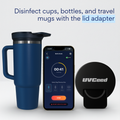
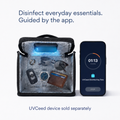
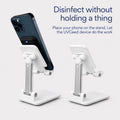
The UVCeed MagSafe device brings this proven technology to your personal items. Your phone, AirPods, credit cards, room key, sunglasses - the items you touch constantly throughout your cruise - can be disinfected in seconds, without chemicals, without moisture, without risk of damage.
Think about how this changes your cruise experience:
Morning routine: Sanitize your phone and room key before heading to breakfast.
After port excursions: Disinfect everything that came into contact with shared surfaces - your phone, wallet, sunglasses.
Before meals: Quick sanitization of items you'll touch while eating.
Evening return: Clean all your daily-carry items before settling in for the night.
This isn't paranoia. This is the same type of protocol healthcare workers use. The difference is, you now have access to the technology in a portable, convenient form factor.
The Math That Should Convince You
Let's do some simple calculations.
A typical Caribbean cruise costs somewhere between $1,500 and $5,000+ per person, depending on the ship and cabin type. Add flights, excursions, drinks packages, and specialty dining, and you're easily looking at a $3,000-$10,000 vacation investment for a couple.
Now consider: if you get norovirus, you'll spend 24-72 hours confined to your cabin, missing port days you've already paid for, unable to enjoy the restaurants and entertainment that drew you to cruise in the first place. Some passengers have reported symptoms lasting their entire cruise.
The average cruise is 7-10 days. Losing even two or three days to illness means 20-40% of your vacation - and your investment - is gone.
UVCeed costs a fraction of a single port excursion. It's less than most drink packages. It's certainly less than the cost of having to see the ship's doctor for anti-nausea medication.
More importantly, it provides peace of mind that no insurance policy can offer. You can't buy back lost vacation days. You can't un-experience the misery of violent gastrointestinal illness in a tiny cabin while the ship cruises through waters you came to see.
What Experienced Cruisers Already Know
Frequent cruisers - the ones who've sailed enough to know what can go wrong - pack differently than first-timers. They bring their own hand sanitizer, their own disinfecting wipes, their own precautions. They've either experienced an outbreak or heard enough horror stories to take protection seriously.
UV-C disinfection is the next evolution of this preparedness mindset. It's not about being afraid of cruising - it's about being smart enough to control what you can control.
You can't control whether someone in the buffet line washed their hands. You can't control whether the crew cleaned that handrail since the last sick passenger touched it. You can't control whether the person in the elevator is already shedding virus before they show symptoms.
But you can control the cleanliness of your personal items. You can break the recontamination cycle that your phone creates. You can give yourself a fighting chance in an environment specifically designed for viral spread.
The Bottom Line: Don't Let Norovirus Sink Your Dream Vacation
Cruise ships are magnificent. The destinations are breathtaking. The experience, when everything goes right, creates memories that last a lifetime.
But 2025's record-breaking 23 outbreaks - and 2026's immediate continuation of that trend - prove that hoping for the best isn't a strategy. The Rotterdam's three outbreaks in a single year prove that even "enhanced cleaning protocols" have limits. The 2,200+ people who spent their vacations sick prove that this can happen to anyone.
UVCeed gives you something the cruise lines can't: personal control over your pathogen exposure. It's the difference between being a passive participant in someone else's cleaning schedule and actively protecting your health with proven technology.
Your cruise vacation should be about sunsets and shore excursions, not sanitizer stations and sick bays.
Pack accordingly.
Don't let your dream vacation become a cautionary tale. Order your UVCeed MagSafe UV-C device before your next cruise and travel with confidence.
Want More Articles Like This?
Get research on UV-C treatment and product updates delivered to your inbox.