Alert: A Douglas County, Colorado adult died from hantavirus this week after exposure to infected rodents. The CDC reports a 40 percent fatality rate for hantavirus pulmonary syndrome in some strains. There is no vaccine. There is no cure. Prevention is the only option - and most people are doing it wrong.
A confirmed hantavirus death in Colorado this week has put a spotlight on a virus that most Americans have never seriously considered - and probably should have been thinking about all along. An adult in Douglas County died after contracting the Sin Nombre strain of hantavirus through local exposure to rodents, the Colorado Department of Public Health and Environment confirmed. State health officials were quick to clarify that the death is unrelated to the high-profile MV Hondius cruise ship outbreak that has generated international headlines. These are two separate hantavirus events, happening simultaneously, on two different continents.
That distinction is medically important. But for anyone living, working, or recreating in areas where rodents are present - which is to say, most of the American West - the more relevant takeaway from both events is the same. Hantavirus is active right now, it is moving through multiple transmission chains at once, and the fatality rate for those who develop serious illness is one of the highest of any virus circulating in the United States today.
There is no approved vaccine for hantavirus. There is no specific antiviral treatment. When the Colorado Department of Public Health and Environment says "the risk to the general public remains low," what they mean is that most people will not encounter infected rodents. What they do not mean is that the people who do encounter them will probably be fine. The data says otherwise.
The Two Hantavirus Threats - and Why Both of Them Matter
The Colorado death and the cruise ship outbreak involve different strains and different transmission dynamics, and understanding the distinction matters for how you think about risk.
The Colorado case involves the Sin Nombre virus - the most common hantavirus strain in North America, responsible for the majority of U.S. cases since the virus was first identified in 1993. Sin Nombre does not spread from person to person. You contract it from rodents - specifically from inhaling airborne particles of dried rodent urine, droppings, or saliva, or from handling contaminated materials. Deer mice are the primary reservoir in the American West. The danger is environmental: a rodent-infested garage, a cabin that was closed over winter, a woodpile, a storage shed, camping gear that sat in the attic for six months.
The cruise ship outbreak involves the Andes virus, a strain found in South America that is, according to published research, the only known hantavirus capable of spreading between people - though health experts stress this transmission requires close, prolonged contact and is rare. Dr. Luis Marcos, an infectious disease expert at Stony Brook Medicine, told Newsweek that the cruise outbreak most likely began when a passenger was exposed while traveling in Argentina, where hantavirus cases have increased substantially compared with 2024. "Exposure typically occurs in rural or wilderness areas contaminated by infected rodents or their excreta," he said.
At least 11 cases and three deaths have now been linked to the MV Hondius outbreak. Passengers have been quarantined and monitored internationally.
But for the vast majority of Americans, the Sin Nombre virus - the one that killed the Colorado adult this week - is the more immediately relevant threat. It has been killing Americans steadily since 1993. It is present across the American West right now. And it does its damage entirely through a mechanism that is preventable: surface and aerosol contamination from rodent waste.
The Numbers That Should Have Everyone's Attention
| Stat | Detail |
|---|---|
| 36-40% | Fatality rate for hantavirus pulmonary syndrome - among the highest of any virus in the U.S. |
| 121 | Confirmed hantavirus cases in Colorado from 1993 to 2023 |
| 76 | Deaths from those 121 Colorado cases - a 63% case fatality rate in that state |
| 1-8 weeks | Incubation period after exposure before symptoms appear |
| 0 | Approved vaccines for hantavirus |
| 0 | Specific antiviral treatments for hantavirus pulmonary syndrome |
| Spring and summer | Peak hantavirus season in Colorado - right now |
That 63% Colorado case fatality figure is not a typo. It reflects a virus that, once it causes serious pulmonary involvement, has a very limited medical response available to it. Supportive care - oxygen, fluid management, mechanical ventilation in severe cases - is largely what medicine can offer. This is why the Colorado Department of Public Health and Environment, the CDC, and every infectious disease specialist who discusses hantavirus leads with the same word: prevention.
Why Spring and Summer Are the Most Dangerous Months
The Colorado CDPH noted in its statement on the Douglas County death that hantavirus cases in the state "usually occur in the spring and summer." That seasonality is not random - it is directly tied to human behavior patterns that most people do not think of as risky.
Spring is when people open up spaces that have been closed all winter. Garages that have not been accessed since November. Vacation cabins. Storage units. Garden sheds. Crawl spaces where pipes may have been checked in the fall and not since. These are exactly the environments where deer mice overwinter, nest, breed, and leave behind months of accumulated droppings and urine.
Summer brings a second wave of exposure: camping. Hiking. The retrieval of outdoor gear - tents, sleeping bags, backpacks, camp stoves, coolers - that has been stored in unheated spaces for months, sometimes with evidence of rodent intrusion that the owner may not notice or may not take seriously.
The pattern that kills people is almost always the same. A person enters a space that was closed, notices some rodent droppings, and cleans them up. They sweep. They vacuum. They wipe surfaces without following the specific protocols that prevent aerosolization of the dried material. They do not wear respiratory protection. They do not pre-treat the surfaces with a disinfectant that is allowed to achieve full contact time before disturbance. The virus, which can survive in dried rodent excreta for days at room temperature - and significantly longer in cool, dark, low-humidity conditions - becomes airborne. It is inhaled. The exposure is complete in seconds.
Symptoms may not appear for up to eight weeks. By the time the person understands what has happened, the virus has already established itself.
The Surface Contamination Fact That Changes How You Should Approach Spring Cleaning
The CDC's official guidance on hantavirus prevention contains a specific instruction that most people have never read and that, once understood, reframes the entire conversation about how to safely address rodent-contaminated spaces.
Do not sweep or vacuum areas with rodent droppings.
The CDC says this explicitly because sweeping and vacuuming aerosolize the dried particles - lifting them into the breathing zone of the person doing the cleaning. This is how a routine spring-cleaning task becomes a fatal exposure event.
What the CDC recommends instead is a wet method: first, saturate the area with a disinfectant solution and allow it to soak for a minimum of five minutes before any physical disturbance of the material. This wetting prevents aerosolization. The disinfectant - typically a bleach-and-water solution at a 1:10 ratio - begins inactivating the virus on contact. Only after the material is wet and the contact time has elapsed should it be carefully wiped up with a paper towel and sealed in a plastic bag.
This protocol works. But it has a critical dependency: the disinfectant must be applied before any disturbance, it must achieve full contact time, and it must reach the surfaces where viral particles are present.
Here is where most people fail. They see a surface. They give it a quick spray. They wipe. They have not waited five minutes. They have not covered every contaminated surface. They do not know what surfaces are actually contaminated because deer mice do not restrict their activity to visible, obvious areas. And they have no way of confirming that the viral load on those surfaces has been reduced before they begin disturbing the area.
This is the gap that UV-C disinfection fills - and fills decisively.
Why UV-C Is a Uniquely Effective Tool Against Hantavirus
Hantavirus - like RSV, influenza, SARS-CoV-2, and the other enveloped RNA viruses - is among the most UV-C sensitive pathogen categories known to science. The outer lipid envelope that characterizes these viruses is highly vulnerable to UV-C irradiation at germicidal wavelengths. UV-C light at 265nm penetrates that envelope and destroys the viral RNA, rendering the pathogen incapable of replication. It does not suppress the virus. It does not dilute it. It physically destroys the genetic material the virus needs to infect a cell.
For hantavirus specifically, UV-C offers something that liquid disinfectants cannot: it works instantly, without contact time, without the risk of physically disturbing the contaminated surface during application. You do not spray and wait. You do not risk splashing. You do not need to apply liquid to a surface that may then need to be wiped - a wiping action that could itself disturb dried particulate matter.
A UV-C pass across a surface before any liquid application or physical cleaning reduces the viable viral load on that surface before you have touched it. Then the wet-method cleaning, following CDC protocols, handles physical removal. The UV-C pre-treatment is not a replacement for the CDC's recommended bleach protocol - it is a first-line reduction of viral viability that makes the subsequent cleaning significantly safer.
This is not a consumer health claim. This is the same logic that hospitals have applied to UV-C room decontamination for decades: use UV-C irradiation to reduce the viable pathogen burden on surfaces before staff enter the space.
Meet UVCeed: Hospital-Grade UV-C Disinfection for the Environments That Actually Put You at Risk
<!-- FLOATING PRODUCT CARD TRIGGER: Insert scroll-triggered product card component here (recommend triggering at 35-40% scroll depth) -->
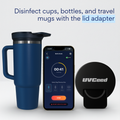
UVCeed was developed by Dr. Peter Bonutti to bring the UV-C disinfection technology used in hospital infection control out of the operating room and into the environments where ordinary people actually encounter pathogen risk. The result is the world's first smart, app-guided UV-C disinfection device - combining a medical-grade 265nm UV-C LED with machine vision, AI safety monitoring, and real-time visual confirmation of surface coverage.
For the hantavirus threat specifically, UVCeed is designed for exactly the scenario that kills people every spring: pre-treating contaminated or potentially contaminated surfaces before physical cleaning begins. A 30-second pass across a garage workbench, a cabin floor, a storage shelf, a piece of camping gear - delivered by a device that guides you in real time through exactly what has and has not been treated - reduces the viable pathogen burden on that surface before you or anyone else disturbs it.
No contact time required. No liquid that could splash. No guesswork about whether you covered the surface. The app shows you, in real time, what has been treated.
What UVCeed delivers:
- Medical-grade 265nm UV-C LED - the same wavelength used in hospital disinfection systems
- 99.9% elimination of bacteria and viruses in 30 seconds of proper exposure
- App-guided real-time visual coverage confirmation - no guessing about what you missed
- Patented AI safety monitoring - automatic shutoff if a person or pet is detected
- Machine-vision 3D surface mapping - ensures complete, even coverage
- Zero chemicals, zero residue, zero contact time
- MagSafe compatible - attaches to any iPhone 12+
- Compact and rechargeable - goes where the risk is
Currently deployed at Sarah Bush Lincoln Healthcare for professional-grade surface disinfection - the same UV-C technology and identical wavelength, now available for your home, garage, cabin, and camping gear.
The Six Hantavirus Scenarios Where UV-C Pre-Treatment Is Not Optional
The following situations represent the highest-frequency exposure scenarios for Sin Nombre hantavirus in the American West. In each case, UV-C pre-treatment of surfaces before physical cleaning is the difference between a controlled process and an aerosolization event.
1. Opening a Garage or Shed After Winter
This is the single highest-risk routine activity for hantavirus exposure in the American West. Deer mice overwinter in sheltered spaces, leaving behind droppings, urine, and nesting material on workbenches, shelving, tool handles, and flooring. Before any sweeping, wiping, or disturbance of any surface in a space that has been closed, pre-treat with UVCeed, then follow the CDC wet-method protocol.
2. Preparing a Vacation Cabin or Rental Property
Cabins that are closed for the winter are ideal mouse habitat - protected from weather, undisturbed, often with accessible food sources. Even a clean-looking cabin may have contaminated surfaces. Spring opening of a cabin is one of the most commonly cited exposure scenarios in CDC hantavirus case reports. UV-C pre-treatment of all flat surfaces before cleaning begins is the most direct risk-reduction step available.
3. Retrieving Stored Camping Gear
Tents, sleeping bags, backpacks and camp stoves stored in garages, attics or storage units are frequently found with evidence of rodent intrusion - chewed fabric, droppings in pockets, contamination that may not be visible to the naked eye. Before you pack any stored camping gear into your car, UV-C treat the exterior surfaces. Before you deploy any gear at a campsite, UV-C treat contact surfaces.
4. Crawl Space and Attic Access
Crawl spaces and attics are among the most consistently rodent-accessible areas in residential structures. Any work in these spaces - plumbing inspection, insulation, HVAC maintenance, holiday decoration retrieval - involves disturbance of surfaces that may have accumulated years of rodent contamination. UV-C pre-treatment of accessible surfaces and any items being removed is a direct pre-cleaning risk reduction step.
5. Farm and Agricultural Work
Agricultural settings - barns, grain storage, equipment sheds, hay storage - represent some of the highest-concentration hantavirus exposure environments. Rodent populations are typically large, and contamination is widespread. Workers who handle equipment, baled materials, or stored product in these spaces have elevated chronic exposure risk. Regular UV-C pre-treatment of frequently handled surfaces reduces that cumulative exposure.
6. Moving Into a Previously Occupied Home or Rental
Moving into a new home, particularly one that sat vacant, involves contact with surfaces whose contamination history is unknown. Cabinets, basement spaces, garage areas and under-sink storage are all potential rodent activity zones. UV-C pre-treatment of these spaces before you fill them with your belongings is a straightforward, zero-chemical risk reduction measure.
What Real Users Are Saying
5/5 - "We have a cabin in the mountains and lost a family friend to hantavirus years ago. Every spring opening, I now do a full UV-C treatment of every surface before we touch anything. UVCeed makes that process fast and verifiable - I can see in the app exactly what I've covered. It's changed how we approach the whole spring opening."
- Mark T., Summit County, CO
5/5 - "I'm an ER physician and hantavirus cases are not theoretical to me - I've seen what pulmonary syndrome does. The UV-C pre-treatment approach UVCeed enables is genuinely sound infection control logic. The device is the real thing - correct wavelength, proper safety controls, app-guided coverage. I recommend it to patients in rural and semi-rural areas every spring."
- Dr. Rachel S., Fort Collins, CO
5/5 - "My husband is a contractor who works in older homes with crawl space access regularly. After reading about the Colorado cases, I ordered UVCeed immediately. He now pre-treats any surface he'll be working near in an enclosed space that may have had rodent activity. It takes two minutes and we both sleep better for it."
- Dana W., Colorado Springs, CO
The Absence of Treatment Options Makes Prevention the Only Strategy
Most serious infectious diseases in the United States have at least some pharmacological backstop - a treatment protocol, an antiviral medication, a vaccine that can provide protection after potential exposure. Hantavirus has none of these options in any meaningful form.
There is no FDA-approved antiviral treatment for hantavirus pulmonary syndrome. No vaccine exists for the Sin Nombre strain that circulates in the United States. When a patient develops serious hantavirus pulmonary syndrome - the rapid fluid accumulation in the lungs that characterizes the severe phase of the disease - the medical team's options are supportive: mechanical ventilation, ECMO in severe cases, aggressive fluid management. Survival rates in patients requiring this level of intervention are not encouraging. The 40 percent overall fatality rate cited by the CDC reflects outcomes across the full spectrum of severity. In patients with severe pulmonary involvement, outcomes are significantly worse.
This is the context in which public health officials say "prevention is key." They are not being vague. They are describing a situation in which prevention is, quite literally, the only effective intervention available. There is no safety net after exposure. The intervention happens before the exposure event, or it does not happen at all.
UV-C pre-treatment of potentially contaminated surfaces, applied before any physical disturbance, is one of the most mechanistically direct prevention steps available - reducing viable viral load on surfaces before the aerosolization event that causes infection. It does not replace sealing entry points, trapping rodents, or following CDC wet-method cleaning protocols. It is the first step in a protocol that, followed correctly, makes the subsequent steps substantially safer.
Protect Your Home This Spring - Use Code SAFECLEAN for 10% Off
The Douglas County death is a reminder that hantavirus is not a historical curiosity or a rare wilderness risk. It is an active threat, on a seasonal cycle that peaks right now, in exactly the kind of spaces that most American families will be opening, cleaning, and working in over the next several weeks.
Get UVCeed at UVCeed.com - Free Shipping
Use code SAFECLEAN at checkout for 10% off. Free shipping. Satisfaction guaranteed.
Frequently Asked Questions
How does the Colorado hantavirus case differ from the cruise ship outbreak? They involve entirely different virus strains with different transmission routes. The Colorado death was caused by the Sin Nombre virus, the most common North American strain, which is contracted through contact with infected rodent droppings, urine or saliva - typically through inhalation of aerosolized dried material - and does not spread between people. The MV Hondius cruise ship outbreak involves the Andes virus, a South American strain that is the only known hantavirus capable of limited person-to-person transmission. Health officials have confirmed there is no connection between the two events. The Colorado case is domestic, environmental, and representative of the annual pattern of Sin Nombre cases that occur in the American West each spring and summer.
Why does hantavirus peak in spring and summer? Two factors drive the seasonal pattern. First, deer mouse populations, which are the primary reservoir for Sin Nombre virus, peak in spring and summer, increasing the probability of rodent presence in human-accessible spaces. Second, and more practically, spring and summer are when people open and clean spaces that have been closed over winter - garages, cabins, sheds, storage units - creating a concentrated pattern of exposure events. The Colorado CDPH specifically noted that cases "usually occur in the spring and summer" for precisely this reason. The Colorado death this week is consistent with that seasonal pattern.
How long does hantavirus survive in rodent droppings and on surfaces? This is the critical fact that most prevention guidance undersells. Sin Nombre virus can survive in dried rodent excreta for several days at room temperature, and for significantly longer periods in cool, dark, low-humidity environments - the exact conditions found in closed garages, cabins and storage spaces over winter. This means that rodent droppings from mice that may no longer be present in a space can remain infectious weeks or months after the animals deposited them. The physical appearance of the material gives no indication of whether viable virus is present.
Does UV-C light kill hantavirus? Hantavirus is an enveloped RNA virus - one of the most UV-C sensitive pathogen categories known to science. The outer lipid envelope characteristic of these viruses is highly vulnerable to UV-C irradiation at germicidal wavelengths. UV-C light at 254-265nm penetrates the envelope and destroys the viral RNA, rendering the pathogen incapable of infecting a cell. UVCeed operates at 265nm - the same wavelength used in hospital disinfection systems - and eliminates 99.9% of viruses and bacteria in 30 seconds of proper surface exposure. Used as a pre-treatment before any physical disturbance of a potentially contaminated surface, it reduces the viable viral load before the cleaning actions that risk aerosolization.
Why does the CDC say not to sweep or vacuum rodent droppings? Because sweeping and vacuuming aerosolize dried rodent waste - lifting particles that may contain viable virus directly into the breathing zone of the person cleaning. This is the most common mechanism by which people contract hantavirus during cleaning activities. The CDC recommends wetting the contaminated area first with a disinfectant solution and allowing it to soak for five minutes before any physical contact, specifically to prevent aerosolization. UV-C pre-treatment of surfaces before the wet-method cleaning adds an additional layer of viral load reduction before any disturbance begins.
Is hantavirus only a risk in rural or wilderness areas? No. While risk is elevated in rural areas with high deer mouse populations, Sin Nombre hantavirus exposure occurs in suburban and peri-urban settings regularly. Any structure that provides shelter and food access for deer mice - garages, sheds, older homes with crawl spaces, storage buildings - is a potential exposure site. The CDC's case history includes infections contracted in suburban garages and in homes within established residential neighborhoods. Geography determines the deer mouse population density, but the virus does not require a wilderness setting.
What are the first symptoms of hantavirus, and when do they appear? Symptoms typically appear between one and eight weeks after exposure, making it difficult to connect illness to a specific exposure event. Early symptoms - fever, fatigue, muscle aches - are nonspecific and often mistaken for influenza or a common viral illness. The distinguishing progression is the onset of respiratory symptoms: coughing, shortness of breath, and the rapid accumulation of fluid in the lungs that characterizes hantavirus pulmonary syndrome. Anyone who develops these symptoms and has had potential exposure to rodents or rodent-contaminated spaces in the preceding eight weeks should seek emergency medical care immediately and inform the treating physician of the potential hantavirus exposure.
Sources: Colorado Department of Public Health and Environment (May 2026 statement); CDC Hantavirus Prevention and Control guidelines; Newsweek reporting by Suzanne Blake (May 18, 2026); KDVR Denver local reporting; Dr. Luis Marcos, Stony Brook Medicine (Newsweek interview); CDC Hantavirus Pulmonary Syndrome case data 1993-present; UVCeed product specifications and laboratory testing documentation.
This article contains affiliate product information. UVCeed product claims are based on manufacturer laboratory testing and published UV-C efficacy literature. UV-C disinfection is a risk-reduction tool and does not replace CDC-recommended hantavirus prevention protocols including rodent exclusion, wet-method cleaning, and appropriate personal protective equipment. Use code SAFECLEAN for 10% off at UVCeed.com.
Want More Articles Like This?
Get research on UV-C treatment and product updates delivered to your inbox.