A viral report is making the rounds this week, and if you eat out regularly, it's worth paying attention to.
Chicago-based Affordable Seating analyzed over 2.8 million TripAdvisor reviews across roughly 40,000 restaurants, tracking mentions of "dirty restaurant," "hair in food," and pest sightings like rats and cockroaches. They then ranked the 10 worst states for restaurant cleanliness based on complaint volume.
The results? New Jersey topped the list with a staggering 320,000+ "dirty restaurant" mentions - more than eight times the top-10 average. Florida came in second, fueled by complaint volumes in tourist-heavy cities like Miami and Orlando. California ranked third, leading the pack in pest-related complaints with 960 reports of rats and roaches. Arizona, Texas, Louisiana, Alabama, Maryland, Nevada, and Georgia rounded out the top 10.
The rankings made national news and sparked heated debate online. But here's the thing most people missed while arguing about whether their state got a fair shake: the cleanliness problems that matter most aren't the ones you can see.
The Invisible Threat on Every Restaurant Table
The hair in your soup is disgusting. A cockroach sighting is a dealbreaker. But from a public health standpoint, these visible problems are actually the least dangerous part of dining out.
The real risk is microscopic.
The CDC estimates that 48 million Americans - 1 in 6 people - get sick from foodborne illness every year. That results in 128,000 hospitalizations and 3,000 deaths annually. The economic toll is a jaw-dropping $74.7 billion per year in medical costs, lost productivity, and other damages, according to USDA Economic Research Service data.
And the single biggest culprit? Norovirus - which causes 5.5 million foodborne illnesses and 22,400 hospitalizations annually in the U.S. alone. Norovirus spreads explosively through contaminated surfaces, and it's the leading cause of restaurant-associated outbreaks.
Here's what makes norovirus especially dangerous in restaurant settings: it can survive on hard surfaces like tables, menus, condiment holders, and checkout counters for days or even weeks. A single infected employee who touches a table, a plate, or a door handle can trigger an outbreak that sickens dozens - or hundreds - of customers.
The 2025-2026 season has been particularly brutal. The CDC reported over 1,078 norovirus outbreaks from August 2024 through mid-January 2025 - nearly double the outbreaks from the same period the previous year. A once-rare strain called GII.17 became dominant, catching populations off guard with little existing immunity.
Why Chemical Wipes Aren't Solving the Problem
If you've ever watched a restaurant employee give your table a quick swipe with a rag or disinfectant wipe before you sit down, you probably felt reassured. You shouldn't.
Most commercial disinfectant wipes require 4 full minutes of wet contact time to actually kill pathogens like norovirus. In reality, a busy server gives a table a 5-second wipe, the surface dries almost immediately, and the next customer sits down assuming everything is clean. It isn't.
Then there's the chemical issue. The disinfectant compounds most commonly used in restaurants - quaternary ammonium compounds, or QACs - have been found in 80% of human blood samples in recent studies. For customers and for restaurant staff who handle these chemicals hundreds of times per shift, the long-term health implications are becoming a growing concern.
And here's the irony: even when chemical disinfectants are applied correctly, they leave behind a residue on the very surfaces where people eat. Tables, high chairs, booster seats, bar tops - all coated in a thin film of chemicals that customers then touch with their hands before picking up their food.
The restaurant industry has been stuck in a cycle of using 20th-century cleaning methods to fight 21st-century pathogens. And it's not working.
What Hospitals Know That Restaurants Don't
Walk into any modern hospital, and you'll find UV-C disinfection technology in use across operating rooms, ICUs, patient rooms, and equipment sterilization areas. Ultraviolet-C light at a 265nm wavelength physically destroys the DNA and RNA of bacteria and viruses on contact. It's chemical-free, residue-free, and - critically - pathogens cannot build resistance to it the way they can with chemical disinfectants.
UV-C technology has been a gold standard in healthcare infection control for decades. But until recently, it was confined to large, expensive, industrial-grade equipment that had no place in a restaurant kitchen, let alone a dining room.
That changed with UVCeed.
UVCeed: Hospital-Grade Disinfection That Fits in Your Hand
UVCeed is a compact, rechargeable UV-C LED disinfection device designed by Dr. Peter Bonutti, a practicing orthopedic surgeon and founder of a medical device company with over 400 patents. Dr. Bonutti built UVCeed on a simple insight: the same technology that prevents infections in hospitals should be available everywhere people are at risk - including every restaurant table in America.
In 30 seconds, UVCeed eliminates up to 99.99% of bacteria and viruses - including norovirus, E. coli, Salmonella, Staphylococcus aureus, Klebsiella pneumoniae, and SARS-CoV-2. No chemicals. No residue. No 4-minute wait.
This isn't marketing language. UVCeed's effectiveness has been validated in independent, peer-reviewed research published on PubMed Central (the National Institutes of Health's scientific database), with controlled laboratory testing against the exact pathogens that cause the most restaurant-associated illness.
The device is EPA-registered, CE-certified, and has earned a Fast Company Next Big Things in Tech Award and a Mom's Choice Award. It's deployed at Sarah Bush Lincoln Hospital for staff use, and it's recommended by licensed physicians for home and travel use.
How UVCeed Works - And Why It's Smarter Than Anything Else on the Market
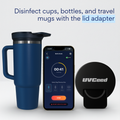
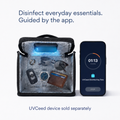
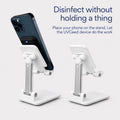
UVCeed isn't just a UV light. It's an AI-powered disinfection system that connects to your smartphone (iOS or Android) and uses patented technology no other consumer device can match:
| Feature | What It Does |
|---|---|
| AI-Powered Dosage Control | Machine learning calculates the precise UV-C dose for each surface based on type, distance, angle, and movement - ensuring full pathogen elimination every time. |
| Augmented Reality Guidance | Your phone screen shows treated areas in real time, turning green when disinfection is complete. You literally see what's clean and what isn't. |
| Machine Vision Safety | Built-in camera detection automatically pauses UV-C light if a person or pet enters the treatment zone - a patented safety feature no competitor offers. |
| 30-Second Cycle | Hospital-grade 265nm UV-C LED. Mercury-free. Works in the time it takes a server to pour your water. |
| Portable & Rechargeable | Pocket-sized. MagSafe or adhesive smartphone mount. Travels everywhere you eat. |
For Diners: Take Control of Your Own Table
Let's be real: you can't control whether the restaurant you're sitting in uses proper disinfection protocols. You can't see norovirus on a table. You can't tell whether the wipe the busser used actually had enough contact time to kill anything.
But you can take 30 seconds to protect yourself.
UVCeed was designed for exactly this moment. Pull it out, treat your table, your silverware placement area, your child's high chair, the menu - and actually see on your phone screen that the surface is disinfected. It's not paranoia. It's the same level of precaution that doctors take in their own homes.
People who are already carrying UVCeed everywhere they eat:
- Parents disinfecting high chairs, booster seats, and kids' tray areas before their children touch them
- Business travelers treating hotel restaurant tables, bar tops, and room service trays
- Immunocompromised diners who can't afford to gamble on whether a table was properly cleaned
- Health-conscious professionals who eat out 5+ times per week and want real protection, not theater
- Anyone who saw this week's "dirtiest restaurant states" ranking and realized they've been trusting a system that isn't working
For Restaurants: The Smartest Operators Are Already Ahead of This
Here's the business reality that every restaurant owner and general manager should understand: a single norovirus outbreak can cost a casual dining restaurant up to $2.2 million in lost revenue, fines, lawsuits, legal fees, insurance premium increases, and staff retraining, according to a Johns Hopkins Bloomberg School of Public Health study published in the Public Health Reports journal.
Even a small outbreak affecting just 5 to 10 people can cost roughly $8,300 - and that's if no lawsuit or fine is involved. Larger outbreaks have driven 14.6% sales drops at major chains and even forced restaurants into bankruptcy (as happened to Chi-Chi's after a 2003 hepatitis A outbreak that permanently closed the brand in the U.S.).
Meanwhile, the CDC is actively investigating 17 to 36 multistate foodborne illness cases every single week as of February 2026. Regulatory enforcement is tightening. Customer expectations around hygiene have permanently shifted since the pandemic. And now viral rankings like this week's "dirtiest states" list are putting restaurant cleanliness directly into the national conversation.
The forward-thinking restaurants that survive and thrive in this environment will be the ones that adopt verifiable, visible disinfection protocols that go beyond the chemical wipe. UVCeed gives restaurants a tool to treat high-touch surfaces between seatings in 30 seconds - tables, menus, payment terminals, door handles, restroom fixtures - with real-time verification that the job was done correctly.
It's not a replacement for standard cleaning. It's the missing step after cleaning that actually prevents illness. And when your customers can see your staff using hospital-grade UV-C technology between seatings, it sends a powerful message: this restaurant takes your health seriously.
The Numbers That Should Worry Every Restaurant (and Every Diner)
| Statistic | Source |
|---|---|
| 48 million Americans get foodborne illness annually | CDC |
| $74.7 billion annual economic cost of foodborne illness in the U.S. | USDA Economic Research Service |
| 5.5 million norovirus foodborne illnesses per year | CDC, 2025 estimate |
| $2.2 million potential cost of a single norovirus outbreak to a restaurant | Johns Hopkins Bloomberg School of Public Health |
| 1,078 norovirus outbreaks in a single recent season (nearly 2x prior year) | CDC |
| 4 minutes required wet contact time for chemical wipes to kill norovirus | EPA label requirements |
| 30 seconds time for UVCeed to eliminate 99.99% of pathogens on a surface | Independent lab testing (PubMed Central) |
| 80% of human blood samples containing QAC chemical disinfectant residue | Published research |
Stop Hoping Your Table Is Clean. Know It Is.
Whether you're a diner who wants real protection, a parent who refuses to put their toddler in an untreated high chair, a traveler who eats in restaurants you've never been to before, or a restaurant operator who understands that one outbreak can undo years of reputation - UVCeed changes the equation.
It's the same science hospitals use. Designed by a surgeon. Validated by independent labs. Published in peer-reviewed journals. And it works in 30 seconds.
TAKE CONTROL OF YOUR TABLE
For Diners: Get the UVCeed Smart Disinfection Device and protect yourself and your family every time you eat out. 30 seconds. No chemicals. Real proof it's working.
For Restaurant Operators: Contact UVCeed about commercial deployment and give your customers the visible, verifiable hygiene standard they're now demanding.
Visit uvceed.com - Free shipping and a 30-day money-back guarantee.
Also available on Amazon.
Commercial and multi-unit inquiries: info@uvceed.com
Disclaimer: This article is sponsored content. UVCeed is a surface disinfection device and is not a medical device. It does not treat, cure, or prevent disease in humans. Effectiveness is based on independent lab testing under controlled conditions; actual results may vary. UV-C light should always be used as directed. The restaurant ranking data cited in this article is based on Affordable Seating's analysis of crowdsourced TripAdvisor reviews, not official health inspection data. CDC and USDA data cited herein is publicly available. Always follow local health authority guidelines for food safety and hygiene.
Want More Articles Like This?
Get research on UV-C treatment and product updates delivered to your inbox.