A Science-Based Guide to Understanding Fungal Threats and the Power of Ultraviolet Germicidal Technology
A deadly drug-resistant fungus is spreading rapidly through healthcare facilities across the United States, and researchers are warning that traditional antimicrobial treatments are increasingly ineffective. As Candida auris infections surge to record levels, health-conscious individuals and facility managers are turning to proven UVC disinfection technology as a critical line of defense.
The Growing Threat: What Is Candida Auris?
First identified in Japan in 2009 from a patient's ear sample, Candida auris (C. auris) has rapidly evolved into one of the most concerning infectious disease threats of our time. The Centers for Disease Control and Prevention (CDC) has designated it an "urgent antimicrobial threat" - the first fungal pathogen to receive this alarming classification.
According to recent CDC data, approximately 7,000 cases were identified across dozens of U.S. states in 2025 alone, and the pathogen has been confirmed in at least 60 countries worldwide. What makes this superbug particularly dangerous is its remarkable ability to survive on surfaces, resist multiple classes of antifungal medications, and spread rapidly in healthcare environments.
Why C. Auris Is So Dangerous
Unlike many other fungi, C. auris possesses several characteristics that make it exceptionally difficult to control:
-
Multi-Drug Resistance: The fungus has developed resistance to multiple classes of antifungal medications, leaving physicians with limited treatment options.
-
Surface Persistence: C. auris can survive on human skin and cling to hospital surfaces and medical equipment for extended periods, facilitating rapid transmission.
-
Diagnostic Challenges: The pathogen is frequently misdiagnosed as other common Candida species, delaying appropriate treatment and infection control measures.
-
High Mortality Rate: Once infected, mortality rates can reach approximately 50% in some patient populations, particularly among those who are immunocompromised or critically ill.
As Dr. Marc Siegel, Fox News senior medical analyst and clinical professor of medicine at NYU Langone, has explained: C. auris is resistant to multiple antifungal drugs, and it tends to spread in hospital settings on equipment being used on immunocompromised patients, such as ventilators and catheters.
The Science of UVC Disinfection: A Proven Solution
While pharmaceutical researchers race to develop new antifungal treatments, there is an existing technology with a proven track record against even the most resilient pathogens: ultraviolet-C (UVC) light. Operating in the 200-280 nanometer wavelength range, UVC radiation represents one of the most powerful germicidal tools available - and understanding how it works reveals why it is so effective against drug-resistant organisms.
How UVC Light Destroys Pathogens
The primary mechanism of UVC disinfection is a process called photodimerization. When UVC light - ideally operating between 254-264 nm - contacts a microbial cell, it is absorbed by the organism's genetic material. This triggers a cascade of destructive events:
-
DNA Damage: The UVC radiation causes thymine or cytosine bases in the DNA to bond together abnormally, creating structural defects called "pyrimidine dimers."
-
Replication Failure: These structural changes prevent the organism from replicating its genetic code. Without the ability to reproduce, the pathogen cannot infect, spread, or establish colonies.
-
Cellular Destruction: At higher intensities, UVC radiation also damages fungal cell membranes and essential proteins, further ensuring pathogen elimination.
What makes UVC technology particularly valuable in the fight against drug-resistant organisms is that it attacks the fundamental genetic machinery of the pathogen. Unlike chemical disinfectants or pharmaceutical treatments, pathogens cannot develop resistance to UVC radiation - the laws of physics apply equally to all microorganisms, regardless of their resistance profiles.
UVC Effectiveness Against Fungi: What the Research Shows
While UVC is highly effective against a broad spectrum of pathogens, its performance against fungi requires particular attention. Scientific research has established that fungi - including yeasts like Candida species - are generally more resilient than bacteria and viruses. Understanding these differences is essential for implementing effective disinfection protocols.
Why Fungi Require Higher UVC Doses
Fungi have evolved several structural defenses that provide partial protection against ultraviolet radiation:
-
Protective Pigments: Many fungi, such as Aspergillus niger, produce melanin. Similar to how melanin protects human skin, this pigment absorbs and scatters UVC light, providing a degree of shielding for the organism's DNA.
-
Spore Resilience: Fungal spores are evolutionary survival structures designed to withstand harsh environmental conditions. Their thick cell walls can require 10-50 times more UVC energy than vegetative bacterial cells to achieve equivalent disinfection levels.
-
Repair Mechanisms: Some fungi possess photoreactivation capabilities - they can activate DNA repair enzymes when exposed to visible light following UVC treatment. This underscores the importance of adequate UVC dosing.
UVC Dosage Requirements by Organism Type
UVC efficacy is measured by dose (fluence), calculated as intensity multiplied by exposure time. The following table illustrates the varying energy requirements for different pathogen types:
| Microorganism | Type | Required Dose for 90% Kill (mJ/cm²) |
|---|---|---|
| E. coli | Bacteria | ~3-5 |
| Candida albicans | Yeast | ~10-20 |
| Penicillium chrysogenum | Mold Spore | ~50-60 |
| Aspergillus niger | Black Mold | ~130-300+ |
These figures demonstrate why proper UVC device selection and usage protocols matter. A device designed primarily for bacterial elimination may not deliver sufficient energy to neutralize hardy fungal spores - particularly the highly resistant varieties increasingly found in healthcare environments.
Practical Applications of UVC Technology
UVC disinfection has established itself across multiple critical sectors, providing an additional layer of protection beyond traditional cleaning methods. Understanding these applications helps illustrate the technology's versatility and effectiveness.
Healthcare Environments
Hospitals and long-term care facilities face the greatest burden from drug-resistant pathogens like C. auris. UVC technology is deployed in several ways:
-
Surface Disinfection: Terminal cleaning of patient rooms, operating theaters, and high-touch surfaces.
-
Equipment Sterilization: Disinfection of medical devices, tablets, phones, and other items that may harbor pathogens.
-
Air Purification: Upper-room and in-duct UVC systems that neutralize airborne pathogens.
HVAC Systems
Building ventilation systems can become reservoirs for mold growth, particularly on cooling coils and drip pans. UVC installation within HVAC systems prevents microbial colonization, maintains system efficiency, and eliminates the phenomenon known as "dirty sock syndrome" - the musty odor caused by biological growth on cooling components.
Food Safety and Processing
The food industry utilizes UVC technology to extend product shelf life by treating surface molds on fruits, vegetables, and other perishable items. This application reduces spoilage losses while decreasing reliance on chemical preservatives.
Personal and Home Use
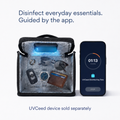
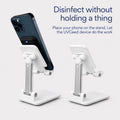
Portable UVC devices have expanded the technology's reach beyond institutional settings. Consumers now use handheld units to disinfect personal items, travel accommodations, and household surfaces - bringing hospital-grade protection into everyday life.
Critical Considerations for Effective UVC Disinfection
While UVC technology offers powerful germicidal capabilities, achieving optimal results requires understanding several important factors:
Line-of-Sight Limitation
UVC light travels in straight lines and cannot penetrate solid materials. If a pathogen is hidden in a carpet fiber, behind dust particles, or in the shadow of an object, the light will not reach it. Effective disinfection requires direct exposure of target surfaces.
Adequate Dosing
As demonstrated by the dosage requirements table, different pathogens require different energy levels for effective neutralization. A UVC device must deliver sufficient intensity over adequate exposure time to achieve meaningful disinfection - particularly for resilient organisms like fungal spores.
Safety Protocols
UVC radiation can cause harm to human skin and eyes. Proper UVC devices incorporate safety features such as motion sensors, timers, and shielding to prevent accidental exposure. Users should follow manufacturer guidelines and ensure spaces are unoccupied during operation.
Material Compatibility
Prolonged or repeated UVC exposure can affect certain materials over time, potentially yellowing plastics, weakening fabrics, or degrading coatings. Modern UVC devices are designed to minimize these effects while maintaining germicidal effectiveness.
The Future of Pathogen Control: Why UVC Matters More Than Ever
As researchers at the Hackensack Meridian Center for Discovery and Innovation have emphasized, the global spread of C. auris and other drug-resistant pathogens demands a multi-faceted response. Their recent scientific review calls for the development of novel treatment approaches, improved diagnostic methods, and enhanced surveillance mechanisms.
However, there is encouraging news on the research front. Scientists at the University of Exeter in England have identified a potential vulnerability in C. auris related to its iron acquisition mechanisms. This discovery may eventually lead to new therapeutic strategies. As one researcher noted, they may have uncovered a key weakness in this lethal pathogen during active infection.
While pharmaceutical research continues, UVC technology provides an immediate, proven solution for environmental disinfection. Unlike treatments targeting specific biological pathways - which pathogens can evolve to circumvent - UVC attacks the fundamental genetic structure of all microorganisms through immutable physical processes.
Health experts consistently emphasize that C. auris is not a threat to healthy individuals with intact immune systems. The primary concern centers on vulnerable populations in healthcare settings. However, the pathogen's ability to survive on surfaces means that environmental disinfection plays a crucial role in preventing transmission chains that could ultimately reach at-risk individuals.
Take Control of Your Environment with UVCeed
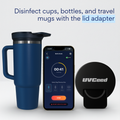
In an era of emerging infectious threats and drug-resistant pathogens, proactive environmental disinfection has never been more important. The UVCeed device brings professional-grade UVC technology into a portable, user-friendly format designed for both personal and professional applications.
Whether you are a healthcare professional seeking additional protection for patients, a facility manager responsible for occupant safety, or a health-conscious individual looking to safeguard your family, UVCeed provides a scientifically-proven layer of defense against bacteria, viruses, and fungi - including the drug-resistant organisms making headlines today.
Ready to Add UVC Protection to Your Defense Strategy?
Join thousands who trust UVCeed for science-backed disinfection.
Why Choose UVCeed?
-
Proven Technology: UVC germicidal technology has been validated by decades of scientific research and real-world application.
-
Optimal Wavelength: Engineered to operate at peak germicidal effectiveness within the 254-264nm range.
-
Safety Features: Built-in protections ensure safe operation in home and professional environments.
-
Portable Design: Take hospital-grade disinfection capability wherever you need it - home, office, travel.
-
No Chemical Residue: Pure light-based disinfection leaves no toxic residues or harmful byproducts.
Protect what matters most. Order your UVCeed device today.
References and Further Reading
The information presented in this article is drawn from peer-reviewed scientific literature, government health agencies, and established medical institutions. Key sources include:
Disclaimer: This article is provided for educational and informational purposes only and should not be construed as medical advice. UVC devices are intended for environmental surface disinfection and are not medical devices. Individuals with health concerns should consult qualified healthcare professionals. The UVCeed device should be used according to manufacturer instructions and applicable safety guidelines.
Want More Articles Like This?
Get research on UV-C treatment and product updates delivered to your inbox.