Sending your child to college is one of those moments that catches you off guard emotionally, even when you've been preparing for it for years. You've done the campus tours, filled out the FAFSA, bought the extra-long twin sheets. You've probably even had the talk about alcohol and staying safe.
But there's something else I want to talk to you about - something that doesn't come up in orientation packets but keeps parents up at night once they hear about it. It's bacterial meningitis, and I want to give you the honest, complete picture so you can make informed decisions about protecting your student.
I'm not here to scare you. I'm here because I care about families, and I think you deserve better information than you're probably getting.
Why College Students Face Higher Risk
Let me start with some context that might surprise you.
Meningococcal bacteria - the organisms that cause the most dangerous form of bacterial meningitis - live in the noses and throats of about 5-15% of the general population without ever causing problems. Most carriers never get sick and don't even know they're carrying these bacteria.
But college campuses create a perfect storm of conditions that increase both the likelihood of transmission and the risk of the bacteria causing serious disease.
The dormitory factor is significant. Studies show that college freshmen living in residence halls have a six-fold increased risk of meningococcal disease compared to other undergraduates. Six times higher. That's not a small difference.
Why? Think about what dorm life actually looks like: shared bathrooms, communal kitchens, late-night study sessions in close quarters, borrowing your roommate's water bottle during a cram session, sharing food and drinks at parties. These are all normal parts of the college experience. They're also all potential transmission routes.
The Numbers You Should Know
I want to be careful here because meningitis statistics can be presented in ways that either minimize or exaggerate the actual risk. Let me give you the honest picture.
Meningococcal disease is rare. In the United States, there are roughly 200-400 cases per year across all age groups. On college campuses specifically, there are an average of 20 cases and 2-4 outbreaks due to the most common strain (serogroup B) annually.
Those numbers might sound small. But here's what makes them significant:
The case fatality rate is 5-15%. Of those who get meningococcal disease, roughly one in ten will die - even with treatment. And it can happen shockingly fast. A student can go from feeling fine to fighting for their life in less than 24 hours.
Up to 20% of survivors have permanent complications. We're talking about hearing loss, brain damage, limb amputation, and seizure disorders. These are young people at the beginning of their adult lives.
The CDC reports that U.S. cases have increased sharply since 2021 and now exceed pre-pandemic levels. This isn't a declining threat; it's one that's growing.
When I weigh those statistics - the rarity of cases against the severity of outcomes - I understand why this keeps parents awake at night. A 1-in-450,000 chance of your child getting a disease sounds reassuring until you remember that disease could kill them or change their life forever in a matter of hours.
The Surface Transmission Question Nobody Talks About
Here's where I want to challenge a common assumption.
You've probably heard that meningococcal bacteria can't survive outside the human body for very long - that they die within minutes once they leave a host. This belief has shaped public health messaging for decades, and it's led many people to focus exclusively on direct person-to-person transmission.
But the science tells a more nuanced story.
Research has shown that meningococcal bacteria can survive on surfaces - glass, plastic, fabric - for hours to days under the right conditions. One comprehensive study found viable bacteria on surfaces for up to 72 hours. Canadian public health data reports survival times of up to 8 days in some conditions.
That doesn't mean surface transmission is the primary route. It's not. Direct contact through respiratory droplets, kissing, and sharing saliva is how most transmission occurs. But the possibility of fomite (surface) transmission has been, in the researchers' words, "more assumed than demonstrated" to be negligible.
What does this mean practically?
Think about a typical college dorm: the communal bathroom faucets, the shared refrigerator handles, the water fountain buttons, the microwave door that fifty students touch every day. Think about the party where drinks get set down and picked back up, where cups get mixed up, where someone sick might cough near a shared food table.
I'm not suggesting that every surface is dangerous. I am suggesting that surface hygiene matters more in high-density living situations than we've traditionally acknowledged - especially during outbreak situations.
What Vaccination Can and Can't Do
Vaccination is absolutely essential. Let me be clear about that. If your child is heading to college and hasn't been vaccinated against meningococcal disease, please talk to your healthcare provider before they leave.
But I also want you to understand the limitations, because I've seen too many parents assume vaccination equals complete protection.
There are two types of meningococcal vaccines, and they cover different strains:
The MenACWY vaccine (brands like Menactra and Menveo) covers four serogroups: A, C, W, and Y. This vaccine is routinely recommended for all adolescents at ages 11-12 with a booster at age 16. Most college students heading to campus should have received this.
The MenB vaccine (Bexsero and Trumenba) covers serogroup B - which is now the predominant cause of meningococcal disease in college-age students. Here's the catch: this vaccine is not routinely recommended for all adolescents. It's only recommended for high-risk individuals and during outbreaks, or based on individual clinical decision-making.
What this means is that even fully vaccinated students may not be protected against the strain most likely to cause outbreaks on campus. The serogroup B vaccine uptake remains low - only about 22% of 17-year-olds have received even one dose, compared to nearly 89% for the MenACWY vaccine.
I'd encourage you to have a conversation with your healthcare provider about whether the MenB vaccine makes sense for your student, especially if they'll be living in a dormitory. It's a personal decision, but it should be an informed one.
The Behaviors That Increase Risk
I want to talk honestly about this because your student needs to understand it too.
Certain behaviors common in college environments have been associated with increased meningococcal transmission:
Sharing drinks and eating utensils. This is probably the most direct route of transmission after kissing. That communal punch bowl at the party, the "here, try this" culture of sharing food and drinks - these create opportunities for bacteria to spread.
Smoking and vaping. Both active and passive smoking damage the respiratory tract's natural defenses and have been associated with higher carriage rates and disease risk. Sharing cigarettes, vapes, or joints is particularly risky because you're literally exchanging saliva.
Alcohol consumption. Beyond the impaired judgment that leads to more sharing behaviors, heavy drinking may also affect immune function.
Sleep deprivation. College students are notorious for not sleeping enough. Chronic sleep deprivation compromises immune function and may increase susceptibility to infection.
Crowded social situations. Bars, parties, concerts, sporting events - anywhere that involves close contact with lots of people for extended periods increases exposure risk.
I'm not suggesting your student should avoid all social interaction. That's neither realistic nor healthy. But awareness matters. Knowing that sharing drinks is a risk factor might make them think twice about grabbing someone else's cup at a party.
[IMAGE PROMPT 4]: A college party scene from a health-aware perspective - students socializing, but one student politely declining to share a drink, perhaps holding up their own cup. The mood should be positive and social, not preachy. The image shows healthy boundary-setting in a normal college context. Warm lighting, candid feel.
A Layered Approach to Protection
Here's how I think about protecting college students from meningitis: it's not about any single intervention, but about layers of protection that work together.
Layer 1: Vaccination Get the MenACWY vaccine and booster if not already done. Discuss the MenB vaccine with your healthcare provider. This is your foundation.
Layer 2: Behavior awareness Have honest conversations with your student about the specific behaviors that increase risk. They're adults now; they can handle the truth.
Layer 3: Symptom recognition Make sure your student knows the warning signs: sudden high fever, severe headache, stiff neck, sensitivity to light, confusion, and the characteristic rash that doesn't fade when you press a glass against it. Meningitis can progress from mild symptoms to life-threatening in hours. Early treatment saves lives.
Layer 4: Environmental hygiene This is where surface disinfection comes in - not as a replacement for vaccination or behavior change, but as an additional layer of protection in high-risk environments.
Why Surface Disinfection Matters in Dorm Settings
I've spent a lot of time studying how pathogens move through shared environments, and college residence halls present unique challenges.
Think about the surfaces your student will touch every single day: door handles, bathroom fixtures, laundry machines, elevator buttons, vending machine keypads, shared kitchen appliances, computer keyboards in the common room. These surfaces are touched by dozens or hundreds of students daily, and standard cleaning protocols often aren't sufficient to truly disinfect them.
Traditional chemical disinfectants face the same limitations I've discussed in other contexts: they require extended contact times that rarely happen in practice, they leave chemical residues, and they may not be practical for frequent use in communal living spaces.
This is where UVC disinfection offers a meaningful advantage.
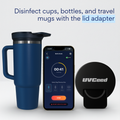
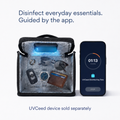
UVC light can inactivate meningococcal bacteria - along with a broad spectrum of other pathogens - in seconds rather than minutes. It leaves no chemical residue, making it safe for use on any surface students might touch. And UVCeed's device provides verification that the disinfection actually worked, which matters when you're trying to protect against something as serious as meningitis.
I'm not suggesting that surface disinfection alone will prevent meningitis. The disease is primarily transmitted through direct contact. But in an outbreak situation, or as part of a comprehensive protection strategy, having the ability to quickly disinfect high-touch surfaces in shared living spaces makes sense.
What I'd Tell My Own Family
If someone I loved was heading to college this fall, here's what I'd want them to know:
Get vaccinated. Both the MenACWY and MenB vaccines. The protection isn't perfect, but it's substantial, and the disease is too serious to leave any layer of protection on the table.
Don't share drinks. Ever. I know it seems like a small thing, but it's one of the highest-risk behaviors for transmission. Bring your own water bottle everywhere and don't let anyone else use it.
Know the symptoms. Severe headache, stiff neck, high fever, sensitivity to light, confusion, vomiting, and rash. If you experience these, don't wait to see if you feel better tomorrow. Get to a health center immediately. Hours matter.
Take care of yourself. Sleep, eat well, manage stress. A healthy immune system is your first line of defense against any infection, including this one.
Be aware of your environment. In outbreak situations, think about the surfaces you're touching and whether they've been properly disinfected. Consider having a personal UVC device for your room and belongings - it takes seconds to use and gives you one more layer of protection.
Don't panic, but don't dismiss the risk. Meningitis is rare. But it's also one of the most serious infections a young person can get. Taking reasonable precautions doesn't mean living in fear; it means being smart.
For the Parents
I know this is hard. You're sending your child into an environment you can't control, trusting them to make good decisions, and hoping the precautions you've put in place are enough.
Meningitis is scary precisely because it can strike so fast and so severely. But it's also preventable - through vaccination, through behavior awareness, through environmental hygiene, and through early recognition of symptoms.
The students who face the highest risk are those who are unvaccinated, engage in high-risk behaviors without awareness, and don't recognize the symptoms in time. You have the power to make sure your child isn't in that category.
Have the conversation. Schedule the vaccine appointments. Send them off with the knowledge they need to protect themselves. And maybe tuck a UVC device in that care package along with the snacks and the quarters for laundry.
They're going to have an amazing experience. Your job is just to make sure they stay healthy enough to enjoy it.
Key Takeaways
- College freshmen in dormitories face 6x higher risk of meningococcal disease than other undergraduates
- U.S. cases have increased sharply since 2021 and now exceed pre-pandemic levels
- Meningococcal bacteria can survive on surfaces for hours to days - not just minutes as commonly believed
- The MenB vaccine (covering the most common college outbreak strain) is not routinely recommended and has only ~22% uptake among teens
- Sharing drinks, smoking, sleep deprivation, and crowded social settings all increase transmission risk
- Symptoms can progress from mild to life-threatening in less than 24 hours - early recognition saves lives
- A layered protection approach combining vaccination, behavior awareness, symptom recognition, and environmental hygiene provides the best defense
Preparing your student for college? Learn how UVCeed can be part of their health toolkit. [Explore our solutions →]
Have questions about dorm safety and disinfection? [Contact our team →]
References:
- CDC Meningococcal Disease Surveillance and Trends
- Emerging Infectious Diseases: University-Based Outbreaks of Meningococcal Disease, 2013-2018
- PMC: Survival of Neisseria meningitidis outside of the host
- PMC: Environmental survival of Neisseria meningitidis
- Public Health Agency of Canada: Neisseria meningitidis Pathogen Safety Data Sheet
- American College Health Association Guidelines
- Massachusetts Department of Public Health: Meningococcal Disease and College Students
- Minnesota Department of Health: Meningococcal Disease and Vaccination in College Students
Want More Articles Like This?
Get the latest research on UV-C disinfection, health protection, and product updates delivered to your inbox. Join thousands of readers who stay ahead of the curve.