With a 40-75% fatality rate, no vaccine, and no treatment, this bat-borne virus is on the WHO's priority pathogen list. Here's what you need to know - and how to protect yourself.
While the world focused on COVID-19, another virus has been quietly causing outbreaks in Asia with a mortality rate that makes coronavirus look mild by comparison.
Nipah virus kills between 40% and 75% of the people it infects. Some outbreaks have reached 100% fatality. There is no approved vaccine. There is no specific treatment. And as of January 2026, cases are actively being reported in India and Bangladesh.
This isn't fearmongering. It's the reality that infectious disease experts have been warning about for years. The WHO lists Nipah as a priority pathogen with pandemic potential - one of the diseases most likely to cause a future global health emergency.
Here's what you need to know.
What Is Nipah Virus?
Nipah virus (NiV) is a zoonotic pathogen - meaning it spreads from animals to humans - belonging to the Paramyxoviridae family. It was first identified in 1999 during an outbreak in Malaysia that infected pig farmers. The virus is named after Sungai Nipah, the Malaysian village where it was discovered.
The natural hosts of Nipah virus are fruit bats of the Pteropus genus, commonly called flying foxes. These bats carry the virus without becoming sick, shedding it through their saliva, urine, and feces. The virus can then spread to humans through multiple pathways:
Direct bat exposure: Contact with bat secretions or consuming food contaminated by bats
Intermediate animal hosts: Pigs and other domestic animals that consume bat-contaminated food, then transmit the virus to humans
Contaminated food products: Particularly raw date palm sap, which bats frequently contaminate while feeding
Human-to-human transmission: Through close contact with infected individuals, their bodily fluids, or contaminated surfaces
That last point is critical. Unlike many zoonotic diseases that only spread from animals to humans, Nipah can spread directly between people. In Bangladesh, approximately half of all Nipah cases result from person-to-person transmission - often among family caregivers and healthcare workers.
The Current Outbreak: January 2026
Right now, health authorities are managing an active Nipah outbreak in West Bengal, India. As of late January 2026, five confirmed cases have been reported in Kolkata, with approximately 100 people under quarantine.
The outbreak began when two nurses at a hospital fell ill with high fevers and respiratory symptoms in late December. They tested positive for Nipah in mid-January. Contact tracing has identified 190 individuals who may have been exposed.
This is West Bengal's first Nipah outbreak in 19 years - previous outbreaks occurred in 2001 and 2007. Meanwhile, the neighboring state of Kerala has seen near-annual outbreaks since 2018, with four confirmed cases (including two deaths) already in 2025.
Bangladesh, where Nipah is now considered endemic, reported four fatal cases in 2025. The country has documented 347 total Nipah cases since surveillance began, with a cumulative fatality rate of 71.7%.
Thailand has implemented airport screening for travelers arriving from West Bengal. Health authorities across the region are on high alert.
Why Nipah Is So Dangerous
Several characteristics make Nipah virus particularly concerning:
Extremely high fatality rate: The case fatality rate ranges from 40% to 75% depending on the outbreak and healthcare infrastructure. Some outbreaks have reached 100% mortality. For comparison, COVID-19's fatality rate is estimated at 0.5-2%, and seasonal flu is around 0.1%.
No approved treatment: There are no specific antiviral drugs approved for Nipah. Treatment consists entirely of supportive care - managing symptoms while hoping the patient's immune system prevails. Some experimental treatments like Remdesivir and monoclonal antibodies have shown promise, but none are widely available.
No approved vaccine: Despite years of research, no Nipah vaccine has been approved for general use. A military vaccine exists for certain adenoviruses. For Nipah, multiple candidates are in clinical trials, with the first Phase II trial launching in Bangladesh in late 2025. But nothing is available today.
Long incubation period: Symptoms can take 4 to 14 days to appear after infection, allowing the virus to spread before anyone knows they're sick.
Severe neurological effects: Nipah attacks the central nervous system, causing acute encephalitis (brain inflammation) that leads to seizures, confusion, and coma. Even survivors often suffer long-term neurological damage including memory loss, cognitive impairment, and personality changes.
Can reactivate: The virus can lie dormant in survivors and reactivate months or years later. Deaths from reactivated latent Nipah infection have been documented.
Person-to-person transmission: The ability to spread between humans, particularly in healthcare settings, creates outbreak potential that purely animal-to-human diseases don't have.
How Nipah Spreads
Understanding transmission is essential for protection.
Primary transmission (animal to human):
The most common route in Bangladesh is consumption of raw date palm sap contaminated by fruit bats. Bats visit date palm trees at night, licking the sap and frequently urinating in the collection pots. Studies using infrared cameras have confirmed this behavior. People who drink the raw sap the next morning can become infected.
Nipah virus is remarkably stable in sugar-rich solutions like date palm sap - it can survive for at least 7 days at room temperature and tolerates pH levels from 3 to 11.
In Malaysia, the original outbreak spread from bats to pigs (who ate contaminated fruit dropped by bats), then from pigs to farmers and abattoir workers through respiratory secretions and contaminated tissues.
Secondary transmission (human to human):
Nipah spreads through close contact with infected individuals - specifically through exposure to respiratory secretions, saliva, urine, and other bodily fluids. Healthcare workers and family caregivers are at highest risk.
In the 2001 Siliguri, India outbreak, a single patient admitted to a hospital infected 23 hospital staff members and 8 visitors. 75% of all cases in that outbreak occurred among hospital personnel or people who visited the hospital.
Surface contamination (fomites):
Research from Bangladesh has documented that Nipah virus can survive on surfaces and potentially transmit through contaminated objects (fomites). Studies found Nipah virus RNA on hospital surfaces including towels, bed sheets, and bed rails near infected patients.
Related paramyxoviruses can survive on surfaces for up to 10 hours. While the exact duration of Nipah's infectivity on surfaces is still being studied, evidence suggests it varies from a few hours to approximately 2 days depending on temperature, humidity, and surface type.
Symptoms: What to Watch For
Nipah infection progresses rapidly. Symptoms typically begin 4-14 days after exposure:
Initial symptoms (days 1-3):
- Fever
- Headache
- Muscle pain (myalgia)
- Sore throat
- Vomiting
- Fatigue
These early symptoms resemble many common illnesses, making early diagnosis challenging.
Progression (days 3-7):
- Dizziness
- Drowsiness
- Altered consciousness
- Respiratory distress
- Atypical pneumonia
Severe stage:
- Acute encephalitis (brain inflammation)
- Seizures
- Coma
- Acute respiratory distress syndrome (ARDS)
- Multi-organ dysfunction
The progression from initial symptoms to coma can occur within 24-48 hours. Death, when it occurs, typically results from encephalitis or respiratory failure.
Even patients who survive often face long-term consequences: approximately 20% of survivors experience persistent neurological problems including seizures, personality changes, and cognitive deficits.
Who Is at Risk?
While anyone can contract Nipah virus, certain groups face elevated risk:
Geographic risk: People living in or traveling to Bangladesh, India (particularly Kerala and West Bengal), and parts of Southeast Asia where Pteropus bats are present
Occupational risk: Healthcare workers, pig farmers, date palm sap collectors, abattoir workers, fruit farmers, and researchers working with the virus
Behavioral risk: People who consume raw date palm sap, handle sick animals, or eat fruit that may have been contaminated by bats
Caregiver risk: Family members providing close-contact care to infected individuals
Healthcare setting risk: Hospital staff and visitors, particularly in facilities with limited infection control
Prevention: What You Can Do
Since there's no vaccine or treatment, prevention is your only defense.
If you're in or traveling to endemic areas:
-
Avoid raw date palm sap. If date palm sap is collected, it should be boiled or fermented before consumption. The virus cannot survive high temperatures.
-
Wash and peel all fruits before eating. Discard any fruit that shows signs of bat bites or has fallen to the ground.
-
Avoid contact with sick pigs or other animals in areas where Nipah is known to occur.
-
Stay away from areas where fruit bats roost. Don't climb trees where bats congregate.
-
Don't consume partially eaten fruit that may have been contaminated by bat saliva.
If caring for someone with suspected or confirmed Nipah:
-
Use full personal protective equipment (PPE) including gloves, gown, eye protection, and N95 respirator or higher.
-
Practice rigorous hand hygiene before and after any patient contact.
-
Disinfect surfaces frequently. Nipah is an enveloped virus, making it susceptible to many disinfectants.
-
Isolate the patient to prevent transmission to others.
-
Limit the number of caregivers to reduce exposure opportunities.
General prevention:
-
Practice good hand hygiene. Wash hands frequently with soap and water.
-
Disinfect high-touch surfaces particularly when traveling or in healthcare settings.
-
Be aware of symptoms if you've been in endemic areas or had potential exposure.
Why Surface Disinfection Matters
The evidence that Nipah can contaminate surfaces - and potentially spread through fomites - has critical implications for protection.
In Bangladesh's hospital outbreak studies, Nipah virus RNA was detected on multiple surfaces near patients: towels, bed sheets, and bed rails. The combination of surface contamination, limited cleaning practices, and poor hand hygiene compliance contributed to healthcare-acquired infections.
The researchers explicitly stated: "To reduce the risk for fomite transmission of NiV, infection control should target hospital surfaces."
This isn't just a hospital problem. Anywhere an infected person has been—their home, transportation, public spaces - potentially harbors contaminated surfaces during the infectious period.
UV-C: Effective Against Enveloped Viruses Like Nipah
Here's where the science offers some reassurance.
Nipah virus is an enveloped virus, meaning it has a lipid (fatty) outer membrane surrounding its genetic material. This envelope makes the virus more susceptible to many disinfection methods, including UV-C light.
Research consistently shows that enveloped viruses are generally more vulnerable to UV-C than non-enveloped viruses. Studies on related enveloped viruses - including coronaviruses, influenza, and HIV - demonstrate rapid inactivation under UV-C exposure.
The mechanism is straightforward: UV-C light at germicidal wavelengths (particularly 254-265 nm) damages viral genetic material (RNA in Nipah's case) by forming pyrimidine dimers that prevent replication. Additionally, UV-C can damage viral proteins, including the envelope proteins necessary for the virus to enter host cells.
While specific published data on Nipah virus UV-C inactivation is limited (Nipah requires BSL-4 facilities for live virus work), the broader body of research on paramyxoviruses and enveloped viruses supports UV-C's effectiveness against this class of pathogens.
Protecting Your Personal Space
You can't control whether an outbreak occurs. You can't force healthcare systems to improve their infection control. You can't accelerate vaccine development.
But you can control your immediate environment.
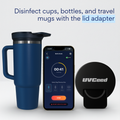
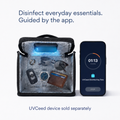
UV-C devices like UVCeed provide a chemical-free way to disinfect the items you touch every day - your phone, keys, wallet, glasses, earbuds, and travel items. In a world where emerging pathogens like Nipah represent real threats, having a portable, proven disinfection tool isn't paranoia. It's prudent preparation.
When you're traveling through areas with active outbreaks, staying in hotels, using public transportation, or simply navigating daily life during respiratory virus seasons, the ability to quickly disinfect your personal items provides a layer of protection that hand sanitizer alone can't match.
UVCeed's lab-tested effectiveness against bacteria and viruses - achieving 99.9%+ reduction in seconds* - offers peace of mind backed by science. The same UV-C technology trusted in hospitals and laboratories, now portable enough to travel with you.
The Bigger Picture
Nipah virus represents a category of threat that infectious disease experts have long warned about: zoonotic pathogens with pandemic potential that could emerge from wildlife populations and spread globally before we're prepared to stop them.
The "Nipah belt" - the region spanning Bangladesh, India, Malaysia, Singapore, and parts of Southeast Asia - is currently small. But global travel and trade mean that what starts in Kolkata could reach anywhere in the world within days.
Research and preparedness are accelerating. CEPI (Coalition for Epidemic Preparedness Innovations) has invested over $100 million in Nipah vaccine development. Multiple vaccine candidates are in clinical trials. The first Phase II trial launched in Bangladesh in late 2025.
But until those efforts bear fruit, prevention remains our primary defense. Awareness, hygiene, careful food practices in endemic areas, proper infection control in healthcare settings, and personal protective measures including surface disinfection.
The next pandemic may not be Nipah. But the habits you build now - the awareness of how pathogens spread, the commitment to hygiene, the tools you keep ready - will serve you regardless of what emerges.
Stay informed. Stay prepared. And explore how UVCeed's UV-C technology can help protect you and your family from the pathogens of today and tomorrow.
Want More Articles Like This?
Get research on UV-C treatment and product updates delivered to your inbox.