Here's something that might keep you up at night if you run a restaurant: norovirus mentions in food safety reports jumped from just 22 in 2014 to over 1,000 in 2025. That's not a typo. And 2026 isn't slowing down.
I've spent years studying surface disinfection, and I want to have an honest conversation with you about what's happening in the food service industry right now. Not to scare you, but because you deserve to know what you're up against - and more importantly, what you can actually do about it.
The Numbers Don't Lie (But They Might Surprise You)
Norovirus has always been the quiet giant of foodborne illness. It causes more outbreaks than Salmonella, E. coli, and Listeria combined. The CDC estimates it's responsible for about 58% of all foodborne illnesses in the United States - roughly 20 million cases every single year.
But here's what's changed: we're seeing a surge that health officials haven't witnessed in over a decade. England reported more than 9,000 lab-confirmed cases by February 2025 - double their five-year average. The pattern is similar across the United States, with outbreak reports climbing steadily since late 2024.
Why should restaurant owners care about these statistics? Because about half of all norovirus outbreaks occur in food service settings. And when an outbreak traces back to your establishment, the consequences extend far beyond the immediate health concerns.
What Makes Norovirus So Difficult to Fight?
I wish I could tell you that standard cleaning protocols are enough. But norovirus is genuinely different from other pathogens, and understanding why matters for protecting your business and your customers.
First, this virus is incredibly hardy. It can survive on surfaces for days - sometimes weeks - waiting for someone to touch that contaminated prep counter, door handle, or menu. Unlike many bacteria that die quickly once outside a host, norovirus is patient.
Second, it's resistant to many common disinfectants. Those quaternary ammonium compounds ("quats") in most commercial cleaning wipes? Norovirus can withstand them. The CDC specifically notes that norovirus "is resistant to many common disinfectants," which is why they recommend specific protocols that many restaurants don't follow.
Third, it spreads with terrifying efficiency. A single gram of infected fecal matter contains billions of viral particles. It only takes about 18 particles to make someone sick. Do the math, and you'll understand why one sick employee who doesn't wash their hands properly can trigger an outbreak affecting dozens of customers.
The Real-World Cost of an Outbreak
Let me share what actually happens when norovirus hits a restaurant, because the official reports only tell part of the story.
In October 2025, health officials investigated an outbreak at a Bellevue, Washington restaurant. Sixteen people reported illness after dining there on a single evening. When inspectors arrived, they found several issues: workers touching ready-to-eat foods with bare hands, handwashing stations not properly stocked, and surfaces that weren't sanitized properly.
The restaurant cooperated fully. They voluntarily closed, did a deep cleaning, and reopened three days later after passing a follow-up inspection.
Three days doesn't sound like much. But let's think about what those three days actually cost:
- Lost revenue during one of the busiest dining periods
- Emergency deep-cleaning services
- Staff wages during closure (you can't just stop paying people)
- The investigation itself and management time
- And the hardest one to quantify: reputation damage that lingers long after you reopen
That's the tangible cost. The intangible cost? Every negative review mentioning "food poisoning" or "got sick here" lives on Google forever.
Why Your Current Disinfection Protocol Might Be Falling Short
Here's where I need to be really honest with you, because this is the part that frustrates me most as someone who cares about public health.
Most restaurants rely on quaternary ammonium-based disinfectant wipes or sprays. They're convenient, they're what your suppliers stock, and they're what you've always used. I get it.
But there's a problem hiding in plain sight - literally on the back of the label.
The contact time issue: Most disinfectant wipes require surfaces to remain visibly wet for 4 to 10 minutes to actually kill pathogens. That's not a suggestion; it's the EPA-registered kill time that makes the "kills 99.9% of germs" claim legally valid.
Here's the reality: a typical disinfectant wipe dries in about 60 seconds.
So when your staff does a quick wipe-down of a prep station between tasks - which feels like good hygiene practice - they may not actually be disinfecting anything. They're cleaning, sure. Removing visible soil and debris. But the microbial killing that prevents outbreaks? That requires maintaining wet contact for minutes, not seconds.
To truly disinfect a surface with standard wipes, you'd need to use 4 to 6 wipes in succession, constantly re-wetting the surface. In a busy kitchen, during dinner rush, how often does that actually happen?
The chemical residue issue: Even when used correctly, quat-based disinfectants leave chemical residues on surfaces. The FDA has specific guidelines about this - many products aren't supposed to be used on food-contact surfaces without rinsing afterward. But rinsing takes time, and in a fast-paced kitchen environment, that step often gets skipped.
This creates a situation where you're either not disinfecting effectively, or you're potentially introducing chemical residues into your food preparation areas.
Neither option is what you signed up for when you thought you were "doing things right."
What Actually Works Against Norovirus
The CDC recommends chlorine bleach solutions (1,000-5,000 ppm) for norovirus disinfection. That's effective, but it comes with its own challenges: the harsh smell, the potential for damaging surfaces and equipment, the safety concerns for staff, and the fact that you absolutely cannot use it around food.
This is why I want to talk about something different: UVC light disinfection.
UVC (ultraviolet-C) light works by damaging the DNA and RNA of microorganisms, preventing them from reproducing. It's been used in hospitals and water treatment facilities for decades. What's changed is that the technology has become portable, practical, and precise enough for food service environments.
Why UVC Makes Sense for Restaurants
Let me walk you through why this approach addresses the specific challenges restaurants face:
Speed: UVC disinfection takes seconds, not minutes. In a kitchen where every second counts during service, this isn't a luxury - it's the difference between actually disinfecting and just going through the motions.
No chemicals, no residue: UVC light leaves nothing behind. No chemical residue on your prep surfaces, no smell, nothing that could potentially contact food. This is why UVC can be used in and around food service areas where chemical disinfectants can't.
Effective against norovirus: Unlike quaternary ammonium compounds, UVC light is proven effective against norovirus. It works by physically destroying the virus's genetic material, and there's no way for the virus to develop resistance.
Verification: This is the part that really matters for accountability. With chemical wipes, how do you know if disinfection actually occurred? You don't. You trust that your staff followed the protocol, maintained wet contact time, and did everything correctly.
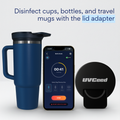
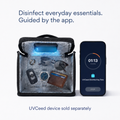
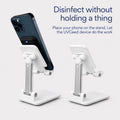
UVCeed's device actually tells you when a surface has received sufficient UVC dose to be disinfected. It provides real-time feedback - you know, definitively, that the surface is safe. For a restaurant owner trying to prove due diligence, that verification is invaluable.
Building a Smarter Disinfection Protocol
I'm not suggesting you throw out everything you're currently doing. Good hygiene practices - proper handwashing, keeping sick employees home, maintaining clean facilities - remain essential. But I am suggesting you take a hard look at the disinfection piece of your protocol.
Here's what a more effective approach might look like:
For routine cleaning during service: Continue using your current cleaning products for removing visible soil and debris. Cleaning and disinfection are different steps.
For disinfection of food-contact surfaces: Consider UVC as your primary disinfection method. It's fast enough to use between tasks, leaves no residue, and is safe for food preparation areas.
For outbreak response: Have a documented protocol that includes UVC disinfection of all surfaces, not just the obvious ones. Menus, door handles, POS terminals, chair backs - norovirus can survive on all of them.
For verification and documentation: Use a disinfection method that provides proof of completion. If an inspector asks or - heaven forbid - a lawyer asks, you want to be able to demonstrate exactly what you did and when.
The Bigger Picture
Look, I understand that adding another tool or protocol feels like one more thing on an already overwhelming list. Restaurant margins are thin, staff are hard to find and keep, and you're already doing everything you can.
But norovirus outbreaks are increasing. The data is clear on this. And the traditional approach to surface disinfection - the one that's been standard practice for decades - has some fundamental limitations that become more apparent every year.
The good news is that the technology to do this better exists. UVC disinfection isn't experimental or unproven. It's established science that's now available in formats that actually work for food service environments.
If you'd like to see how UVCeed's approach to verified UVC disinfection could fit into your operation, I'd encourage you to explore further. Not because I want to sell you something, but because I genuinely believe this represents a better way to protect your customers, your staff, and your business.
The norovirus surge of 2026 is real. What you do about it is up to you.
Key Takeaways
- Norovirus outbreaks in food service have surged dramatically, with 2024-2025 seeing the highest levels in over a decade
- The virus can survive on surfaces for days or weeks and is resistant to many common disinfectants
- Standard disinfectant wipes require 4-10 minutes of wet contact time to work - far longer than most kitchen protocols allow
- Chemical disinfectants also leave residues that shouldn't contact food
- UVC light disinfection offers a fast, chemical-free, verifiable alternative that's safe for food service environments
- UVCeed is the only device that provides real-time feedback confirming when a surface has been properly disinfected
Want to learn more about protecting your restaurant from norovirus and other pathogens? [Explore UVCeed's restaurant solutions →]
Have questions about implementing UVC disinfection in your food service operation? [Contact our team →]
References:
- CDC NoroSTAT Data, 2025
- FDA Food Safety Alerts, 2024-2025
- King County Public Health Outbreak Reports
- WHO Disease Outbreak News
- National Restaurant Association Food Safety Guidelines
Want More Articles Like This?
Get research on UV-C treatment and product updates delivered to your inbox.