I need to tell you something that might change the way you think about cleaning your home. It's not complicated, but it is important - and once you know it, you can't unknow it.
That container of disinfectant wipes under your sink? The ones you use on your kitchen counter after preparing raw chicken, on your bathroom surfaces, on your kid's highchair tray? There's a good chance they're not actually disinfecting anything.
I know that sounds dramatic. Bear with me.
The Fine Print That Changes Everything
Go grab your disinfectant wipes right now. I'll wait.
Now flip the container over and find the directions for use. Not the marketing claims on the front - the actual EPA-registered instructions on the back, usually in small print.
Look for a phrase like "to disinfect" or "to sanitize." Below it, you'll find something like this:
"Wipe surface to be disinfected. Use enough wipes for the treated surface to remain visibly wet for 4 minutes. Let surface dry."
Four minutes. Not four seconds. Four minutes.
Some products require even longer - up to 10 minutes of wet contact time.
Now here's the thing: a typical disinfectant wipe dries on a surface in about 60 seconds. Often less, depending on your room temperature and humidity.
Do you see the problem?
What "Kills 99.9% of Germs" Actually Means
That impressive claim on the front of the package isn't a lie. The product can kill 99.9% of certain germs - but only when used exactly as directed. That means maintaining continuous wet contact for the full specified time.
Here's what most people actually do:
- Pull out a wipe
- Quickly wipe down the surface
- Throw away the wipe
- Move on with their day
This takes about 15 seconds. And while you've successfully removed visible dirt and some germs mechanically, you haven't disinfected the surface. The chemical agents in the wipe didn't have enough contact time to destroy the pathogens.
You've cleaned. You haven't disinfected. There's an important difference.
Cleaning removes dirt, debris, and some germs from surfaces. Disinfecting kills germs on surfaces after cleaning. Most of us conflate these terms, but they describe different outcomes.
The Math Gets Worse
Let's say you want to actually follow the directions. Your wipes require 4 minutes of wet contact time, but each wipe dries in about 60 seconds.
To keep the surface wet for 4 full minutes, you'd need to use at least 4 wipes - continuously reapplying to maintain moisture on the surface.
Four wipes. Every time. On every surface you want to actually disinfect.
That 75-count container suddenly doesn't last very long, does it?
But there's another issue that concerns me even more than cost or convenience.
The Chemical Exposure You Didn't Sign Up For
Every time you use more wipes to meet that contact time, you're also increasing your exposure to the chemicals in those wipes. And this is where I really want you to pay attention.
Most commercial disinfectant wipes contain quaternary ammonium compounds - "quats" for short. They've been workhorses of the cleaning industry for decades because they're effective antimicrobials. But research over the past few years has raised some important questions about what happens when we're exposed to them frequently.
Here's what the science is showing:
They stick around. Studies have found that quat-based cleaners leave residues on surfaces - residues that can transfer to your hands, your food, and ultimately into your body. One study found that household dust levels of quats roughly doubled compared to pre-pandemic levels, likely due to increased disinfectant use.
They may affect brain cells. A 2024 study published in Nature Neuroscience found that certain quats, including one commonly found in mouthwash and personal care products, affected the development of oligodendrocytes - the cells that produce myelin in your brain. This research is still emerging, but it's concerning enough that scientists are calling for reevaluation of how we use these compounds.
They're not meant for food surfaces. Many quat-based disinfectants aren't supposed to be used on surfaces that contact food - or if they are, the surface needs to be rinsed afterward. But how many of us spray our kitchen counter and then rinse it before making a sandwich?
I'm not trying to frighten you. Most casual exposure to these chemicals isn't going to cause immediate harm. But I do think you deserve to know that using more wipes to achieve proper disinfection also means more chemical exposure. It's a trade-off that rarely gets discussed.
The Food Safety Wrinkle
Speaking of food surfaces - here's where restaurant owners and parents of young kids should really pay attention.
Many disinfectant products carry warnings about food contact surfaces. The EPA has different categories for sanitizers and disinfectants based on whether they're safe to use in areas where food is prepared or consumed.
Check your wipes again. Look for phrases like:
- "Rinse with potable water after use on food contact surfaces"
- "Not for use on food contact surfaces"
- "For use on hard, non-porous surfaces"
If you're disinfecting your kitchen counter and then immediately placing food on it - or if you're cleaning your child's highchair tray and they're eating off it within minutes - you may be inadvertently exposing yourself and your family to chemical residues.
The irony is thick here: in trying to make surfaces safer, we may be introducing different risks.
So What's the Alternative?
I've laid out a problem. Now let me offer you a solution - because I wouldn't have written all this just to leave you frustrated.
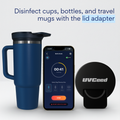
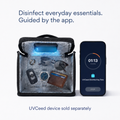
UVC light disinfection works differently than chemical disinfectants. Instead of using chemicals that need contact time to break down cell membranes, UVC light damages the DNA and RNA of microorganisms directly. It's the same technology hospitals have used for decades to disinfect operating rooms and equipment.
Here's why I think it deserves your attention:
No contact time issue. UVC disinfection happens in seconds. You're not waiting for anything to dry or hoping the surface stays wet long enough.
No chemical residue. Light doesn't leave anything behind. Once the surface is treated, it's just... a surface. No films, no compounds, nothing that could transfer to food or skin.
Safe for food areas. Because there's no chemical involved, UVC can be used on and around food contact surfaces without any rinsing or waiting. This is a significant advantage for kitchens - both commercial and home.
It actually works. UVC is effective against a broad spectrum of pathogens, including many that are resistant to chemical disinfectants. Remember how I mentioned norovirus is resistant to quats? UVC handles it just fine.
The Verification Problem - Solved
Here's something that bothered me for years about disinfection: how do you actually know it worked?
With chemical wipes, you don't. You trust that you followed the protocol correctly. You hope the product was stored properly and isn't expired. You assume you used enough wipes and maintained wet contact for long enough.
But you don't know.
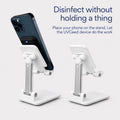
This is why I'm genuinely excited about what UVCeed has built. Their device doesn't just emit UVC light - it measures the dose and tells you when a surface has received enough exposure to be disinfected. You get real-time feedback. A confirmation that the job is actually done.
It sounds simple, but it's the first time I've seen this in a consumer-accessible product. For me personally, that verification removes a layer of anxiety I didn't even realize I was carrying.
What I Actually Do Now
I want to be practical with you, because theory is nice but you live in the real world with limited time and energy.
I haven't thrown away all my cleaning products. I still use wipes and sprays for general cleaning - removing visible dirt, wiping up spills, quick tidying. They're convenient and they do serve a purpose.
But for actual disinfection - the times when I'm trying to kill pathogens, not just clean up messes - I use UVC. Kitchen prep surfaces after handling raw meat. Bathroom surfaces. My phone (which, let's be honest, is probably the germiest thing I own). Anything my young nieces are likely to put their mouths on when they visit.
It takes seconds, it leaves nothing behind, and I know it actually worked.
Is it perfect? No solution is perfect. UVC requires line-of-sight to work, so it won't disinfect around corners or inside crevices. And you do need to be careful not to expose your skin or eyes directly to the light. But these are manageable limitations, and UVCeed's device is designed to make safe operation intuitive.
The Bottom Line
That container of disinfectant wipes isn't useless. But it probably isn't doing what you think it's doing.
The 4-minute contact time requirement is real. Most people don't follow it - not because they're careless, but because they don't know about it. The fine print is genuinely fine.
If you want to keep using chemical disinfectants, at least use them correctly. Multiple wipes. Maintain wet contact. Rinse food surfaces afterward if the label requires it. Accept that you'll go through products faster and have more chemical exposure as a result.
Or consider that there might be a better approach - one that works in seconds, leaves nothing behind, and actually confirms when disinfection is complete.
I'm not here to tell you what to do. I'm just your friend who happens to know a lot about surface disinfection, and I care enough to share what I've learned.
What you do with this information is up to you.
[IMAGE PROMPT 6]: A person putting away the UVCeed device in a kitchen drawer, with a clean and organized kitchen visible in the background. The mood is calm, competent, "I've got this handled." Warm natural lighting, lifestyle photography style. The image should convey quiet confidence and modern, chemical-free living.
Quick Reference: What to Remember
The 4-Minute Rule: Most disinfectant wipes require 4+ minutes of wet contact time to actually disinfect. A single wipe dries in ~60 seconds. You'd need 4+ wipes per surface to meet this requirement.
Chemical Concerns: Quaternary ammonium compounds (quats) leave residues, have emerging health concerns, and often aren't meant for food contact surfaces without rinsing.
The UVC Alternative:
- Works in seconds, not minutes
- No chemical residue
- Safe for food contact areas
- Effective against chemical-resistant pathogens
- UVCeed provides verification that disinfection is complete
Have questions about making the switch to UVC disinfection? [Talk to our team →]
Want to see UVCeed in action? [Watch a demonstration →]
References:
- EPA Registered Product Labels and Contact Time Requirements
- Nature Neuroscience (2024): Pervasive environmental chemicals impair oligodendrocyte development
- Current Research in Microbial Sciences (2024): Re-evaluation of QAC exposure risks
- CDC Guidelines on Surface Disinfection
- Washington Post: How chemicals called quaternary ammonium compounds may affect the brain (2024)
Want More Articles Like This?
Get research on UV-C treatment and product updates delivered to your inbox.