Let’s be real for a minute. We are all experiencing a bit of "hygiene fatigue." After years of hyper-vigilance, the urge to just stop worrying about every surface we touch is strong. We want to live our lives, travel, dine out, and shake hands without constantly reaching for the sanitizer.
But pretending invisible threats don’t exist isn't the answer. The answer is smarter, lower-effort ways to manage the risk.
The truth is, staying healthy isn't about living in a sterile bubble. It’s about winning a constant, invisible numbers game played between germs and your immune system. And right now, the items you touch the most - especially the one in your hand right now - are stacking the deck against you.
Here is the science of why you get sick, and the brilliant piece of technology that helps tilt the odds back in your favor.
The Science: It’s All About the "Load"
Why can you sometimes share a drink with a sick friend and be fine, but other times touch a doorknob and get the flu?
It comes down to a fundamental scientific concept called the Infectious Dose.
Think of your immune system as the security guards at an exclusive club. If one or two troublemakers (pathogens like bacteria or viruses) try to sneak in, security easily handles them. You never even notice.
But if 10,000 troublemakers storm the gate at once, security gets overwhelmed, they break through, and cause chaos inside the club. You get sick.
The goal of modern prevention is not to eliminate every single germ. The goal is to keep the numbers below the threshold that overwhelms your system.
Every action you take to lower the number of germs you encounter - washing hands, cooking meat thoroughly, cleaning surfaces - is called "reducing the pathogen load." Every bit of load reduction lowers the chance of hitting that "infectious dose."
The Gaping Hole in Your Hygiene Routine
We are generally good at the big stuff. We wash our hands after using the restroom and before we eat.
But there is a massive blind spot in our daily routine that undoes all that hard work within seconds: Your Smartphone.
Think about it. You wash your hands in a public restroom, grab the door handle to leave, and immediately pull out your phone to check a text. Whatever was on that door handle is now on your phone.
Your phone goes everywhere with you - kitchen counters, gym benches, restaurant tables, and yes, the bathroom. It stays warm, it's rarely truly cleaned, and you press it against your face dozens of times a day.
Scientists have repeatedly confirmed that mobile phones often carry significantly more bacteria than a toilet seat. It is a high-traffic, mobile petri dish that you are constantly re-infecting your clean hands with.
If we want to get serious about reducing the "pathogen load" in our lives, we have to tackle the third hand we never wash.
Enter Smart Hygiene: The UVCeed Ecosystem
Until recently, thoroughly cleaning your phone and other small items on the go was nearly impossible. Alcohol wipes can damage screen coatings and bulky UV "coffins" sit uselessly on your nightstand at home.
This is where UVCeed changes the game. It stops being a "gadget" and becomes an essential health tool by taking hospital-grade disinfection technology (UV-C light, proven to destroy the genetic material of pathogens) and making it portable, smart, and incredibly versatile.
Here is why this is the missing link in modern prevention:
1. It sits right on the source
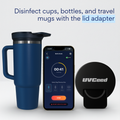
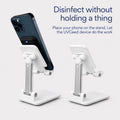
The core UVCeed device attaches magnetically to the back of your MagSafe phone. It’s not another thing to carry; it’s part of the device that needs cleaning the most. You have a powerful disinfection tool in your pocket 24/7, ready to sanitize restaurant cutlery, tray tables, or bathroom door handles in seconds.
2. It makes the invisible visible
Using its companion app, UVCeed uses augmented reality and AI-powered detection on your phone screen to actually show you potential biological threats on surfaces. It helps you understand where the "load" is hiding before you zap it.
3. It transforms into a Portable Sanitation Chamber
This is where the system truly shines. Sometimes you need to clean things, not just surfaces - like keys, wallets, pacifiers, or jewelry.
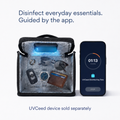
UVCeed offers a specialized soft-sided bag and adapter. You simply detach the MagSafe UVCeed unit from your phone and magnetically snap it to the inside lid of the bag. When you close the lid, that handy bag transforms into a powerful, enclosed sanitation chamber.
The app recognizes this setup with a specialized "Bag Mode." And here is the kicker: if you want to give your phone a deep, passive clean, there is a special toggle within Bag Mode that allows you to safely place your phone inside the bag along with your other high-touch items, disinfecting everything at once.
A "Micro-Habit" with Macro Results
We need to shift our thinking from "fear of germs" to "empowered management."
Zapping your phone after a subway ride, or dropping your keys and wallet into the UVCeed bag when you get home, takes seconds. These are tiny micro-habits.
But these tiny habits drastically reduce the pathogen load on the items that bridge the gap between the dirty world and your eyes, nose, and mouth. It keeps the number of "troublemakers" storming the gate low enough for your immune system to handle the rest.
You don't need to live in a bubble to stay healthy. You just need to be smarter about the numbers. It’s time to give your immune system a fighting chance.
Order yours today.
Want More Articles Like This?
Get research on UV-C treatment and product updates delivered to your inbox.