This virus survives on surfaces for weeks, laughs at your hand sanitizer, and there's no treatment. Here's what you need to know - and the one thing that actually works.
If it feels like everyone you know is sick right now, you're not imagining things.
Across the country, people are getting hit with what's being called a "mystery throat virus" - a brutal infection that leaves you bedridden with a horrific sore throat, relentless cough, sky-high fever, and exhaustion that lingers for weeks. Some are calling it the worst illness they've had in years.
The culprit? Adenovirus. And unlike the flu or COVID, there's no vaccine for the general public and no antiviral treatment. You simply have to ride it out.
But here's what makes adenovirus particularly insidious: it's one of the hardiest viruses on the planet, and your normal cleaning routine isn't doing what you think it is.
Adenovirus: The Virus That Won't Die
Adenoviruses aren't new - they've been infecting humans since we first identified them in the 1950s. But what makes them exceptional is their survival ability.
Unlike many viruses that break down quickly outside the body, adenovirus is what scientists call a "non-enveloped" virus. Most viruses have a fragile outer membrane that disinfectants can easily destroy. Adenovirus doesn't. Its protein shell is remarkably stable, which means it persists in the environment far longer than you'd expect.
How long? Research shows adenovirus can survive on hard surfaces for 7 days to 3 months. One study found the virus recoverable from metal and plastic surfaces for more than 30 days. That doorknob you touched last week? Still potentially contaminated. The elevator button from yesterday? Definitely.
This extraordinary resilience is why adenovirus outbreaks are so common in schools, daycares, military barracks, and healthcare facilities - anywhere people share spaces and touch common surfaces.
Your Hand Sanitizer Isn't Working (And Neither Is Most Cleaning)
Here's the uncomfortable truth that public health experts know but rarely emphasize: adenovirus is resistant to many common disinfectants.
Because adenovirus lacks that outer envelope, alcohol-based hand sanitizers are significantly less effective against it than against other viruses. The CDC explicitly notes that soap and water are more reliable than hand sanitizer for adenovirus. Yet how often do you have access to a sink when you're commuting, shopping, or working?
Standard household cleaners often fail too. Research has shown that adenovirus can resist common detergents and disinfectants that work perfectly well against other pathogens. The EPA maintains a specific list of disinfectants proven effective against adenovirus - and many popular cleaning products don't make the cut.
This isn't a theoretical problem. As one infection control specialist put it: "One reason why adenovirus can be transmitted easily from surface to person is that they're often resistant to common household cleaners."
The Symptoms Are Brutal - And They Attack Everything
Adenovirus doesn't just cause one type of illness. It's a shape-shifter that can attack multiple systems in your body simultaneously.
The respiratory symptoms are what most people notice first: severe sore throat (often described as the worst they've ever had), persistent cough, nasal congestion, and fever that can spike alarmingly high. But adenovirus can also cause pink eye, middle ear infections, bronchitis, and even pneumonia.
Then there's the gastrointestinal component. Many adenovirus strains cause vomiting, diarrhea, and stomach cramps - sometimes alongside the respiratory symptoms, sometimes on their own.
The duration is what really sets adenovirus apart. While a typical cold resolves in a few days, adenovirus symptoms can persist for two weeks or longer. The cough, in particular, can linger even after other symptoms improve.
And here's the kicker: even after you feel better, you can continue shedding the virus for days or weeks. People with weakened immune systems may shed it for months. That means you can be spreading adenovirus long after you think you've recovered.
Why This Winter Is Particularly Bad
Health experts have noticed a surge in adenovirus cases this winter, and there's a perfect storm of factors driving it.
First, post-pandemic immune patterns have left many people more susceptible to respiratory viruses they might have previously fought off more easily. Second, lower vaccination rates for flu mean more people are getting hit with multiple respiratory illnesses simultaneously, making it harder to distinguish what they have. Third, the winter environment—closed windows, recirculated air, crowded indoor gatherings - creates ideal conditions for adenovirus spread.
The timing couldn't be worse. We're already dealing with an aggressive flu season (the H3N2 subclade K variant is particularly nasty this year), rising RSV cases, and ongoing COVID circulation. Adding adenovirus to the mix means healthcare systems and individual immune systems are being hit from multiple directions.
Your Phone Is Ground Zero for Reinfection
Let's talk about the elephant in the room: your smartphone.
You touch your phone hundreds of times per day. You touch it after touching door handles, shopping carts, gas pumps, and shared surfaces. Then you hold it to your face, or touch your face after touching it. The cycle never stops.
Given that adenovirus survives on hard surfaces for weeks or months, and given that phones are made of exactly the kind of non-porous materials where viruses persist longest, your phone is essentially a long-term pathogen reservoir.
You can wash your hands religiously, but if you immediately pick up a contaminated phone, you've recontaminated yourself. It's like washing your hands and then shaking hands with everyone who touched your phone over the past month.
And remember: alcohol-based sanitizer isn't particularly effective against adenovirus. You can wipe down your phone with sanitizer and still be holding an infectious surface.
UV-C Light: The Solution That Actually Works
While adenovirus laughs at many disinfectants, it has a weakness: ultraviolet light.
UV-C light, specifically in the germicidal wavelength range of 200-280 nanometers, damages the genetic material of viruses - including the hardy adenovirus. Unlike chemical disinfectants that struggle against non-enveloped viruses, UV-C works through a completely different mechanism that adenovirus can't resist.
Research confirms UV-C effectiveness against adenovirus. Studies have demonstrated that proper UV-C exposure can achieve significant log reductions in adenovirus viability on surfaces. One study using a UV-C cabinet showed a 3-log reduction (99.9% kill rate) in adenovirus DNA within 3 minutes, with viral DNA becoming undetectable after 6 minutes.
This is why UV-C technology has been standard in hospitals, laboratories, and water treatment facilities for decades. It works when other methods fail.
UVCeed: Breaking the Recontamination Cycle
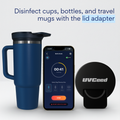
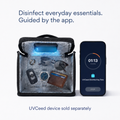
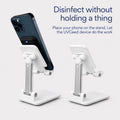
The UVCeed MagSafe UV-C device brings hospital-grade disinfection technology to your most-touched personal items.
Think about your daily routine. Your phone. Your earbuds. Your credit cards. Your keys. Your sunglasses. Every one of these items touches contaminated surfaces and then touches you or items near your face. Every one can harbor adenovirus for weeks.
UVCeed breaks this cycle. In seconds, without chemicals, without moisture, without any risk of damage to your electronics, you can disinfect the items that form your personal pathogen ecosystem.
This isn't about being paranoid. It's about recognizing reality: you live in a world where hardy viruses like adenovirus persist on surfaces, where hand sanitizer doesn't always work, and where your phone is touched more than almost any other object in your life.
The Math of Prevention
Consider what adenovirus costs you when you get it:
One to two weeks of misery. Days of missed work. Possible doctor visits or urgent care trips. OTC medications to manage symptoms (which don't actually treat the virus). The risk of complications like pneumonia, especially if you're immunocompromised.
Now consider the cost if you spread it to family members. Double or triple the impact. Kids missing school. Parents missing work to care for sick children. The viral domino effect that turns one infection into a household-wide event.
UVCeed costs less than a single doctor's copay. Less than a week of cold medicine. Less than the productivity you lose from a single sick day.
More importantly, it provides something no amount of hand sanitizer or hope can offer: a proven method to kill a virus that resists most other approaches.
The Bottom Line: Adapt to Reality
Adenovirus isn't going anywhere. It's been infecting humans for millennia, and its exceptional resilience means it will continue spreading through homes, offices, schools, and every shared space where people touch common surfaces.
You can't control whether someone sick touched the elevator button before you. You can't control whether your coworker's kid brought adenovirus home from daycare. You can't control the invisible film of pathogens coating every surface in public spaces.
But you can control what happens to your personal items. You can break the recontamination cycle that turns your phone into a long-term viral reservoir. You can use technology that actually works against hardy, envelope-resistant viruses.
The "mystery illness" everyone's talking about isn't really a mystery. It's adenovirus, and it's thriving because our standard cleaning habits aren't designed to stop it.
UVCeed is designed to stop it.
Stop fighting adenovirus with tools that don't work. Get UVCeed and protect yourself with proven UV-C technology.
Want More Articles Like This?
Get research on UV-C treatment and product updates delivered to your inbox.