TL;DR
A Legionnaires' disease outbreak centered on Manhattan's Upper East Side has now killed 11 people and sickened 94, according to health officials, with the last new case diagnosed more than six weeks before the August 28 update. A separate, unrelated outbreak in Toronto has sickened at least 11 people near the Bathurst and Dupont intersection, including residents of a long-term care home. Neither outbreak is something a handheld UV-C device solves, and it's worth understanding exactly why.
What actually happened
Legionnaires' disease is a severe form of pneumonia caused by Legionella bacteria, which grow in warm, stagnant water systems, cooling towers, building water systems, hot tubs, rather than spreading person to person. In New York City, an outbreak on the Upper East Side reached 11 deaths and 94 total cases by August 28, 2026, with all hospitalized patients who survived having since been released, according to CBS New York's coverage.
In Toronto, a separate outbreak sickened at least 6 people within a roughly one-kilometer radius of the Bathurst and Dupont intersection, with symptom onset between July 2 and July 26, and health officials investigating whether it's connected to another cluster of at least 5 cases at a nearby long-term care home, according to CP24's reporting. The source in both outbreaks was still under investigation at time of reporting, with cooling towers the most common culprit in cluster outbreaks of this kind.
Why Legionella isn't a "wipe it down" problem
Legionella bacteria live in building-scale water systems: cooling towers, large air conditioning units, decorative fountains, hot tubs, and complex plumbing. People get infected by inhaling contaminated water droplets in mist or vapor form, not by touching a surface. The CDC's Legionella surveillance guidance is clear that prevention centers on water system maintenance: regular testing, proper disinfectant levels, and temperature control in building water systems, which is why individual outbreaks are almost always traced back to a specific piece of building infrastructure rather than a personal hygiene lapse.
This is a useful contrast for understanding what surface disinfection, including UV-C, can and can't do. It's excellent for touchpoints: door handles, gym equipment, phone screens, produce, anything a hand or food touches directly. It does nothing for airborne or waterborne pathogens circulating through a building's mechanical systems, which need engineering controls, not a handheld light.
What you can actually do
- If you live or work near a reported outbreak area, follow local health department guidance rather than assuming any specific building is or isn't involved.
- Know the symptoms: fever, cough, muscle aches, and shortness of breath appearing 2 to 10 days after exposure, and seek care promptly if they appear, especially if you're over 50, smoke, or have a chronic lung condition.
- For your own home, hot tubs, humidifiers, and any equipment with standing water reservoirs should be cleaned and maintained per manufacturer instructions, since these are the small-scale equivalent of the building systems that drive larger outbreaks.
- Focus your own disinfection efforts on the touchpoints you actually control: door handles, faucet handles, remote controls, phones, which is where UV-C is genuinely useful.
Where UVCeed fits
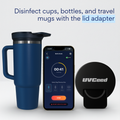
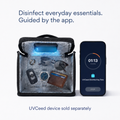
UVCeed is a touchpoint tool, not a water-system tool, and we want to be straight about that distinction rather than overselling relevance to a story like this one. 254 nm UV-C is well established as effective against a broad range of bacteria on hard, non-porous surfaces when there's direct line of sight and adequate dose. It's a strong fit for the door handles, faucet fixtures, and shared surfaces around any home humidifier or hot tub setup, the places your hands actually touch, alongside the water-system maintenance that actually prevents Legionella growth.
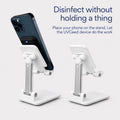
With UVCeed, you aim the device at one section, a faucet handle, a humidifier's exterior controls, a door handle, and hold it steady until the app confirms that section is complete, then move to the next section for anything larger than the coverage area.
FAQ
Can I catch Legionnaires' disease from a surface? No. Legionella spreads through inhaling contaminated water droplets or mist, not through surface contact, which is why it's classified differently from touchpoint pathogens like Staph or E. coli.
Does UV-C protect against Legionnaires' disease? Not directly. UV-C is effective on hard surfaces with line of sight, but Legionella outbreaks stem from building water systems and airborne transmission, which require water treatment and engineering controls, not surface disinfection.
What are the symptoms of Legionnaires' disease? Fever, cough, muscle aches, headache, and shortness of breath, typically appearing 2 to 10 days after exposure. It's treated with antibiotics and can be severe, especially in older adults or smokers.
Who is most at risk? People over 50, current or former smokers, and those with chronic lung disease or weakened immune systems face the highest risk of severe illness.
Are the NYC and Toronto outbreaks connected? No, they're separate, unrelated outbreaks under investigation by different health departments in different countries.
Want More Articles Like This?
Get research on UV-C treatment and product updates delivered to your inbox.