TL;DR
A new peer-reviewed study published in the European Heart Journal on July 23, 2026 found that 84 percent of acute heart attack patients had detectable micro- and nanoplastics in their blood. In chronic heart disease patients: 40 percent. In patients with normal coronary arteries: 32 percent. 97 percent of the positive cases contained polyethylene, the plastic in bags and bottles. The study is observational; it shows association, not causation. But the reasonable takeaway for a health-informed reader is simple: reduce reliance on plastic-touched surfaces where you can, and use disinfection methods that don't add more chemical wear-and-tear to the plastic surfaces that remain. That's where 254 nm UV-C, and UVCeed specifically, come in.
What the study found
The study, led by Dr. Raffaele Marfella of the University of Campania Luigi Vanvitelli in Naples, was published in the European Heart Journal on July 23, 2026. Blood samples from 61 patients undergoing angiograms were analyzed.
Key numbers:
- 84% of acute heart attack patients tested positive for micro- and nanoplastics in blood
- 40% of chronic heart disease patients tested positive
- 32% of patients with normal coronary arteries tested positive
- 97% of positive cases contained polyethylene (the plastic in bags and bottles)
The strongest predictor of plastic detection in the study was smoking, which complicates cause-and-effect interpretation because smoking is an independent, established risk factor for cardiovascular disease.
Michelle Routhenstein, a preventive cardiology dietitian who reviewed the study for the press, said: "This was an observational study, so it can only show an association, not cause and effect." She noted the small sample size and single-country design as limits on how broadly the finding can be applied.
Sources:
- Microplastics detected in most heart attack patients' blood: 'startling new study' - Fox News, July 23, 2026
- European Heart Journal - publisher page
What the study does not say
Rigorously: the study did not show that plastic causes heart attacks. It showed that plastic was more likely to be present in the blood of heart attack patients. That's an association, and observational associations do not survive as causal claims without prospective, controlled follow-up.
We say that because we don't traffic in sensationalism. What the study does do is add to a growing body of evidence, going back to the 2024 Marfella study in the New England Journal of Medicine on microplastics in carotid plaque, that microplastics are found in human tissue and blood in measurable, non-trivial amounts, in a growing percentage of patients. That is a scientific fact worth taking seriously.
See the earlier 2024 study for context: Microplastics and Nanoplastics in Atheromas and Cardiovascular Events - NEJM, March 2024.
Practical, non-sensational responses
The recommendations that came out of the reporting on the July 2026 study are consistent with what preventive cardiologists have been saying for two years:
- Replace plastic food storage with glass or stainless steel where practical
- Use ceramic or glass for microwaving; never microwave in plastic
- Reduce single-use plastic water bottles
- Reduce plastic packaging where alternatives exist
Add one thing the mainstream articles don't mention:
- Reduce the chemical wear-and-tear on the plastic surfaces that remain in your home. Every time you use bleach spray, quaternary ammonium wipes, or strong alcohol on a plastic surface, you contribute to microscopic degradation of the polymer. That degradation is one of the pathways by which microplastics are shed into the environment and, potentially, into the food and water supply. See: Antimicrobial-induced polymer degradation - Environmental Science & Technology.
That last point is where UV-C is uniquely well suited.
Why UV-C is the low-chemical-load disinfection method
254 nm UV-C is a photonic disinfection method. It works by damaging microbial DNA and RNA. It leaves no chemical residue. It doesn't degrade polymer surfaces the way strong oxidizers do. It doesn't off-gas VOCs. It doesn't require rinsing.
For a household trying to reduce chemical load while maintaining disinfection standards, UV-C is the tool that fits the philosophy.
The EPA and FDA both recognize UV-C as an established disinfection technology. See: Ultraviolet Radiation - U.S. FDA.
Where UVCeed fits
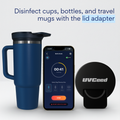
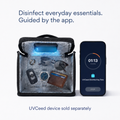
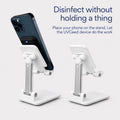
UVCeed is a smartphone-mounted 254 nm UV-C device that runs an app-guided session. You aim it at the surface, hold it steady, and the app confirms when that section has received a full germicidal dose. For surfaces larger than the beam's coverage area, you move to the next section and run another session.
For a health-conscious household:
- 254 nm UV-C, EPA- and FDA-recognized germicidal wavelength
- App-guided sessions, so you don't guess
- Tilt-safety shutoff, so the beam stops if it's not pointed at a surface
- USB-C charging
- No chemicals, no residue, no polymer degradation from repeated wipe-downs
Practical low-chemical-load home checklist
- Water bottles: switch to stainless or glass; run a UV-C session on the mouthpiece before refilling
- Food containers: switch to glass; UV-C sessions on the lids that must remain plastic
- Microwave interior: session monthly
- Refrigerator handle and drawer handles: session weekly instead of bleach wipes
- Kitchen counter: session daily instead of chemical spray
- Phone case and phone screen: session in place of alcohol wipes
- Kids' plastic toys: session weekly
FAQ
Does UV-C reduce the microplastic load already in my body? No. UV-C is a surface disinfection tool. Reducing intake is what reduces future load. UVCeed helps you reduce plastic surface use and reduce chemical degradation of the plastic surfaces you keep.
Does the study prove plastic causes heart attacks? No. It shows association, not causation. But the trajectory of evidence, from the 2024 NEJM carotid study to this 2026 blood study, is enough that prudent reduction is a reasonable personal choice.
Won't UV-C damage plastic over time? Extended, direct UV-C on plastic can cause some polymer discoloration or brittleness over years. UVCeed sessions of 30 to 60 seconds are well within the safe range for regular household use. Cumulative UV-C on a phone case or a fridge handle over years is dramatically less than the polymer wear caused by weekly chemical disinfectant.
How is 254 nm UV-C different from sunlight UV? Sunlight is filtered by the atmosphere. UV-C from the sun does not reach Earth's surface at any meaningful intensity. 254 nm UV-C from a controlled source is what's used in hospital disinfection and municipal water treatment.
Is it safe around kids and pets? UVCeed's tilt-safety shutoff means the beam stops if it's not pointed at a surface. Don't look directly at the light while active.
The bottom line
An 84 percent detection rate of microplastics in heart attack patients' blood is a signal, not a headline to panic over. The rational response is to reduce plastic reliance where practical, and to disinfect the plastic surfaces you keep with a method that doesn't accelerate their degradation. UV-C, and UVCeed specifically, is the tool for a health-informed household that reads studies carefully and acts on evidence, not hype.
Want More Articles Like This?
Get research on UV-C treatment and product updates delivered to your inbox.