TL;DR
Norovirus has sickened 98 people, 94 passengers and 4 crew, aboard Royal Caribbean's Serenade of the Seas during a one-way voyage from San Diego to Miami that began September 19. The CDC's Vessel Sanitation Program logged it as the 20th gastrointestinal outbreak reported across all cruise lines in 2026, continuing a pattern that's held steady nearly all year.
What actually happened
The CDC's Vessel Sanitation Program publicly reports a cruise outbreak whenever a ship under its jurisdiction, meaning it sails to and from U.S. ports, reports gastrointestinal illness in 3% or more of passengers or crew to onboard medical staff. Royal Caribbean's Serenade of the Seas crossed that threshold on its San Diego-to-Miami repositioning voyage, with norovirus confirmed as the cause in 98 total cases.
This isn't an isolated incident. Earlier in the year, a Princess Cruises ship sailing out of Fort Lauderdale reported a norovirus outbreak that infected roughly 90 people, and Oceania Cruises logged its first gastrointestinal outbreak of the year in a separate incident, according to coverage from Health and Me and CBS Miami. The Serenade of the Seas incident marks the 20th such outbreak of the year across all cruise lines under CDC jurisdiction, a pace that's held remarkably consistent since spring.
Why cruise ships keep hitting this number
Norovirus spreads through contaminated surfaces, food, and close contact, and it's brutally efficient at it: as few as 10 viral particles can cause infection, and it can survive on hard surfaces for weeks. Put a few thousand people in a semi-enclosed environment sharing buffets, railings, elevator buttons, and cabin surfaces for a week, and the math works against you even with rigorous ship sanitation protocols already in place. Cruise lines run aggressive cleaning regimens specifically because of this dynamic, and outbreaks still happen when a single infected passenger boards asymptomatic or in the early incubation window.
What to actually do before you sail
- Wash hands with soap and water before eating; hand sanitizer alone is less effective against norovirus than against many other pathogens.
- Bring your own disinfecting wipes or a portable UV-C device for your cabin's high-touch points: the TV remote, bathroom fixtures, door handles, and nightstand.
- Avoid touching your face after handling buffet serving utensils, elevator buttons, or handrails.
- If you or a cabin-mate develop symptoms, report to the ship's medical staff immediately rather than waiting it out, both for your own treatment and to help the ship track and contain spread.
Where UVCeed fits
254 nm UV-C is well documented as effective against norovirus and other common gastrointestinal pathogens on hard, non-porous surfaces, which makes a portable device a genuinely useful addition to a cruise packing list, not a replacement for handwashing and the ship's own protocols, but a supplement for the surfaces housekeeping can't fully own between cleanings.
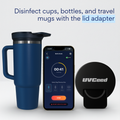
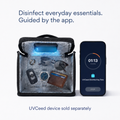
With UVCeed, you aim the device at one section of your cabin, the remote, the bathroom counter, the door handle, and hold it steady until the app confirms that section is complete. Since it runs on USB-C, it's an easy carry-on, no chemicals to worry about in a small cabin bathroom, no liquids to declare.
FAQ
Why do cruise ships get so many norovirus outbreaks? The combination of close quarters, shared surfaces, and buffet-style dining creates ideal conditions for a virus that only takes about 10 particles to cause infection and can survive for weeks on hard surfaces.
Does hand sanitizer protect against norovirus on a cruise? Less than you'd expect. Norovirus is more resistant to alcohol-based sanitizers than many pathogens, which is why the CDC and cruise lines emphasize soap-and-water handwashing specifically.
How many cruise outbreaks have there been in 2026? The Serenade of the Seas incident was the 20th gastrointestinal outbreak reported by the CDC's Vessel Sanitation Program across all cruise lines in 2026, as of late September.
Can UV-C be used on food during a cruise buffet? 254 nm UV-C inactivates bacteria on food surfaces, but FDA rules prevent citing a specific reduction percentage on food, so we don't make that claim. It's best used on the hard surfaces in your own cabin rather than shared buffet food.
What should I do if I get sick on a cruise? Report symptoms to the ship's medical staff right away. Isolating early helps both your recovery and the ship's ability to contain further spread.
Want More Articles Like This?
Get research on UV-C treatment and product updates delivered to your inbox.