TL;DR
- In May 2025, the CDC alerted clinicians nationwide after tracing 42 genetically linked bloodstream infections to nonsterile ultrasound gel used in percutaneous procedures across multiple states and countries. MMWR, September 2025
- A 2025 multi-center emergency department study found bacterial contamination on roughly half of ultrasound probes even after cleaning, underscoring that reprocessing gaps are common, not rare. Journal of Hospital Infection, 2025
- AIUM's 2025 revised guidelines reaffirm that external transducers need low-level disinfection and internal transducers need high-level disinfection between every patient, a distinction facility staff must never blur. AIUM 2025 Revision
- Urgent care clinics see high, fast-turnover patient volumes, with many centers averaging dozens of visits a day and little scheduled downtime between rooms, which multiplies surface touchpoints. Experity Urgent Care Visit Data
- A 254nm UV-C handheld device is a legitimate supplemental tool for hard, non-porous equipment housings, cords, and exam room surfaces between patients, but it does not replace validated probe-specific high-level or low-level disinfection required for devices that contact skin or mucous membranes.
A CDC Alert Traced Bloodstream Infections to Contaminated Ultrasound Gel
In May 2025, the Centers for Disease Control and Prevention issued a nationwide alert after identifying a cluster of bloodstream infections linked to nonsterile, multi-use ultrasound gel. The investigation, later detailed in the Morbidity and Mortality Weekly Report, found 42 genetically related isolates of Paraburkholderia fungorum, an environmental bacterium rarely associated with human illness, in patients across Minnesota, North Carolina, North Dakota, Canada, and Israel between May 2023 and April 2025. The contaminated products, sold under the MediChoice and ClearImage brand names and manufactured by the same company, were traced to peripheral IV placement, venipuncture, and paracentesis procedures where gel came into contact with punctured skin. MMWR
The American College of Radiology relayed the alert to its members, urging facilities to use only sterile, single-use gel packets for any percutaneous or image-guided procedure, and to stop using the affected lot numbers immediately. ACR The episode is a reminder that ultrasound-adjacent infection control failures are not theoretical. They show up in MMWR case counts, they trigger FDA MedWatch reports, and they land on the desks of facility administrators who have to explain what went wrong and what changes next.
For diagnostic imaging centers and urgent care clinics that run ultrasound and point-of-care testing alongside high daily patient volume, this alert is a useful prompt to revisit two separate but related questions: are probe reprocessing protocols actually being followed on every patient, and is the equipment and room around the probe getting the attention it needs between visits.
Why This Matters: The Data Behind the Headline
The gel outbreak is not an isolated data point. A 2025 multi-center study published in the Journal of Hospital Infection sampled ultrasound probes in emergency department settings and found that bacterial contamination remained substantial, affecting roughly half of probes tested, even when cleaning protocols included ethanol or sodium hypochlorite. Journal of Hospital Infection, 2025 An earlier but widely cited study published in PLOS ONE found that low-level disinfection was only partially effective on transvaginal probes, with a measurable share of probes still contaminated by spore-forming organisms afterward. PLOS ONE
The American Institute of Ultrasound in Medicine (AIUM) addressed this directly in its 2025 revised official statement on transducer cleaning. The guidance is specific and non-negotiable on one point: external transducers that only contact clean, intact skin are treated as noncritical devices requiring low-level disinfection (LLD) between patients, while internal transducers, including transvaginal, transrectal, and transesophageal probes, require high-level disinfection (HLD) plus a single-use cover for every exam. The 2025 revision also expanded approved HLD chemistries to include chlorine dioxide, giving facilities another validated option. AIUM 2025 Revision
The CDC's own Guide to Infection Prevention for Outpatient Settings lists injection safety, sterilization, and high-level disinfection as the highest-priority focus areas for ambulatory facilities precisely because failures there carry the greatest risk of bloodstream and tissue infection. CDC Outpatient Guide Separately, the CDC's guideline on environmental infection control in health care facilities covers the broader category of surfaces, equipment housings, and high-touch objects that fall outside the sterilization and high-level disinfection tier but still require routine, documented cleaning. CDC Environmental Infection Control
For urgent care specifically, the operational context raises the stakes. Industry data shows many clinics averaging dozens of patient visits per day, with morning and late-afternoon surges and minimal scheduled downtime between rooms, a structural difference from a scheduled specialist office where a single provider might see a handful of patients in the same window. Experity Urgent Care Visit Data Some clinics report averages climbing well past 60 visits a day during peak respiratory season, which means an exam room and the equipment inside it may turn over a dozen or more times before lunch. Experity Urgent Care Visit Data The Urgent Care Association's accreditation program includes a dedicated physical environment and infection control review precisely because fast patient turnover raises the bar on how consistently rooms and equipment get attention between visits. Urgent Care Association Accreditation
Diagnostic imaging centers face a related but distinct pressure. Ultrasound suites often run back-to-back scheduled appointments, and the sonographer performing the exam is frequently the same person responsible for cleaning the probe, wiping the console, and prepping the room for the next patient in the same short window. When staff are stretched across clinical, administrative, and cleaning duties, the surfaces that fall outside a strict written protocol, like the exterior of the machine or the cord running from the probe to the console, are the ones most likely to get an inconsistent wipe or none at all. That is exactly the gap the checklist below is meant to address.
A Practical Checklist for Imaging and Urgent Care Facilities
The following is not a replacement for a written infection control policy or your accrediting body's requirements. It is a working list of the surfaces and objects that most often get missed in the gap between a validated probe protocol and general room cleaning.
- Exam tables and patient positioning surfaces. Every patient contacts these directly, and fabric or vinyl coverings can retain organic material even after a wipe-down.
- Ultrasound machine housing, console, and keyboard. Sonographers touch these constantly mid-exam with gloved or ungloved hands, and research on operator practices has found inconsistent cleaning knowledge for keyboards and equipment surfaces specifically. AIUM 2025 Revision
- Gel bottle exteriors and gel warmers. The gel itself must be sterile and single-use for percutaneous work per the 2025 CDC alert, but the outside of the bottle or warmer unit is a separate, often-overlooked touchpoint. MMWR
- Probe cords and handles. Cords drag across tables and floors during exams and are rarely included in standard probe reprocessing steps.
- Front desk and check-in counters. Urgent care check-in involves ID cards, insurance cards, pens, and clipboards changing hands dozens of times a day.
- Waiting room chairs and armrests. High turnover means these surfaces see continuous contact with minimal time for cleaning between patients.
- Door handles, light switches, and privacy curtain edges. Frequently touched, rarely disinfected on a per-patient basis.
- Probes that contact mucous membranes or broken skin follow a separate, mandatory protocol. Transvaginal, transrectal, transesophageal probes, and any probe used in a percutaneous or invasive procedure require EPA-registered, probe-specific high-level or low-level disinfectants validated for that exact use case, applied per AIUM and CDC guidance. This step is not optional and is not interchangeable with UV-C or general surface disinfection.
Where UVCeed Fits
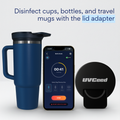
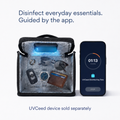
For the equipment housings, cords, exam tables, gel bottle exteriors, and front-desk surfaces on that list, a 254nm UV-C handheld device gives staff a fast way to add a documented disinfection pass between patients without adding wet-contact time or chemical odor to a room that needs to turn over quickly. This matters most in urgent care, where the whole operating model depends on getting a room ready for the next patient in minutes, not the longer dwell times that some chemical disinfectants require to work effectively. The UVCeed handheld device pairs with an app that verifies dose delivery: staff aim the device, hold steady until the app confirms the section is complete, then move to the next section, which creates a record that the surface received an actual, measured UV-C dose rather than a quick wipe that may or may not have worked.
That documentation matters for accreditation reviews and for administrators who want evidence, not just assurance, that between-patient protocols are being followed consistently across every room and every shift. It does not touch the probe reprocessing workflow at all. It is built for the housings, cords, and counters around the exam, not the device that goes on or in a patient.
What UV-C Does Not Do: An Honest Limitations Note
UV-C light at 254nm does not replace the EPA-registered, probe-specific high-level or low-level disinfection required for any ultrasound transducer that contacts mucous membranes, broken skin, or sterile body sites. Those protocols exist because they have been validated against the specific pathogens and use cases involved, and AIUM and CDC guidance treats them as mandatory, not optional. AIUM 2025 Revision UV-C also only disinfects surfaces in direct line of sight, meaning shadowed areas, crevices, and the underside of objects require repositioning or a different method entirely. It does not address airborne transmission of respiratory pathogens, which is a separate risk pathway covered by ventilation and masking guidance. And using a UV-C device does not change or reduce any CDC recommendation, state licensing requirement, or accreditation standard your facility is already obligated to follow. It is a supplemental layer for the between-patient surface gap, not a substitute for anything in your existing infection control plan.
Frequently Asked Questions
Does UV-C disinfection replace high-level disinfection for transvaginal or transrectal probes? No. Internal transducers require EPA-registered high-level disinfection per AIUM and CDC guidance, applied by trained staff following the manufacturer's validated process. UV-C is not a substitute for that protocol. AIUM 2025 Revision
What sparked the 2025 CDC ultrasound gel alert? CDC investigators identified 42 genetically related bloodstream infection isolates connected to nonsterile, multi-use ultrasound gel used in percutaneous procedures across multiple U.S. states and two other countries between 2023 and 2025, prompting a nationwide clinician alert in May 2025. MMWR
How often should ultrasound equipment housings and exam room surfaces be disinfected during a busy urgent care shift? Between every patient, at minimum for high-touch surfaces like exam tables, equipment housings, and cords, consistent with the priority areas outlined in the CDC's outpatient infection prevention guidance. CDC Outpatient Guide
Can UV-C handheld devices help with accreditation reviews? They can support a documented, consistent between-patient surface disinfection routine, which is relevant to the physical environment and infection control criteria reviewed during Urgent Care Association accreditation, though they do not replace any required written policy or probe-specific protocol. Urgent Care Association Accreditation
Is bacterial contamination on ultrasound probes actually common, or is this an edge case? It is common enough to be a recurring finding in the literature. A 2025 multi-center emergency department study found bacterial contamination on roughly half of probes tested even after cleaning, and an earlier PLOS ONE study found low-level disinfection only partially effective on transvaginal probes. Journal of Hospital Infection, 2025 PLOS ONE
Bottom Line for Administrators
The 2025 CDC gel alert and the peer-reviewed contamination data behind it point to the same conclusion: ultrasound and point-of-care equipment carries real infection control risk, and the fixes require both strict adherence to validated probe protocols and consistent attention to the equipment and surfaces around the exam. Probes that touch mucous membranes or broken skin need their EPA-registered high-level or low-level disinfectant, no exceptions. Everything else in the room, the housings, cords, gel bottles, tables, and check-in counters, needs a fast, repeatable, documented process that survives a high-volume shift. That is the gap a 254nm UV-C handheld device is built to close.
Want More Articles Like This?
Get research on UV-C treatment and product updates delivered to your inbox.