TL;DR
Everything Sprouts, LLC of Minneapolis has recalled 5-ounce containers of alfalfa sprouts, plus its Crunchy Protein Sprout Mix and Zesty Garlic Mix cups, after at least 55 people across 15 states got sick with E. coli and Salmonella. Four people have been hospitalized. Raw sprouts are grown in warm, humid conditions that are ideal for bacteria, and no amount of rinsing at home reliably makes them safe once contaminated. This piece covers what the recall actually says and what to do with the cutting boards, counters, and containers the sprouts touched.
What Actually Happened
The outbreak has sickened at least 55 people in 15 states, including Florida, Minnesota, North Carolina, and Wisconsin, according to CBS News. Of those, 46 were infected with E. coli, 7 with Salmonella, and 2 with both, per NBC News. Four people have been hospitalized; no deaths have been reported. Illness onset dates range from May 31 to August 8, 2026.
The FDA recall notice covers Everything Sprouts and Calco-brand alfalfa sprouts distributed since May 27, 2026, sold in 5-ounce containers, along with Crunchy Protein Sprout Mix and Zesty Garlic Mix cups. The company says it has been testing product daily since the outbreak began and has not received a positive lab result, per its statement to NBC News, which is part of why sprout-linked outbreaks are notoriously hard to pin to a single contaminated batch.
The CDC outbreak page advises anyone with the recalled product to throw it out or return it, and to wash anything the sprouts touched, including reusable containers, refrigerator shelves, and cutting surfaces.
Why Sprouts Keep Causing Outbreaks
Alfalfa sprouts are one of the most consistent repeat offenders in foodborne illness because of how they are grown. Seeds are germinated in warm water for several days before harvest, and the FDA notes that this same warm, moist environment ideal for sprouting seeds is also ideal for bacterial growth, including E. coli, Salmonella, and Listeria. Unlike leafy greens, sprouts cannot be effectively washed clean at home; bacteria can be internalized inside the seed itself before it ever germinates.
That is why the FDA's standing guidance, reiterated on the recall page, is that children, older adults, pregnant women, and anyone with a weakened immune system should avoid raw sprouts entirely, and that everyone else should cook sprouts thoroughly if eating them at all rather than relying on a rinse.
What to Actually Do in Your Kitchen
- Check for the recalled product. Everything Sprouts or Calco alfalfa sprouts, Crunchy Protein Sprout Mix, or Zesty Garlic Mix cups distributed since May 27, 2026. Discard in a sealed bag or return for refund.
- Wash any container or bag the sprouts were stored in, including reusable produce bags and refrigerator bins.
- Clean the refrigerator shelf and any cutting boards or countertops the sprouts touched, since both E. coli and Salmonella can transfer to nearby surfaces.
- Wash your hands and any utensils used to handle the sprouts before touching other food.
- Watch for symptoms. E. coli symptoms typically include severe stomach cramps and diarrhea (often bloody) starting 3 to 4 days after exposure, per the CDC; Salmonella symptoms usually begin within 6 hours to 6 days. Contact a doctor if symptoms are severe or persistent.
Where UV-C Fits (and Where It Does Not)
UV-C at 254 nm inactivates E. coli and Salmonella on hard, non-porous surfaces by damaging the DNA that lets them replicate. That makes it well suited to the cutting board edge (non-porous sections), the counter, the refrigerator bin, and container exteriors, without introducing a chemical near food-prep areas.
254 nm UV-C does inactivate bacteria on food surfaces themselves when there is direct line of sight, but FDA rules prevent us from citing a specific reduction percentage on food, so we do not. For sprouts specifically, UV-C cannot reach bacteria that may be internalized inside the seed or plant tissue, which is exactly why the FDA's guidance for high-risk groups is to avoid raw sprouts rather than rely on any cleaning method, including UV-C, as a substitute.
Where UVCeed Fits
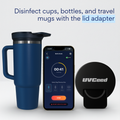
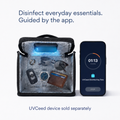
UVCeed is a 254 nm UV-C device that pairs with your phone camera and app to guide a session across the exact surface you are treating. You aim UVCeed at one section, hold it steady while the app confirms that section is complete, then move to the next section if the surface is larger than the coverage area.
For a sprout-related cross-contamination scare, run a session on the counter, the cutting board's hard edges, the refrigerator bin, and any reusable containers. No chemical residue near food-adjacent surfaces, no wipes to buy or throw away, and a tilt-safety shutoff that turns the lamp off if the device rotates away from the target.
FAQ
Can I just rinse the sprouts and eat them? No. The FDA states that washing sprouts does not reliably remove bacteria because contamination can be internalized inside the seed before germination, per the FDA's sprout safety guidance.
Is this the same outbreak as other recent produce recalls? No. This is a distinct outbreak from the Cyclospora lettuce and jalapeño Salmonella outbreaks reported earlier in 2026. The FDA is tracking multiple concurrent foodborne outbreak investigations this year, per Food Safety News.
Who is most at risk from sprout-related illness? Children, older adults, pregnant women, and people with weakened immune systems face the highest risk of severe illness, which is why the FDA recommends these groups avoid raw sprouts altogether, per the FDA.
Can UV-C disinfect the sprouts themselves? 254 nm UV-C can inactivate bacteria on exposed food surfaces with direct line of sight, but it cannot reach bacteria internalized in plant tissue, and FDA rules prevent us from citing a reduction percentage on food. For sprouts, the FDA's guidance to avoid raw consumption for high-risk groups stands regardless of any surface treatment.
How long do E. coli and Salmonella symptoms take to show up? E. coli symptoms typically start 3 to 4 days after exposure; Salmonella symptoms usually start within 6 hours to 6 days, per the CDC outbreak page.
The Bottom Line
Sprouts remain one of the hardest produce categories to make safe at home because the same warm, moist growing conditions that produce the sprout also favor bacteria. Clear the recalled product out, treat the surfaces it touched, and follow the FDA's standing guidance on who should avoid raw sprouts entirely.
Want More Articles Like This?
Get research on UV-C treatment and product updates delivered to your inbox.