By UVCeed Health & Wellness | April 2026
The CDC just issued a warning that should concern every parent, traveler, and gym-goer in America: drug-resistant Shigella infections have increased substantially across the United States over the past decade. By 2023, roughly 8.5% of Shigella cases were classified as highly drug-resistant - meaning the bacteria did not respond to any of the commonly prescribed antibiotics used to treat them.
In 2011, that number was zero.
One in three infected patients required hospitalization. The symptoms include bloody diarrhea, fever, and stomach pain that can persist for weeks. And the most alarming part of the CDC's report is a single, chilling detail: there are currently no FDA-approved oral antibiotics available to treat the drug-resistant strains.
Read that again. The bacteria are spreading. The drugs don't work. And the primary transmission route is one you encounter every single day - contaminated surfaces.
How Drug-Resistant Shigella Spreads
Shigella doesn't travel through the air like the flu. It spreads the old-fashioned way - through contact with contaminated surfaces and then touching your mouth or food. According to the CDC, people become infected when they get Shigella germs on their hands from contaminated surfaces and then touch their face or handle food.
This includes surfaces like changing tables, bathroom fixtures, shared kitchen areas, daycare centers, gym equipment, restaurant tables, and public restrooms. It also includes everyday objects you carry with you - your phone, your keys, your water bottle.
The bacteria can survive on hard surfaces for extended periods. A single contaminated doorknob, countertop, or piece of shared equipment can infect multiple people before anyone realizes there is a problem.
Children, travelers, and people with weakened immune systems are at the highest risk. But anyone who touches a contaminated surface and then touches their mouth - which is essentially everyone, multiple times per day - is a potential target.
The Superbug Problem Is Bigger Than Shigella
Shigella is not an isolated case. It is part of a much larger crisis that public health officials have been warning about for years: the rise of antibiotic-resistant superbugs.
The overuse and misuse of antibiotics - in medicine, in agriculture, and in consumer products - has accelerated the evolution of bacteria that our drugs can no longer kill. The CDC has identified antibiotic resistance as one of the most urgent public health threats in the world.
And here is the part that most people miss: chemical disinfectants are contributing to the problem. A study covered widely in health media this month found that antibacterial products containing certain chemical compounds may actually be driving bacteria to develop resistance faster. The very products people buy to protect themselves may be making the next generation of superbugs harder to kill.
This creates a vicious cycle. Bacteria evolve to resist antibiotics. Chemical disinfectants push resistance further. And consumers are left with fewer and fewer tools that actually work.
Unless you step outside the chemical paradigm entirely.
UV-C Light: The Disinfection Method Bacteria Cannot Outsmart
There is one category of disinfection technology that bacteria have never developed resistance to in over a century of use: ultraviolet germicidal irradiation.
UV-C light - specifically the 265nm wavelength used in hospital-grade disinfection systems - destroys pathogens by physically breaking apart their DNA and RNA. It does not rely on chemical reactions that bacteria can adapt to. It does not leave residues that create selection pressure for resistant strains. It works through a fundamental physical mechanism that organisms cannot evolve around, because there is no biological workaround for having your genetic material shattered.
This is why hospitals have used UV-C disinfection for decades, particularly against the most dangerous drug-resistant organisms. When antibiotics fail and chemical disinfectants fall short, UV-C light still works. It worked on MRSA. It worked on C. diff. It worked on SARS-CoV-2. And it works on Shigella.
The problem, until recently, was that hospital-grade UV-C technology was exactly that - confined to hospitals. Bulky, expensive, and inaccessible to the people who need surface disinfection most: families, travelers, and anyone navigating a world full of shared surfaces and drug-resistant bacteria.
That is the problem UVCeed was built to solve.
UVCeed: Hospital-Grade UV-C Disinfection That Fits in Your Pocket
UVCeed is a portable, medical-grade UV-C disinfection device that uses the same 265nm wavelength trusted by healthcare facilities to eliminate up to 99.99% of harmful bacteria and viruses in just 30 seconds. No chemicals. No residue. No contribution to antibiotic resistance.
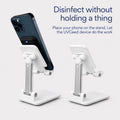
It clips directly to your iPhone via MagSafe and uses a patented AI-powered app to guide you through the disinfection process in real time - showing you exactly what is being treated, ensuring proper distance and coverage, and confirming when the surface reaches 99.99% disinfection.
Where it matters most in a world of drug-resistant bacteria:
Daycare and schools. Shigella spreads rapidly through children's environments. Changing tables, high chairs, shared toys, and classroom surfaces are all prime transmission points. UVCeed lets parents and caregivers disinfect these surfaces in 30 seconds without exposing children to chemical residues.
Gym and fitness equipment. Shared gym equipment is one of the most bacteria-dense environments most people encounter regularly. Studies show gym surfaces harbor more bacteria than public restrooms. A quick pass with UVCeed before your workout eliminates the risk without wipes that take 4-10 minutes to actually work.
Travel. Hotel rooms, airplane tray tables, rental car steering wheels, restaurant tables, public restrooms - every surface a traveler touches is a surface someone else touched first. UVCeed is TSA-compliant, pocket-sized, and ready to use anywhere.
Kitchen and food prep. Shigella can spread through contaminated food and surfaces. UVCeed disinfects cutting boards, countertops, and utensils without chemicals that could contaminate your food.
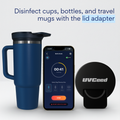
Water bottles and drinkware. Your reusable water bottle is one of the most bacteria-dense objects you own. The Universal Fit Lid Adapter positions UVCeed over any bottle opening - Stanley, Yeti, Hydro Flask, baby bottles, travel mugs - for targeted interior disinfection.
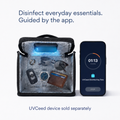
Personal items. Your phone carries 10 times more bacteria than a toilet seat. Your keys, wallet, earbuds, and makeup brushes are not far behind. The UVCeed Disinfecting Tote creates an enclosed UV-C chamber for fast, chemical-free treatment of the items you touch most.
Why Chemical Wipes Are Not Enough
Most people reach for disinfecting wipes when they want to clean a surface. What most people do not realize is that per EPA guidelines, chemical disinfecting wipes require the surface to remain visibly wet for the full contact time listed on the label - typically 4 to 10 minutes - to actually kill bacteria. A quick wipe-and-go does almost nothing.
Beyond the contact time problem, chemical wipes introduce another issue in the age of superbugs: they add selection pressure that can drive bacterial resistance. Sub-lethal exposure to chemical disinfectants - which is exactly what happens when you wipe a surface and let it dry before the required contact time - teaches surviving bacteria to tolerate those chemicals. The next generation is harder to kill.
UV-C light does not have this problem. There is no sub-lethal dose that trains bacteria. The mechanism is physical destruction of genetic material, not a chemical interaction that organisms can adapt to. In 30 seconds, UVCeed delivers a verified lethal dose to surface pathogens - confirmed in real time through the app.
The Complete Protection Kit
For comprehensive coverage against surface pathogens, the UVCeed Complete Protection Kit includes everything you need:
- UVCeed Device - portable, hospital-grade 265nm UV-C disinfection that clips to your iPhone
- Universal Fit Lid Adapter - disinfects the inside of any water bottle, cup, or travel mug with openings from 0.5 to 4.5 inches
- Disinfecting Tote - enclosed UV-C chamber for keys, wallets, phones, earbuds, baby items, and personal accessories
The device is rechargeable via USB-C, delivers approximately 60-80 disinfection cycles per charge, and is backed by 8+ U.S. patents. It was developed by Bonutti Technologies - a medical device incubator with 30+ years of innovation and over 400 patents - and is currently deployed in healthcare facilities including Sarah Bush Lincoln Hospital.
Named one of Fast Company's Next Big Things in Tech. Engineered by surgeons. Trusted by hospitals. Now available to families.
Shop UVCeed at uvceed.com - Use code UV15OFF for 15% off + free shipping.
The Bottom Line
The CDC's Shigella warning is not an isolated headline. It is the latest signal in a long-term trend that public health officials have been sounding alarms about for years: the antibiotics we have relied on for decades are losing the war against bacterial evolution, and chemical disinfectants may be making the problem worse.
You cannot control what bacteria evolve to resist. But you can control how you disinfect the surfaces your family touches every day. UV-C light has never produced a resistant organism in over 100 years of use. It is the one disinfection method that works on the physics of destruction rather than the chemistry of interaction - and that fundamental difference is why it still works when everything else fails.
Stop fighting superbugs with the tools that created them. Start using the one they cannot beat.
Get UVCeed - 15% Off + Free Shipping | Code: UV15OFF
UVCeed is manufactured by UVCeed, LLC. UV-C disinfection is not a medical treatment for bacterial infections. If you suspect a Shigella or other bacterial infection, consult a healthcare provider. *Results based on independent laboratory testing: 99.9% reduction of Staphylococcus aureus in 15 seconds, 99.99% reduction of E. coli in 24 seconds, and 99.9% reduction of SARS-CoV-2 in 32 seconds on hard non-porous surfaces at 12.7 cm. See uvceed.com for full testing details and disclaimers.
Want More Articles Like This?
Get research on UV-C treatment and product updates delivered to your inbox.