TL;DR
A 2026 study analyzing 185 water samples detected Naegleria fowleri, the organism behind "brain-eating amoeba" infections, in 34% of samples collected across Lake Mead National Recreation Area, Grand Teton, and Yellowstone, with the highest concentration found at Polecat Hot Springs in Grand Teton, according to National Parks Traveler. This isn't an abstract risk: an 8-year-old Louisiana girl died in August 2026 after likely contracting the infection while swimming in a lake near her home, reported by CNN. We're going to be straight about what disinfection can and can't do here, because this is a case where the honest answer matters more than a sales pitch.
What actually happened
Lillian Smart, age 8, died after contracting Naegleria fowleri, which the Louisiana Department of Health said she likely encountered while swimming in Lake Claiborne, roughly 30 miles northwest of Ruston, Louisiana. Around the same period, a North Carolina teen was also hospitalized in critical condition after a suspected infection, per U.S. News.
The CDC's own data confirms why these cases draw so much attention despite being rare: the infection, called primary amebic meningoencephalitis, is fatal in roughly 98% of confirmed cases, with death typically occurring within five to ten days of symptom onset, according to CDC data. The organism thrives in warm freshwater, lakes, rivers, hot springs, and poorly maintained pools, and infection occurs almost exclusively when contaminated water is forced up the nose with enough pressure to reach the brain via the olfactory nerve. It is not contracted by drinking water, and it does not spread person to person.
Why this is genuinely different from most of what we cover
Most of the pathogens in our coverage, Salmonella, Listeria, norovirus, MRSA, spread through surface contact, food, or close person-to-person exposure, which is exactly the category UV-C surface disinfection is built to address. Naegleria fowleri does not spread that way. It's a waterborne organism that requires forceful nasal water entry during freshwater activities like swimming, diving, or water skiing in warm lakes and rivers.
254 nm UV-C is genuinely effective against protozoan organisms in controlled water treatment systems, dosed water treatment applications have long used UV-C for exactly this kind of pathogen. But a handheld surface disinfection device is not a water treatment system, and it is not designed to treat an entire lake, river, or even a home pool's full water volume. We're not going to pretend otherwise.
What actually reduces your risk
- Avoid submerging your head or forcing water up your nose in warm freshwater lakes and rivers, especially during high-temperature months when the organism is most active.
- Use nose clips during activities like water skiing, tubing, or diving in warm freshwater if you're going to be in a position where water could be forced upward.
- Avoid disturbing bottom sediment in shallow, warm freshwater, since the organism tends to concentrate there.
- Don't use untreated tap or well water for nasal irrigation (neti pots); the CDC specifically warns this has caused infections when people assumed tap water was automatically safe for nasal use.
- Keep home pools and hot tubs properly chlorinated and maintained, since adequately treated water is not a documented source of infection.
Where UV-C actually fits, and where it doesn't
We won't claim UVCeed protects against Naegleria fowleri infection, because the transmission route, forced nasal water entry during freshwater recreation, isn't something a surface disinfection device addresses. Anyone telling you otherwise is overselling their product.
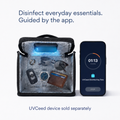
What UV-C legitimately helps with in this context is the gear that comes back from a lake trip. Coolers, water shoes, nose clips, dive masks, and other equipment can carry lake water, sediment, and whatever else was in it back to your car, your porch, and your kitchen counter. 254 nm UV-C light inactivates a broad range of bacteria and can help with the general contamination that hard gear surfaces pick up during freshwater recreation, aiming at one section of gear, holding until the app confirms that section's dose is complete, then moving to the next.
This is a supporting step for general hygiene around lake gear, not a Naegleria fowleri prevention method. The prevention that actually works is behavioral: nose clips, avoiding head submersion in warm freshwater, and not using untreated water nasally.
FAQ
Can UV-C protect me from brain-eating amoeba? No. Infection occurs through forced nasal water entry during freshwater activities, not through surface contact, so surface disinfection doesn't address the actual transmission route. Nose clips and avoiding head submersion in warm freshwater are the evidence-based precautions.
How common is Naegleria fowleri infection really? It's rare, typically a handful of confirmed U.S. cases per year, but the fatality rate is around 98%, which is why cases receive significant attention despite the low overall incidence.
Can I get infected from drinking contaminated lake water? No. Infection requires water to be forced up the nose with enough pressure to reach the brain via the olfactory nerve. Swallowing contaminated water does not cause this infection.
Is tap water safe for nasal rinsing? Not without proper treatment. The CDC recommends using distilled, sterile, or previously boiled and cooled water for nasal irrigation devices like neti pots, since untreated tap water has been linked to infections.
Should I avoid swimming in lakes entirely because of this? The CDC does not recommend avoiding recreational water entirely; it recommends specific precautions (nose clips, avoiding head submersion in warm shallow freshwater, avoiding disturbing sediment) rather than blanket avoidance.
Want More Articles Like This?
Get research on UV-C treatment and product updates delivered to your inbox.