TL;DR
Several lots of Paturages Comtois and Val de Saone brie and camembert were pulled from Leclerc and Intermarche stores and restaurant supply chains on September 2, 2026, after Listeria monocytogenes was detected in a batch manufactured the same day. The affected cheese moved through supply channels from May 22 through September 2, meaning product could still be in refrigerators or on cheese boards right now. Soft cheeses are one of the most common Listeria vehicles for a reason worth understanding.
What actually happened
According to France's official recall registry Rappel Conso, the brie was sold in one-kilogram format and distributed to retail stores and restaurants across France between May 22 and September 2, 2026. Specific affected lot codes carry minimum durability dates ranging from August 19 through October 11, 2026, meaning some of the recalled product could still appear fresh and unexpired to a consumer checking the date stamp alone.
The recall notice, covered by Allo Docteurs, instructs anyone who purchased the affected lots to not consume the product, not use it, and destroy it rather than return it for a refund, a standard precaution with Listeria given how resilient the bacteria is once it establishes itself in a refrigerator environment. Anyone who has eaten the product and develops fever with headache and muscle aches is advised to contact a doctor, since those symptoms can signal the early stage of listeriosis.
This isn't the first time soft cheese has driven a multi-country Listeria event. The CDC's investigation into a 2022 U.S. outbreak tied to brie and camembert resulted in hospitalizations across multiple states, a reminder that soft, moisture-rich cheeses are a recurring category risk rather than a one-off event.
Why soft cheese is a Listeria magnet
Unlike hard cheeses, soft-ripened cheeses like brie and camembert have higher moisture content and a near-neutral pH as they age, both of which are exactly the conditions Listeria monocytogenes needs to survive and multiply. The FDA notes that Listeria is unusual among foodborne pathogens because it can grow slowly even at refrigerator temperatures, meaning a contaminated wheel doesn't need to sit at room temperature to become more dangerous over time. Pregnant women, adults over 65, and anyone immunocompromised face the highest risk, since listeriosis can cause miscarriage, stillbirth, or severe systemic infection in those groups.
What to actually do this week
- Check any brie or camembert in your refrigerator against the recalled lot codes if you shop at retailers carrying French imports.
- Wipe down the cheese drawer, cutting board, and cheese knife after removing any recalled or questionable product, since Listeria can transfer from packaging to surfaces even without direct contact with the cheese itself.
- Keep ready-to-eat soft cheeses away from other refrigerated foods that won't be cooked before eating.
- Run a UV-C session over the cheese board, knife, and refrigerator shelf area as a routine step after cheese-heavy gatherings, not just after a recall.
Where UVCeed fits
254 nm UV-C inactivates Listeria monocytogenes on food surfaces, including cheese rinds and packaging, by damaging the bacteria's DNA. FDA rules prevent us from citing a specific reduction percentage on food, so we don't, but UV-C is a genuine supplement for the surfaces and tools around ready-to-eat foods, where Listeria's ability to survive refrigeration makes ongoing surface hygiene matter more than with most other pathogens.
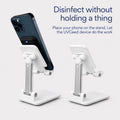
With UVCeed, you aim the device at one section, the cheese board, the knife, the fridge shelf, and hold it steady until the app confirms that section is complete. If the surface is larger than the coverage area, move to the next section and repeat. No chemical residue near food.
FAQ
How do I know if my brie is part of the recall? Check the specific lot codes and minimum durability dates against the official recall notice from the retailer or manufacturer where you purchased the cheese.
Can UVCeed be used directly on cheese? Yes. 254 nm UV-C inactivates Listeria on food surfaces including cheese rinds. FDA rules prevent us from citing a specific reduction percentage on food, so we don't. This is a supplement to, not a substitute for, discarding recalled product.
Why is Listeria more dangerous than other foodborne bacteria for some people? Listeria can cross the placental barrier and cause miscarriage or stillbirth in pregnant women, and it can cause severe systemic infection in older adults and immunocompromised people, groups for whom the CDC recommends avoiding certain soft cheeses altogether unless labeled pasteurized and verified safe.
Does refrigeration stop Listeria from growing? No. Listeria is one of the few foodborne pathogens that can multiply slowly even at standard refrigerator temperatures, which is part of why soft cheese recalls carry an instruction to destroy rather than simply chill the product longer.
What symptoms should I watch for after eating recalled cheese? Fever, headache, muscle aches, and in some cases stiff neck or confusion, according to the recall notice and CDC listeriosis guidance. Contact a doctor if these appear after consuming affected product.
Want More Articles Like This?
Get research on UV-C treatment and product updates delivered to your inbox.