TL;DR
Fall football and soccer season means shared locker rooms, shared pads and gear, and skin-to-skin contact, exactly the conditions the CDC identifies as the primary drivers of MRSA spread in athletic settings. MRSA, or methicillin-resistant Staphylococcus aureus, doesn't respond to the antibiotics that treat ordinary staph infections, which is why prevention at the equipment and facility level matters more in sports than in almost any other youth activity.
What's actually driving the risk
The CDC's guidance for coaches and athletic directors is direct about why athletic facilities are a recurring MRSA risk: the bacteria spreads through skin-to-skin contact and through shared equipment, towels, and surfaces, all of which are baseline features of contact sports like football and wrestling and are increasingly common in soccer, volleyball, and other team sports that share locker rooms and gear storage.
Locker rooms compound the risk because they combine several conditions MRSA favors at once: warm, humid environments from showers, damp towels and uniforms that don't always get laundered between practices, and high turnover of skin contact across shared benches and equipment. According to coverage from EOS Surfaces on locker room infection risk, all contact sports using shared, damp, crowded locker rooms carry meaningful MRSA outbreak risk, which is why school athletic programs are increasingly expected to maintain documented cleaning policies covering locker rooms, shared equipment, and uniforms specifically, not just general facility cleaning.
The prevention guidance is consistent across sources: shared equipment should be cleaned and allowed to fully dry between uses, since MRSA and other staph bacteria survive longer on damp surfaces than dry ones.
What to actually do this season
- Make sure any cuts, scrapes, or turf burns are covered with a clean, dry bandage before practice or games, since broken skin is the most common entry point for MRSA.
- Shower immediately after practice or games rather than waiting until arriving home.
- Don't share towels, razors, or personal hygiene items with teammates.
- Wash practice uniforms and gear after every use rather than reusing them across multiple sessions.
- Disinfect shared equipment, pads, helmets, and locker room benches on a consistent schedule, and make sure gear is fully dry before it goes back in a bag or locker.
Where UVCeed fits
254 nm UV-C inactivates Staphylococcus aureus, including MRSA, on hard surfaces by damaging the bacteria's DNA so it can't reproduce. For gear that can't go through a washing machine, like shin guards, helmet padding, or shared weight room equipment, a UV-C session offers a chemical-free way to reduce bacterial load between uses without adding moisture or residue that could counteract the goal of keeping gear dry.
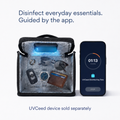
With UVCeed, you aim the device at one section, the helmet padding, the locker bench, the equipment bag interior, and hold it steady until the app confirms that section is complete. If the surface is larger than the coverage area, move to the next section and repeat.
FAQ
What is MRSA and why is it different from a regular staph infection? MRSA is a strain of Staphylococcus aureus that has become resistant to methicillin and related antibiotics, making infections harder to treat than standard staph infections. It typically enters through cuts or broken skin.
Why are locker rooms a common MRSA risk point? Warm, humid conditions, shared equipment, damp towels, and high skin-to-skin contact all combine to create favorable conditions for MRSA spread, according to CDC guidance for athletic facilities.
Can UV-C disinfect sports equipment that can't be washed? Yes. 254 nm UV-C inactivates MRSA and other bacteria on hard surfaces like helmet padding, shin guards, and equipment bags without adding moisture or chemical residue.
What are the warning signs of a MRSA skin infection? A red, swollen, painful bump that may resemble a spider bite, often warm to the touch and sometimes draining pus. Anyone with a suspicious skin infection, especially an athlete, should see a doctor promptly.
How often should shared athletic equipment be cleaned? The CDC recommends cleaning shared equipment after each use and allowing it to dry fully before the next use, since MRSA survives longer on damp surfaces.
Want More Articles Like This?
Get research on UV-C treatment and product updates delivered to your inbox.