TL;DR
The Florida Department of Health confirmed the state's first Vibrio vulnificus death of 2026 in Palm Beach County, with 11 confirmed cases statewide so far. Vibrio vulnificus is a naturally occurring bacterium in warm brackish and saltwater. It spreads primarily through raw or undercooked shellfish and through open wounds exposed to warm seawater. One in five infected people die, sometimes within 24 to 48 hours of symptoms. If you're immunocompromised, have liver disease, or have any open wound, take Florida's coastal water advisories seriously. And for shared surfaces on your fishing gear, cooler, cutting boards, and seafood prep zones, 254 nm UV-C in an app-guided session is a real defensive layer.
What was reported
Per the Fox Weather report on July 26, 2026:
- First Vibrio vulnificus death of 2026 confirmed in Palm Beach County
- 11 confirmed cases so far in 2026 statewide
- Florida Department of Health statement: "Most people get vibriosis by eating raw or undercooked shellfish, particularly oysters."
- Transmission routes: consuming raw/undercooked shellfish (primary); direct contact with warm saltwater through open wounds
- Elevated risk following major hurricanes; case counts spiked after Hurricane Ian (2022) and Hurricane Helene (2024)
Sources:
- Florida first flesh-eating bacteria death 2026 - Fox Weather, July 26, 2026
- Vibrio Species Causing Vibriosis - CDC
- Vibrio vulnificus - Florida Department of Health
What Vibrio vulnificus actually does
Vibrio vulnificus is not new. It has always been present in warm seawater along the Gulf and southeastern Atlantic coasts. What has changed is water temperature, storm frequency, and human behavior at the water's edge.
Clinical presentation:
- Ingested (raw oysters, undercooked shellfish): watery diarrhea, cramps, nausea, vomiting, fever within 12 to 72 hours. In healthy adults it can be mild. In immunocompromised or liver-disease patients it can progress to septicemia.
- Wound-acquired (open cut in warm seawater): rapid skin blistering, tissue necrosis, potentially requiring surgical debridement or amputation. Progresses to systemic infection quickly.
- Case fatality rate: about 1 in 5 overall. Higher for wound cases with delayed treatment.
The CDC estimates roughly 80,000 vibriosis cases annually in the U.S., with about 100 deaths. See: Vibrio Illness (Vibriosis) - CDC.
Who is at highest risk
- Chronic liver disease (cirrhosis, hepatitis B or C, hemochromatosis)
- Immunocompromised status (chemotherapy, transplant recipients, HIV, long-term steroids)
- Diabetes
- Chronic kidney disease
- Anyone with an open wound or recent tattoo, piercing, or surgical site entering warm salt or brackish water
If you have any of the above, do not eat raw oysters. Do not enter Florida coastal or brackish water with any open wound. Do not gut, scale, or clean raw fish without gloves.
Where UV-C fits into a defensive layer
UV-C does not treat an active Vibrio infection. If you suspect exposure, this is a call-your-doctor-immediately situation.
What UV-C does is reduce the cross-contamination risk on the surfaces where raw seafood is handled:
- Kitchen prep surfaces where raw fish or shellfish were butchered
- Cutting boards after raw seafood contact
- Cooler interiors and exteriors where the catch of the day rode home
- Fishing knife handles, fillet knives, and gutting tables
- Fishing rod grips after handling bait
- Boat surfaces where wet fish landed
254 nm UV-C damages the DNA of Vibrio and other Gram-negative bacteria, and it's used in commercial seafood processing as a supplemental disinfection method. See: UV in Seafood Processing - FDA fish and fishery products hazards guide.
Where UVCeed fits
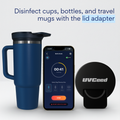
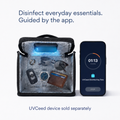
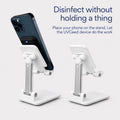
UVCeed is a smartphone-mounted 254 nm UV-C device that runs an app-guided session. You aim it at the surface, hold it steady, and the app confirms when that section is complete. For a large cutting board, cooler, or boat surface, you move to the next section and run another session.
Coastal-family features:
- 254 nm UV-C germicidal wavelength
- App-guided sessions with confirmation per section
- Tilt-safety shutoff, so the beam stops if pointed away from the surface
- USB-C charging
- Pocket-sized, fits in a tackle box or beach bag
Post-fishing / post-oyster-shucking session checklist
Immediately after processing seafood at home:
- Wash cutting board with hot soapy water, dry, then run a UV-C session per section
- Session the knife handle and blade
- Session the sink faucet handles (hot and cold)
- Session the countertop where the fish rested (each section)
- Session the cooler interior after emptying and washing
- Session the exterior cooler handle
In the field:
- Session the fillet knife handle before packing up
- Session the tackle box latch and lid
- Session your reusable water bottle mouthpiece if you were handling bait
- Session your phone case and screen (they are always covered in fish slime somehow)
Can I use UVCeed on the raw fish itself? Yes. 254 nm UV-C inactivates bacteria on food surfaces including fish. FDA rules prevent us from citing a specific reduction percentage on food, so we don't. UV-C is a supplement, not a substitute. Still cook fish to an internal temperature of 145°F, and if you have any Vibrio risk factors, do not eat raw or undercooked shellfish. Period.
FAQ
How long does Vibrio survive on hard surfaces? Vibrio vulnificus can survive on wet surfaces for hours to days depending on temperature and organic load. It's why the "clean the cutting board immediately" rule is not optional in coastal kitchens.
Is UV-C safe around food? UVCeed is safe to use on and around food and food-contact surfaces. FDA regulations prevent us from making specific reduction claims on food.
Is UV-C safe around kids and pets? UVCeed's tilt-safety shutoff means the beam stops if pointed away from a surface. Don't look directly at the light.
What are the early symptoms of a wound-acquired Vibrio infection? Rapidly worsening pain at the wound site, redness spreading outward, skin blistering, fever, and confusion. This is an emergency. Go to an ER immediately and tell them you had recent exposure to warm salt or brackish water.
Should I stop eating oysters? Not necessarily. Healthy people with no liver disease, no immune compromise, and no chronic conditions listed above are at low risk. Cook oysters to 145°F internal temperature and the risk drops dramatically. Raw oyster consumption in high-risk populations is where the deaths cluster.
The bottom line
Florida's first Vibrio vulnificus death of 2026 is a reminder that this pathogen is not exotic and not rare in the Gulf and southeastern coastal states. The primary defenses are behavioral: cook shellfish, keep wounds out of warm salt water, know your own risk factors. On the surfaces of your kitchen, cooler, and fishing gear, 254 nm UV-C is a defensive layer that fits in your tackle box. UVCeed runs app-guided sessions so each section is done, not guessed.
Want More Articles Like This?
Get research on UV-C treatment and product updates delivered to your inbox.