You check in, drop your bag, and reach for the lamp switch. Then you pick up the TV remote to find something to watch. Then you tap the key card on the desk, set down your phone, and settle in. None of it feels like anything worth thinking about. But a small body of hotel research suggests those first few minutes of a stay happen to pass over exactly the surfaces that carry the most bacteria in the room.
The useful takeaway is not that hotels are dangerous. It is that the surfaces we touch without thinking are also the ones we clean the least, and that a simple habit can close the gap.
Why the two smallest things in a hotel room matter most
In a study presented at the American Society for Microbiology, researchers sampled 19 surfaces in hotel rooms across three states, looking at total bacteria and coliform, a category of bacteria associated with fecal contamination. The most heavily contaminated surfaces were not the ones most people would guess. The toilet and bathroom sink ranked high, as expected. But sitting right beside them were two far less obvious objects: the TV remote and the bedside lamp switch.
Both showed high levels of bacterial contamination, which makes sense once you think about how a room gets cleaned. A housekeeper wipes down visible surfaces like the desk, the counter, and the mirror. The remote and the switch are small, easy to overlook, and touched by nearly every guest. The study also found the heaviest contamination overall on the housekeeping cart itself, specifically the sponges and mops. That points to a quiet problem: cleaning tools can move bacteria from one room to the next if they are not managed carefully.
The study was preliminary and small, and the authors could not confirm that the bacteria they found would make anyone sick. What they did conclude is that contamination levels are a reliable sign of how clean a room actually is, and that looking at a surface is not a good way to measure it.
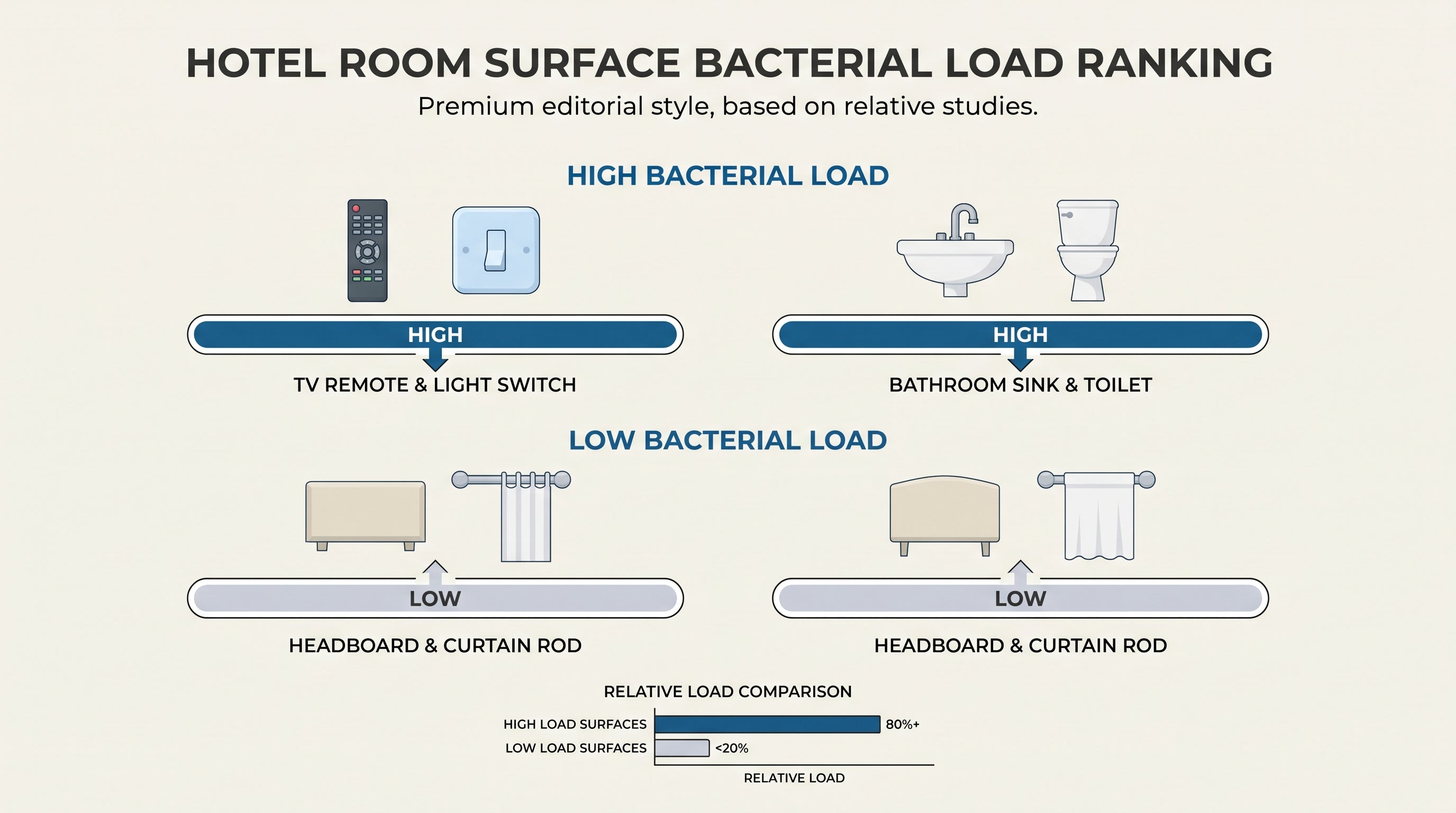
That is the first idea worth keeping: the objects you are most likely to touch when you walk into a hotel room are also the ones a cleaning pass is most likely to miss. See how UVCeed turns them into a quick, visible cleaning step.
On a plane, the dirtiest spot is not the restroom
Airplane restrooms get the attention, but a 2014 study from Auburn University tested a different question: how long do two well-known pathogens survive on the materials you actually sit with for hours at a time? The researchers applied MRSA and E. coli O157:H7 to six cabin surfaces from a major carrier: the armrest, the plastic tray table, the metal toilet button, the window shade, the seat-back pocket cloth, and the seat leather.
The result upends the usual instinct. MRSA survived longest, 168 hours, a full week, on the fabric of the seat-back pocket. E. coli O157:H7 survived longest on the armrest, up to 96 hours, four full days. Both organisms remained viable for days across the cabin materials, and the researchers noted they could spread through ordinary skin contact.
The seat-back pocket deserves a second thought because it is treated like a bin. Passengers tuck used tissues, wrappers, and other waste into it, and it is emptied far more often than it is disinfected. The tray table sits in the same category: it is a hard, frequently touched surface that gets a wipe only when there is time between turns.
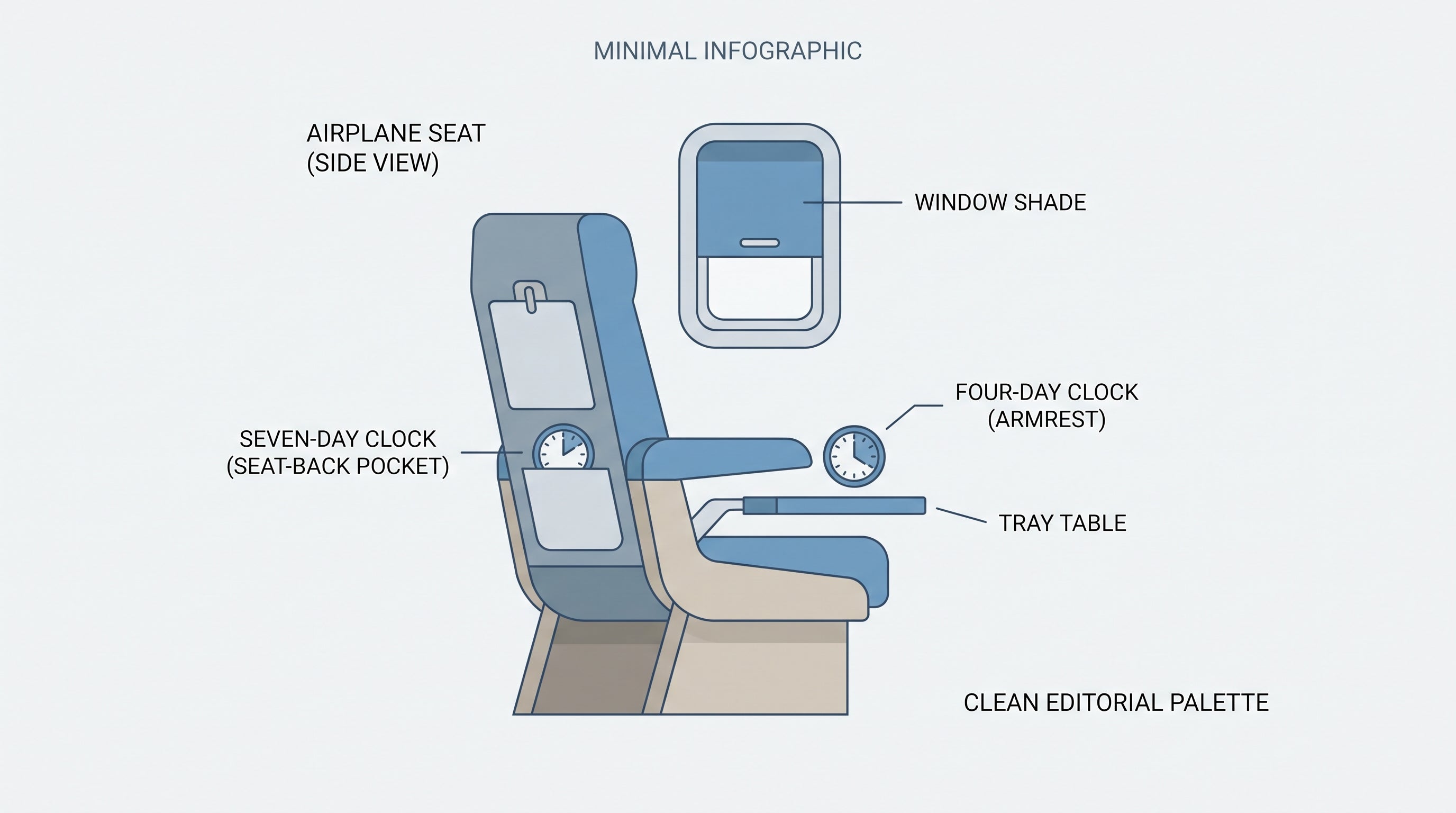
None of this means a flight is a health emergency. It means the surfaces closest to your hands and face for hours are worth a minute of attention, the same way you would wash your hands before eating. The tray table and armrest are exactly the flat, direct-contact surfaces UV-C is built to handle.
Why "looks clean" is not the same as clean
The hotel researchers made one point that applies well beyond travel: visual inspection is a poor way to judge sanitation. A remote and a switch can look spotless and still carry the same load as the bathroom sink, because the bacteria that matter are invisible. That is the gap between how we judge a surface and how it actually is, and it is the reason routines beat guesswork.
The same logic explains why a once-over with a damp cloth leaves people unsure. A cloth removes what it can touch, but it does not tell you what it missed, and it can carry bacteria from one surface to the next, the same cross-contamination the housekeeping-cart finding described.
How UV-C light actually works
UV-C sits in the short-wavelength band of ultraviolet light, and it works on a different principle than wiping. When UV-C light at around 254 nanometers is absorbed by a microbe's DNA and RNA, it causes molecular damage to that genetic material. With a sufficient dose, the microbe can no longer replicate, which means it is inactivated.
Dose is the product of intensity and time, which is why the light needs to stay over the surface for a measured moment rather than a passing sweep. There is also a hard rule of physics attached: the pathogen has to be in the direct path of the light. Anything in shadow stays shielded, which is why flat, direct-contact surfaces like a remote, a switch plate, a tray table, and a phone are the sweet spot.
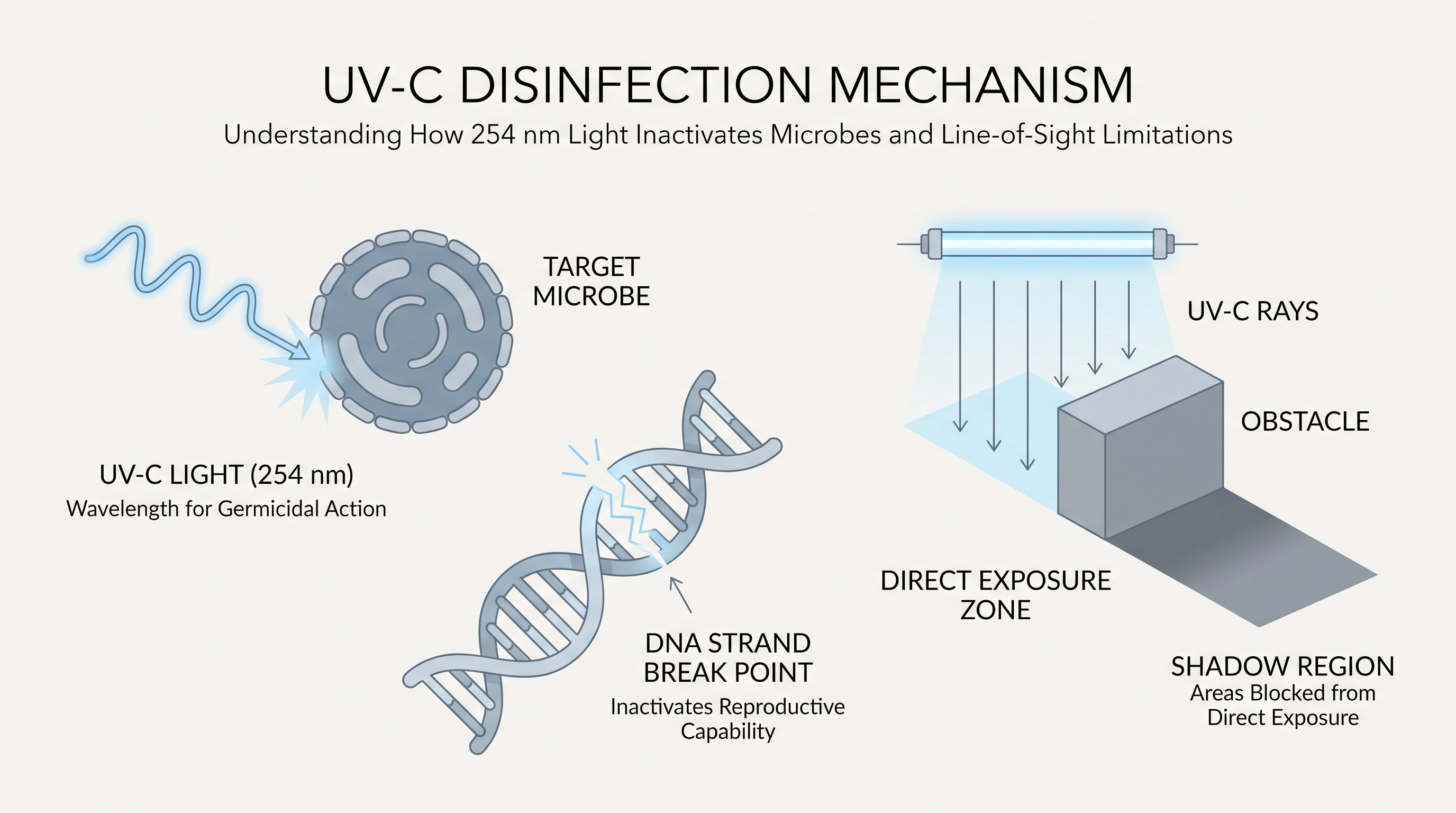
That line-of-sight limit is actually what makes the tool honest. It does not claim to reach around corners or into fabric folds; it is built for the smooth surfaces your hands actually touch.
A 15-second habit for the things you touch
Put the two studies together and a clear routine appears. When you arrive, run a quick pass over the half-dozen surfaces you will touch most: the remote, the lamp switch, the door handle, the bathroom counter, your phone. On a plane, do the same over the tray table, the armrest, and the buckle. It is not a deep clean of the whole room; it is a targeted pass over the touch points, which is where the evidence says to aim.
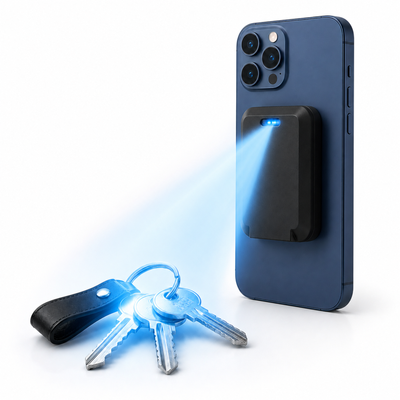
UVCeed makes that step easier to do well. The device attaches to the back of a phone, and the app uses the camera to show coverage as you go, so you can see which part of the surface you have already covered and which part you have not. In lab testing, it inactivated 99.9% of Staph aureus in 15 seconds, 99.9% of E. coli in 24 seconds, and 99.9% of SARS-CoV-2 in 32 seconds.
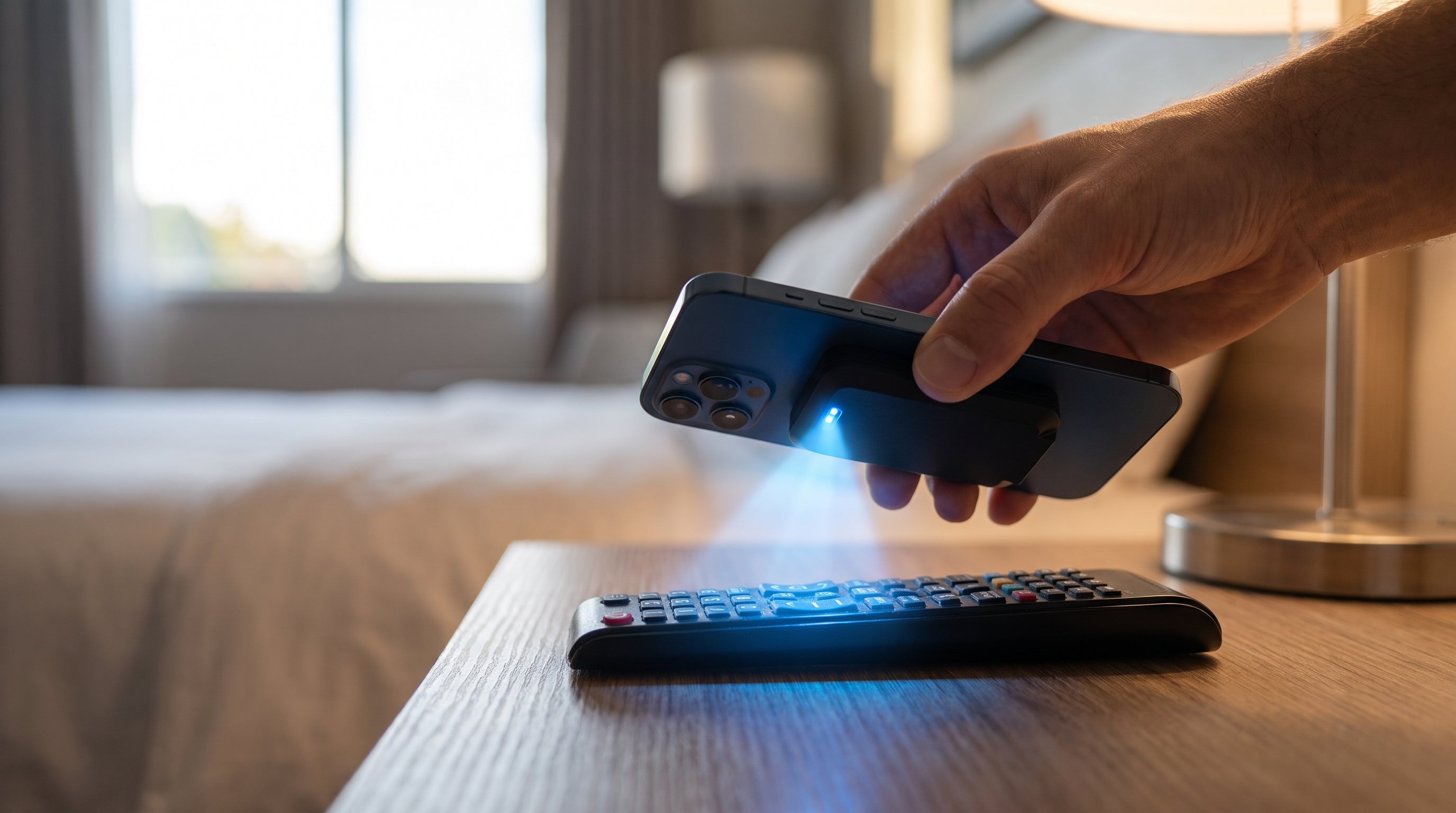
Those numbers describe the device's own lab results, not a promise about every germ on every surface, and the visible-coverage idea is the useful part: you stop guessing about what got cleaned. The app shows the coverage as you go, so you can see exactly what you have cleaned.
A calmer way to think about travel hygiene
Travel hygiene gets framed as either panic or shrug. The evidence points somewhere in the middle. You do not need to wipe down an entire hotel room, and you do not need to fear an airplane seat. You need to know where the evidence says attention pays off, and then spend a few seconds there.
The findings are reassuring in their own way because they are specific. The remote and the light switch. The seat pocket and the armrest. These are small, named surfaces, not an abstract cloud of germs, and each one is easy to handle with a fast, targeted pass. That turns a vague worry into a routine, and routines are what actually get done.
Want More Articles Like This?
Get research on UV-C treatment and product updates delivered to your inbox.