TL;DR
Louisiana has confirmed 9 Vibrio vulnificus cases and 5 deaths so far in 2026, a sharp jump from its historical average of about 7 cases and 1 death a year over the past decade. Florida has separately confirmed 15 cases. Experts are pointing to warming Gulf Coast water temperatures as a driver of the expanding range. This piece covers what the bacteria is, how people actually get infected, and what to change about a beach or coastal trip this season.
What Actually Happened
Louisiana has recorded 9 confirmed Vibrio vulnificus cases in 2026, all resulting in hospitalization, with 5 deaths, according to NBC News. That is a significant spike against the state's average of roughly 7 cases and 1 death per year over the past decade. Florida has separately confirmed 15 cases in 2026, per Fox Weather's tracker, which also lists cases in Alabama and Connecticut this season.
Nationally, the CDC estimates roughly 80,000 vibriosis cases occur in the US each year, and about 1 in 5 people infected with Vibrio vulnificus specifically die from it, often within a day or two of becoming ill. Experts cited by NBC News point to warming ocean temperatures expanding the bacteria's habitat range along the Gulf Coast as a contributing factor to the year-over-year increase.
How People Actually Get Infected
Vibrio vulnificus occurs naturally in warm coastal and brackish water and is most abundant between May and October. There are two distinct ways people get infected:
- Open wounds in warm coastal water. Any break in the skin, including a fresh cut, a scrape, or even a recent tattoo or piercing, exposes you to infection if you enter water where the bacteria is present.
- Raw or undercooked shellfish. Eating contaminated raw oysters or other shellfish harvested from affected waters is the other primary route.
Early symptoms can look like the flu: fever, chills, body aches, nausea, and diarrhea, typically within 24 hours of exposure. The more characteristic warning signs, discolored and unusually warm skin, swelling, worsening pain, and blisters filled with bloody or yellowish fluid, can develop within hours to days and represent a medical emergency. A drop in blood pressure causing dizziness is also a red flag. Experts quoted in the NBC News coverage stress seeking immediate medical care rather than attempting to treat symptoms at home.
What to Actually Do Before a Coastal Trip
- Do not enter warm coastal or brackish water with any open wound, including small cuts, scrapes, insect bites, or recent piercings and tattoos.
- Cover existing cuts with a waterproof bandage if you do get in the water, and rinse off with clean, fresh water immediately after.
- Skip raw shellfish from Gulf Coast waters during an active advisory, and confirm shellfish are fully cooked, not just steamed until the shell opens.
- Watch for symptoms for several days after any coastal exposure, especially discolored, warm, or rapidly swelling skin near a wound.
- Seek emergency care immediately if you develop the characteristic skin symptoms after coastal water exposure. Vibrio vulnificus can progress from mild symptoms to life-threatening infection within 24 to 48 hours.
Where UV-C Fits (and Where It Does Not)
Vibrio vulnificus infection happens through direct water exposure or raw shellfish, not through contaminated hard surfaces, so UV-C surface disinfection does not address the primary infection route for this bacteria. Where UV-C is genuinely useful on a coastal trip is the secondary risk: hotel rooms, rental cars, beach gear, and shared equipment that travel with millions of other beachgoers through the same warm-weather season, and where norovirus, Staph, and other bacteria are common hitchhikers.
254 nm UV-C does inactivate bacteria on food surfaces when there is direct line of sight, but FDA rules prevent us from citing a specific reduction percentage on food, so we do not, and this does not change the guidance to fully cook shellfish rather than rely on any surface treatment.
Where UVCeed Fits
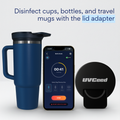
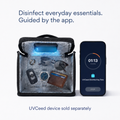
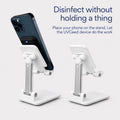
UVCeed is a 254 nm UV-C device that pairs with your phone camera and app to guide a session across the exact surface you are treating. You aim UVCeed at one section, hold it steady while the app confirms that section is complete, then move to the next section if the surface is larger than the coverage area.
On a Gulf Coast trip, that means the hotel room remote and light switches, the rental car steering wheel and door handles, and any shared cooler or beach gear, all high-touch points that are unrelated to Vibrio but very relevant to the general travel-illness load of a beach vacation. No chemical residue, no wipes to pack, and a tilt-safety shutoff that turns the lamp off if the device rotates away from the target.
FAQ
Can I catch Vibrio vulnificus from a surface, like a beach towel or cooler? No. Infection occurs through open wounds exposed to contaminated water or through eating raw or undercooked contaminated shellfish, not through contact with dry surfaces, per NBC News.
Is the whole Gulf Coast affected, or specific states? Louisiana and Florida have both confirmed elevated 2026 case counts, with additional cases tracked in Alabama and Connecticut, per Fox Weather's tracker. Check your specific destination's state health department for current advisories before a trip.
How fast does this infection progress? Early flu-like symptoms can appear within 24 hours, with the characteristic skin symptoms and severe illness developing within hours to a few days. About 1 in 5 people infected die, often within one to two days of becoming ill.
Is it safe to swim in the ocean at all this season? Most people who swim in Gulf Coast waters do not get infected. The specific risk factor is entering warm coastal water with an open wound. Healthy skin without cuts carries much lower risk.
Why are cases rising this year specifically? Experts point to warming ocean temperatures expanding the bacteria's natural habitat range, alongside more consistent case reporting by state health departments, per NBC News.
The Bottom Line
Vibrio vulnificus is a water and shellfish exposure risk, not a surface risk, so the single most protective step is keeping open wounds out of warm coastal water. Handle that risk directly, and use the trip to also cut down on the more ordinary germ load that travels with every beach vacation.
Want More Articles Like This?
Get research on UV-C treatment and product updates delivered to your inbox.