TL;DR
Hand, foot, and mouth disease (HFMD) is spiking across the country this year, with one Tennessee county reporting outbreaks across 31 schools and daycares and researchers at UC Riverside documenting a broader nationwide rise. HFMD spreads through direct contact, saliva, and stool, and it survives on hard surfaces like toys, high chairs, and changing tables long enough to pass between kids and caregivers. This piece covers what is driving the surge and the surface-level habits that actually cut transmission at daycare pickup and at home.
What Is Actually Happening
Hand, foot, and mouth disease outbreaks have hit at least 31 schools and day cares in one Tennessee county alone, and UC Riverside researchers have documented HFMD cases rising nationwide, with experts pointing to environmental conditions, shifting population immunity, and circulating viral strains as contributing factors. The pattern is consistent with what infection control researchers have flagged as an unusual and sustained surge rather than a typical seasonal bump, according to Infection Control Today's coverage.
HFMD is caused most commonly by coxsackievirus, part of the enterovirus family. It is highly contagious and disproportionately affects children under 5, which is exactly the population spending the most time in daycare and preschool settings with heavy shared-surface contact: toys, mats, high chairs, and changing tables.
Why It Spreads So Efficiently in Daycare Settings
HFMD transmits through multiple routes at once, per the Mayo Clinic's overview:
- Direct contact with nasal discharge, saliva, or fluid from blisters
- Contact with stool, particularly relevant during diaper changes
- Airborne droplets from coughing or sneezing
- Contact with contaminated surfaces and objects, then touching the mouth, nose, or eyes
That last route is where daycare settings struggle most. Shared toys go from one mouth-exploring toddler to the next with only intermittent wiping. Changing tables see multiple diaper changes between cleanings. High chair trays get wiped with the same cloth across an entire lunch service. The virus itself is resilient once it lands on a hard surface, capable of persisting long enough to bridge from one child's exposure to the next child's contact hours later.
What Parents Can Actually Do
- Ask your daycare about their cleaning cadence for high chairs, changing tables, and shared toys, especially during any active outbreak notice.
- Send in a designated water bottle and utensils rather than relying on communal cups, which is a known transmission route for saliva-borne illness.
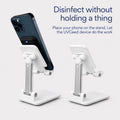
- Disinfect the items that travel between daycare and home: lunch boxes, water bottles, stuffed animals that made the round trip, and your own phone after pickup.
- Watch for symptoms: mouth sores, and a rash with blisters on the hands, feet, and sometimes buttocks, often preceded by a low fever. Keep a symptomatic child home, since HFMD remains contagious for days after symptoms start.
- Wash hands thoroughly after every diaper change, which remains the single highest-yield intervention for stool-route transmission.
Where UV-C Fits (and Where It Does Not)
UV-C at 254 nm inactivates viruses, including non-enveloped enteroviruses like the coxsackievirus family that cause HFMD, on hard, non-porous surfaces by damaging the virus's genetic material so it can no longer infect a new host. This makes it well suited to high chair trays, changing table surfaces, doorknobs, and toy bins with hard plastic exteriors.
Where it does not help: UV-C cannot penetrate plush toys, fabric bibs, or porous mat surfaces, and any residue like saliva or stool film should be physically wiped away first since dried organic material can shield a virus from direct UV exposure. UV-C is a supplement to, not a replacement for, routine handwashing and standard diaper-changing hygiene protocols.
Where UVCeed Fits
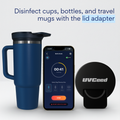
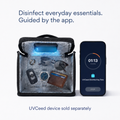
UVCeed is a 254 nm UV-C device that pairs with your phone camera and app to guide a session across the surface you are treating. You aim UVCeed at one section, hold it steady while the app confirms the section is complete, then move to the next section if the object is larger than the coverage area.
For a family managing a daycare-age kid, the practical session list is short and specific: hard plastic toys after they come home, the high chair tray before and after meals, and the changing table surface. No chemical residue near a surface your toddler will put their hands or mouth on next.
FAQ
How long is a child contagious with HFMD? The virus can be shed in stool for weeks after symptoms resolve, and in respiratory secretions for one to three weeks, per Mayo Clinic guidance, which is why reinfection and re-transmission within a household or classroom is common even after visible symptoms clear.
Can adults get HFMD from their kids? Yes, though it is far more common and typically milder in children under 5. Adults, especially caregivers doing frequent diaper changes, can contract it and should maintain the same hand hygiene practices.
Is there a vaccine for HFMD? No approved vaccine exists in the US for the coxsackievirus strains that most commonly cause HFMD. Prevention relies entirely on hygiene and surface control.
Does UV-C work on the rash or blisters directly? No. UVCeed and UV-C devices generally are designed for disinfecting hard surfaces and objects, not for use on skin, rashes, or open blisters. Skin symptoms should be managed per your pediatrician's guidance.
Why is this year's surge different from a typical summer bump? Researchers cited by UC Riverside point to a combination of environmental conditions, shifting population-level immunity following lower exposure during recent years, and circulating strains as contributing to a broader and more sustained rise than typical seasonal patterns.
The Bottom Line
HFMD spreads through multiple routes at once, and the surface route is the one families can actually control between daycare drop-off and pickup. Focus on the hard surfaces that travel with your kid and the ones they touch most at home.
Want More Articles Like This?
Get research on UV-C treatment and product updates delivered to your inbox.