Your earbuds go where almost nothing else you own goes: into your ear, for hours, every single day. That one detail changes the way you should think about cleaning them. The same device that plays your music and takes your calls is sitting inside one of the warmest, most humid places on your body, picking up wax, sweat, and the bacteria that live comfortably in both.
Most of us treat earbuds the way we treat a phone case: wipe them when they look dirty and move on. The problem is that the stuff worth removing from an earbud is mostly invisible, and the surfaces that matter are the ones a cloth cannot reach. Here is what is actually happening on your earbuds, and the right way to clean them.
Why earbuds are different from your other gadgets
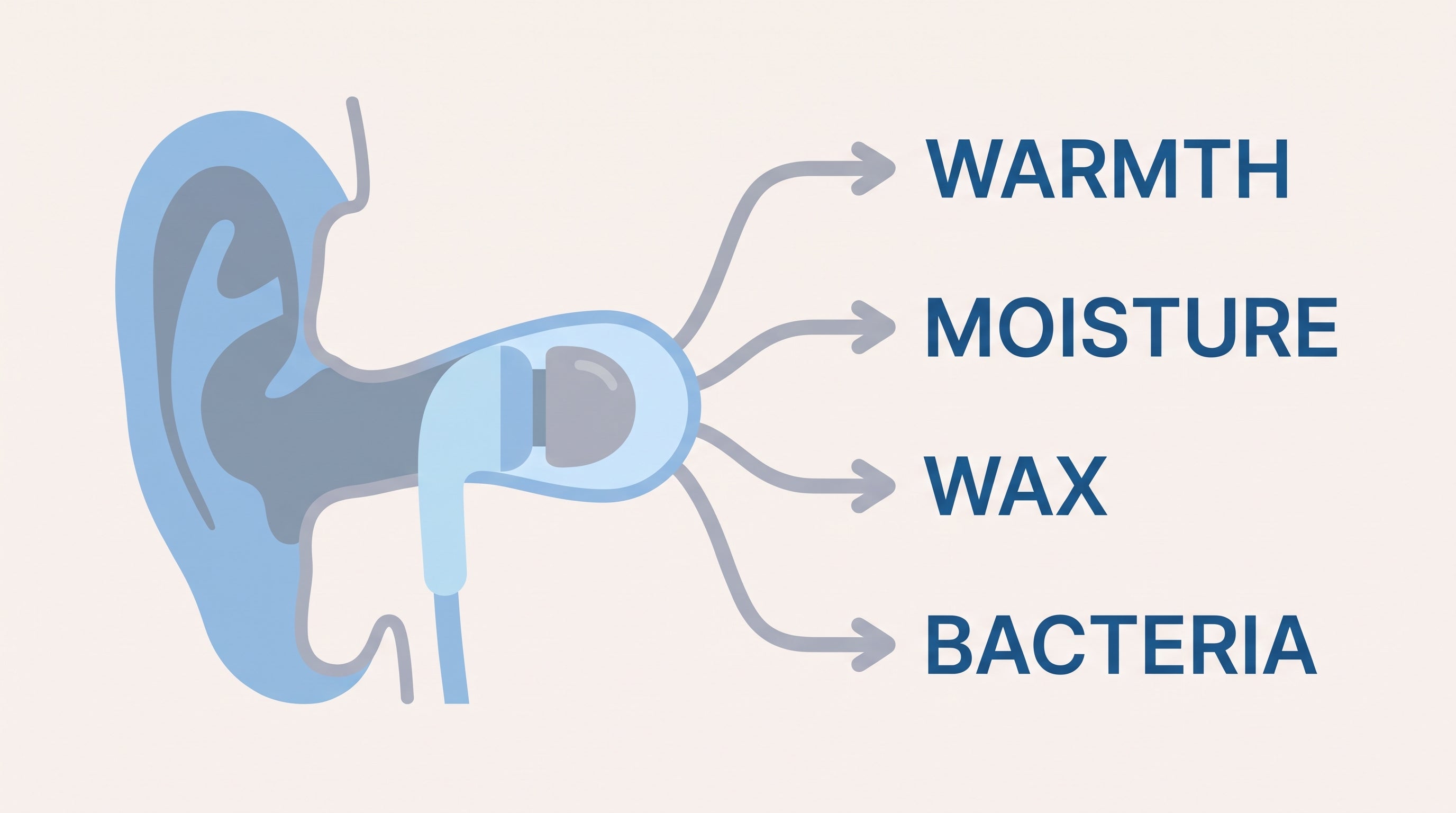
The ear canal is exactly the kind of place microorganisms like. It is warm, it is moist, and it stays that way for long stretches of the day. OSF HealthCare puts it plainly: bacteria and fungi thrive in moist, warm areas such as the ear canal. When you seat a pair of in-ear buds, you are effectively putting a cap on that environment.
That seal is part of what makes earbuds sound good, but it also traps moisture and heat instead of letting them escape. Add a workout or a long commute, and the inside of that little chamber becomes a humid pocket. Then the earbuds go back into a charging case, which is another small, enclosed, dark space, a convenient place for whatever they picked up to wait until the next use. A case that travels in a pocket or a gym bag spends much of the day warm too, so the cycle never really gets a break.
Earbuds do one more thing worth knowing: they can press earwax deeper into the canal rather than letting it work its way out naturally. Over time that can lead to buildup, and buildup is one of the conditions that makes an outer-ear infection, known as otitis externa, more likely.
What the swabs actually found
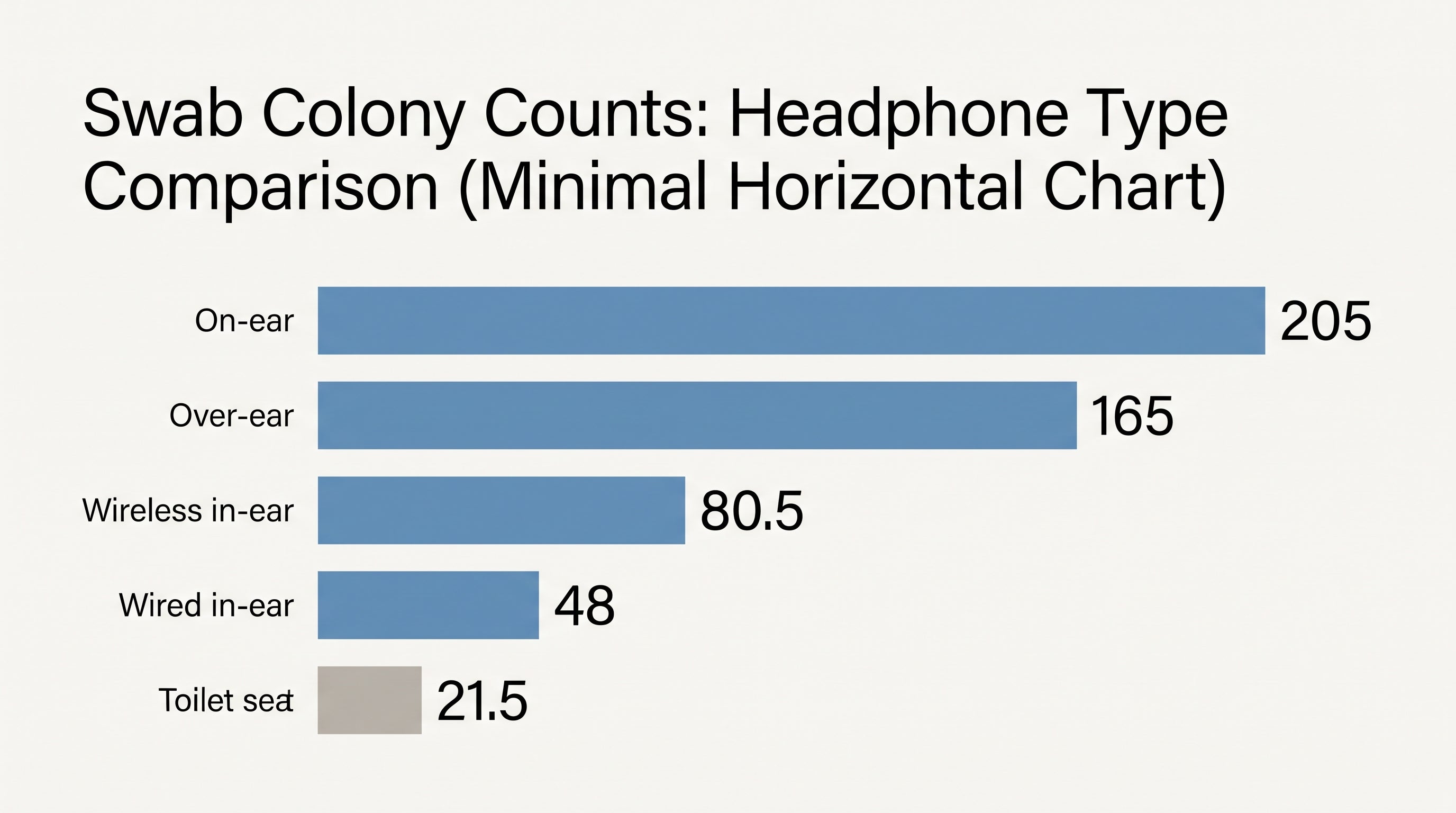
You do not have to guess whether earbuds get dirty. A swab analysis published by Boots Hearingcare measured colony-forming units, or CFUs, on a set of everyday headphone types and compared them with a familiar benchmark. On-ear headphones came back at 205 CFU, over-ear at 165, wireless in-ear buds at 80.5, and wired in-ear at 48. A toilet seat swabbed for comparison measured 21.5 CFU.
Put another way, the dirtiest headphone style in that sample read nearly 10 times higher than the toilet seat, and every headphone type tested above roughly 50 CFU, the level at which a personal item is considered moderately to highly contaminated. The takeaway is not that your earbuds are a toilet seat. It is that the things we put in and around our ears are consistently carrying more than we assume.
The bacteria found on earphones and in the ear canals of regular users in this line of research include familiar names: Staphylococcus aureus, the same organism targeted by hospital-grade disinfection, along with Staphylococcus epidermidis and others. Most of the time a healthy ear handles this without any drama. The risk is not that the bacteria exist; it is the combination of moisture, time, sharing, and a surface that never gets a real clean.
When a dirty earbud turns into an ear problem
For most people, the occasional unwashed earbud causes no obvious trouble. The outer ear has its own defenses, a layer of skin and a film of wax, that keep a modest microbial load in check. Problems tend to show up when a few habits stack up: wearing buds for long stretches, wearing them while the ear is already irritated, sharing them, or putting them back in while an infection is still healing.
The scale of it is easy to underrate until you see the numbers. In a 2024 survey of 481 earphone users, 21 percent had experienced symptoms of otitis externa or had been diagnosed with it, and wearing buds for more than an hour at a time was significantly linked to those problems. Itching was the most common symptom, followed by pain, discharge, and rash.
The guidance from OSF HealthCare is also specific on sharing: earbuds can transfer bacteria between people, and organisms that are harmless on one person's skin can cause trouble in someone else's ear. The advice is just as specific on timing: do not use earbuds during an active ear infection or for several weeks afterward, because the ear needs that time to fully heal.
Watch for the signs of an outer-ear infection rather than waiting it out: pain, itching, drainage or discharge, a clogged or full feeling, or reduced hearing. Those are cues to see a clinician, who may treat the underlying cause with topical antibiotic or antifungal drops. None of this is a reason to fear earbuds. It is a reason to treat them like the personal item they are.
How to clean your earbuds without damaging them
The official guidance from Apple and Samsung is careful because the components are delicate. The short version: clean dry first, go gentle, keep liquid away from the openings, and let everything dry completely before it goes back in the case.
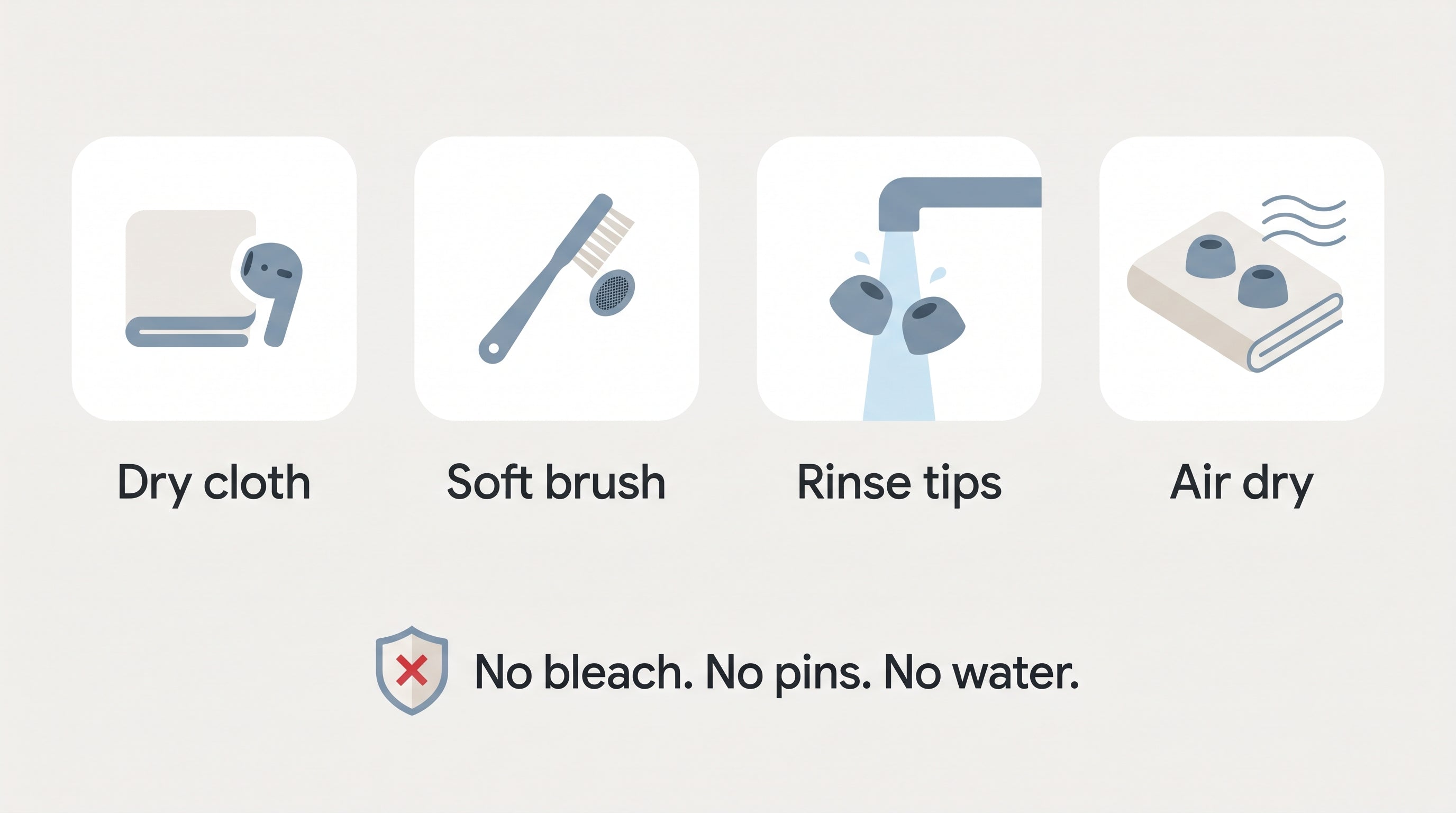
For the body of an earbud, Apple recommends a soft, dry, lint-free cloth, lightly dampened with fresh water only if needed, then dried. For the speaker and microphone meshes, the guidance is a soft brush worked in small circles, never a pin, a needle, or anything sharp. The one thing every manufacturer agrees on: do not use bleach, hydrogen peroxide, or household spray cleaners, and do not run the buds under water.
For the mesh specifically, Apple's detailed method is to brush the marked zones in small circles for about 15 seconds, blot on a paper towel, and repeat three times in total, then let everything dry for at least two hours. Detachable silicone tips are the easy part: they can be rinsed with water only, no soap, and left to dry completely. The drying step matters more than people think, because trapped moisture is exactly the condition you are trying to remove.
A faster layer for the spots a cloth cannot reach
Even a careful wipe has a blind spot: the seams, the grilles, the junction where a silicone tip meets the body, the inside of the case lid. Those are the places where wax and moisture hide, and they are also the places a cloth, however diligent, cannot physically press into.
That is where UV-C light earns its keep. UV-C is the wavelength of ultraviolet light that inactivates microorganisms by damaging their DNA or RNA, and it does the job without liquid, without wiping, and without leaving a residue. It reaches an irregular surface the way a cloth cannot, and it does not depend on contact pressure to be effective.
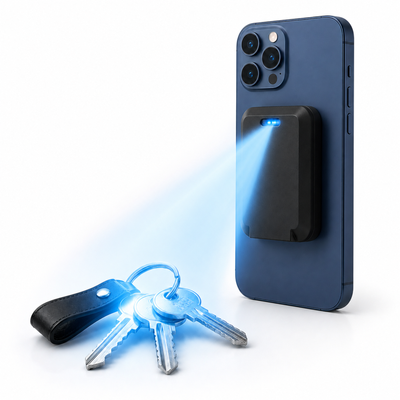
What matters is that the exposure is actually delivered. UVCeed attaches to your phone and uses the camera to show you, on screen, which areas have received enough light, so you can see the spots you have already cleaned rather than guessing. On the lab-tested pathogens that matter here, the numbers are specific: Staph aureus 99.9% in 15 seconds, and E. coli 99.99% in 24 seconds.
See the spots a cloth cannot reach on your own earbuds: https://uvceed.com/products/the-uvceed-disinfection-device
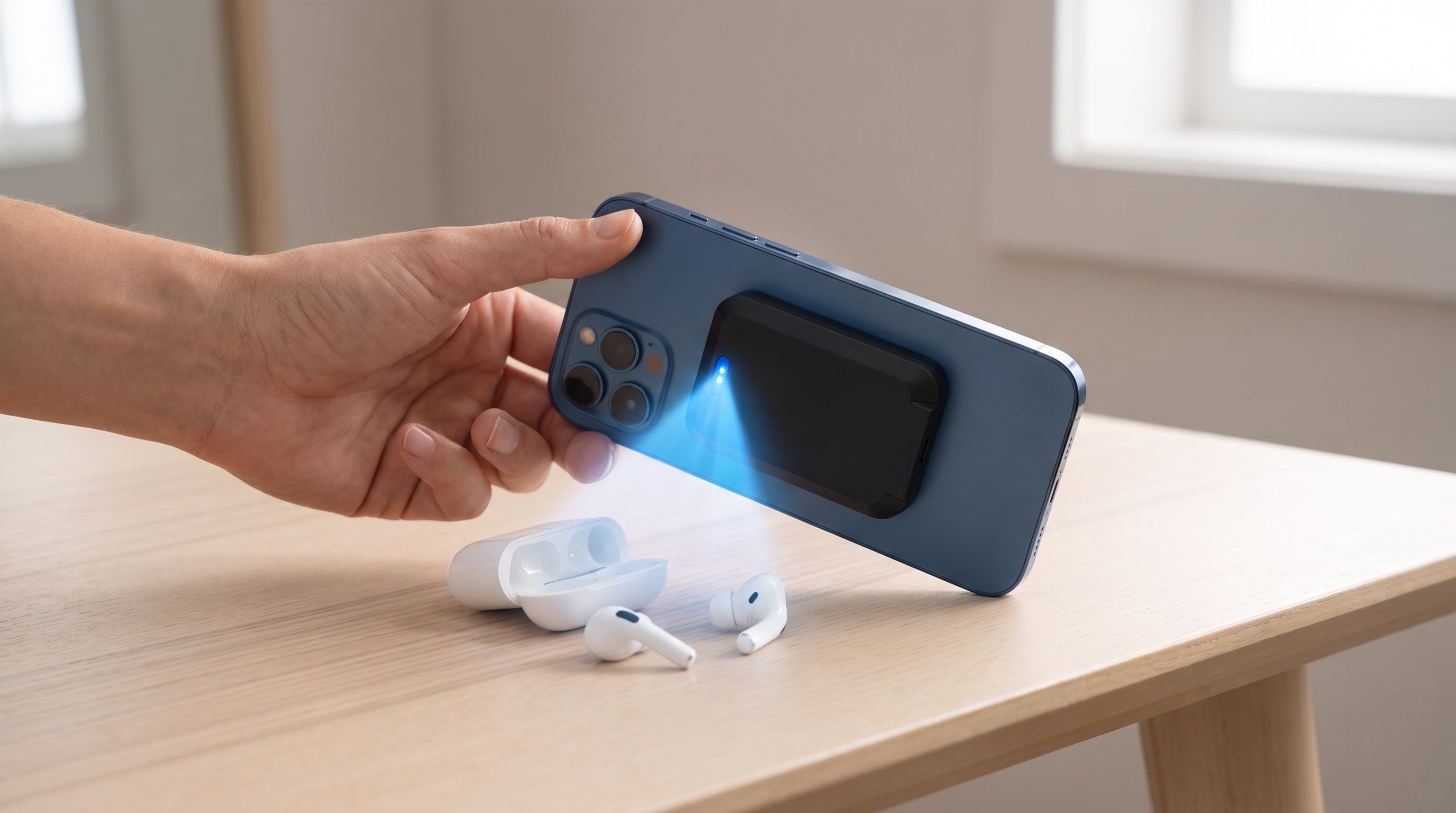 AI-generated illustration for visualization purposes. UV-C light is invisible to the human eye.
A simple weekly routine that covers the whole surface
You do not need a complicated ritual. Once a week, or right after a sweaty workout, run a five-minute version of this: wipe the body with a dry microfiber cloth, brush the mesh gently, rinse and fully dry the tips, and give the buds and the case a UV-C pass for the seams and grilles. Store them in a clean, dry case, and keep them out of a sweaty pocket or gym bag where the cycle simply starts over.
Skip earbuds while an ear is healing, and keep a spare set if you live or work out around someone who reaches for yours. None of this is about living in fear of a tiny speaker. It is about a small, consistent habit that keeps a device you wear for hours a day as clean as the routine you already keep for your phone and your hands.
Want More Articles Like This?
Get research on UV-C treatment and product updates delivered to your inbox.