Your reusable water bottle is the healthiest item in your day and one of the least cleaned. You refill it at the kitchen sink, sip from it at your desk, carry it to the gym, and run it under the tap before you fill it again. A quick rinse feels like cleaning, because the bottle looks clear and the water looks clean. That is exactly why the bottle rarely gets the one thing it actually needs: a real wash with soap, aimed at the parts your mouth touches.
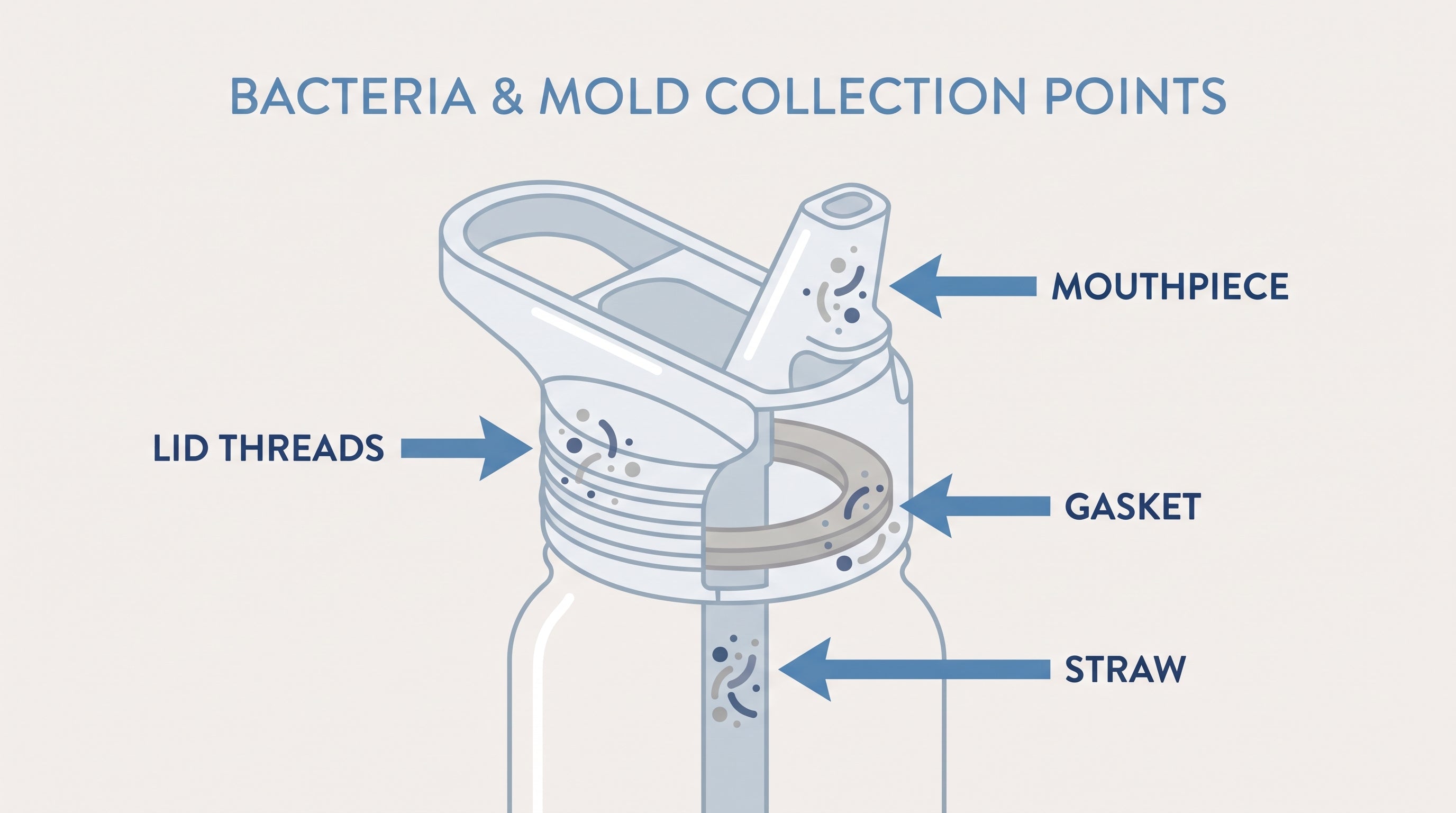
The mouthpiece, the lid threads, and the gasket sit in a warm, damp place against your mouth all day. Bacteria from your own mouth transfer onto the bottle every time you drink, and the moisture gives them somewhere to keep growing. The result is a surface you press your lips to several times a day, quietly carrying more than you would guess.
What actually grows in a bottle
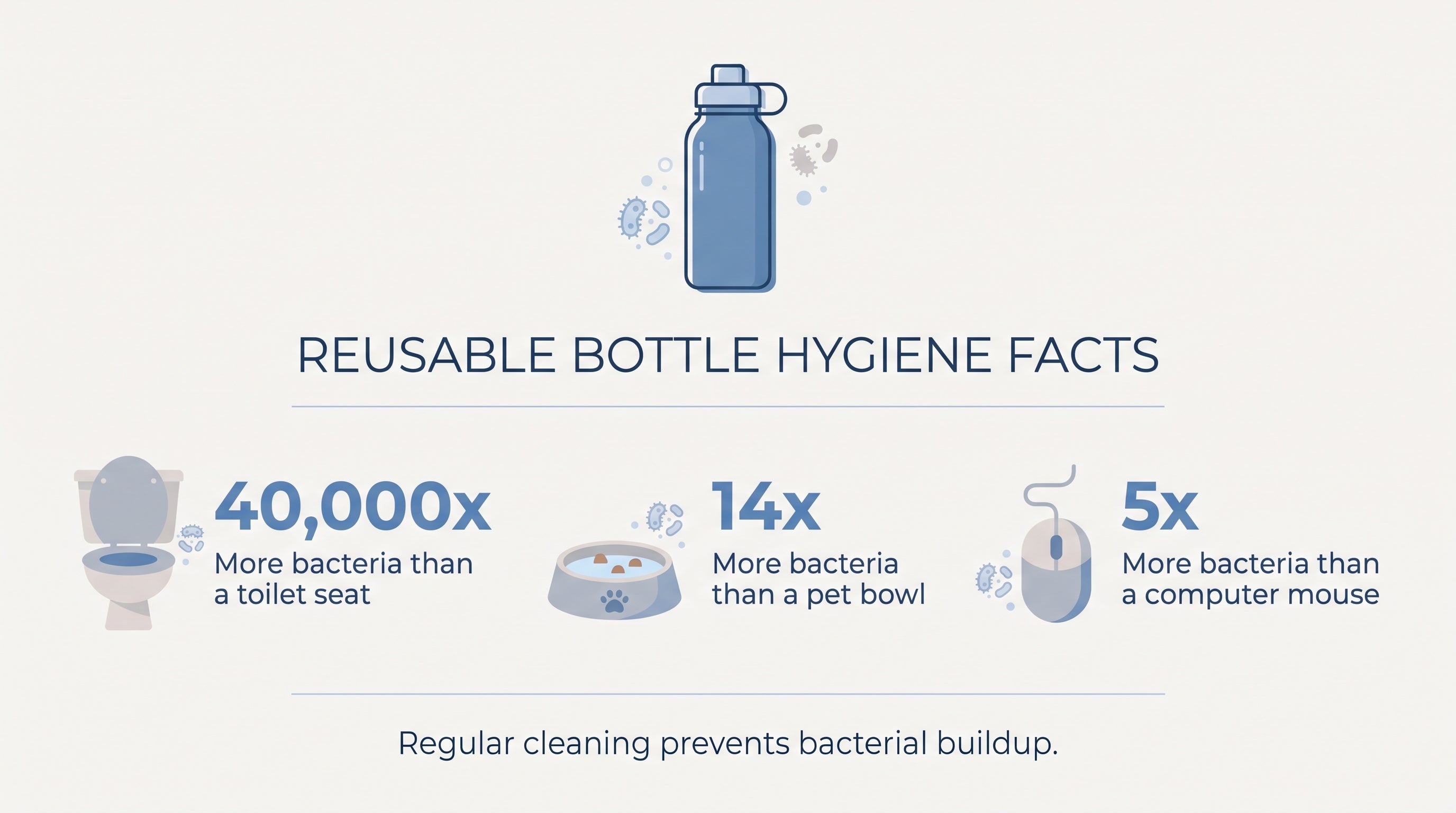
Rinsing is not the same as washing, and the difference shows up fast. A reusable bottle holds warmth, moisture, and the bacteria your mouth leaves behind, and together they let bacteria and mold build up faster than they would on a dry surface. When researchers compared reusable bottles with the everyday objects people already consider dirty, a bottle carried roughly five times the bacteria of a computer mouse, about fourteen times that of a pet bowl, and about forty thousand times that of a toilet seat.
Most of that bacteria is your own, which is usually the least concerning part. Your mouth is already full of it, and drinking from a bottle simply returns what you put there. The bigger question is what happens when a bottle goes days between real washes, or when it picks up something it did not start with. Germs from unwashed hands, a bathroom counter, or a shared filling station can get inside, and a damp bottle gives them both time and food.
Health experts name a familiar list of possibilities here. E. coli, Salmonella, and Staphylococcus aureus can all find their way onto a bottle through hands and surfaces, and mold can follow the moisture. A bottle that smells faintly of damp even after drying is often signaling mold in the cap, which is a sign the gasket and threads need more than a rinse. None of this means a water bottle is dangerous to use. It means the bottle is a surface, the same way a phone or a cutting board is a surface, and surfaces benefit from being cleaned.
Why the mouthpiece and lid threads matter most
If you only scrub one part of the bottle, make it the top. The lid is the main thing that gets dirty, and the mouthpiece, the threads where the cap screws on, the gasket, and any straw are the places a fast rinse misses. They are small, grooved, and constantly damp, which is exactly the environment bacteria and mold prefer.
Straws and nozzles are the hardest to clean because they are narrow and mostly out of sight. A bottle brush reaches the walls of the bottle, but the inside of a straw needs its own small brush, and a gasket usually has to be popped out before it gets clean. The rule is simple: the more crevices a bottle has, the more attention each one needs, and the less a rinse can do for it.
How to clean each part the right way
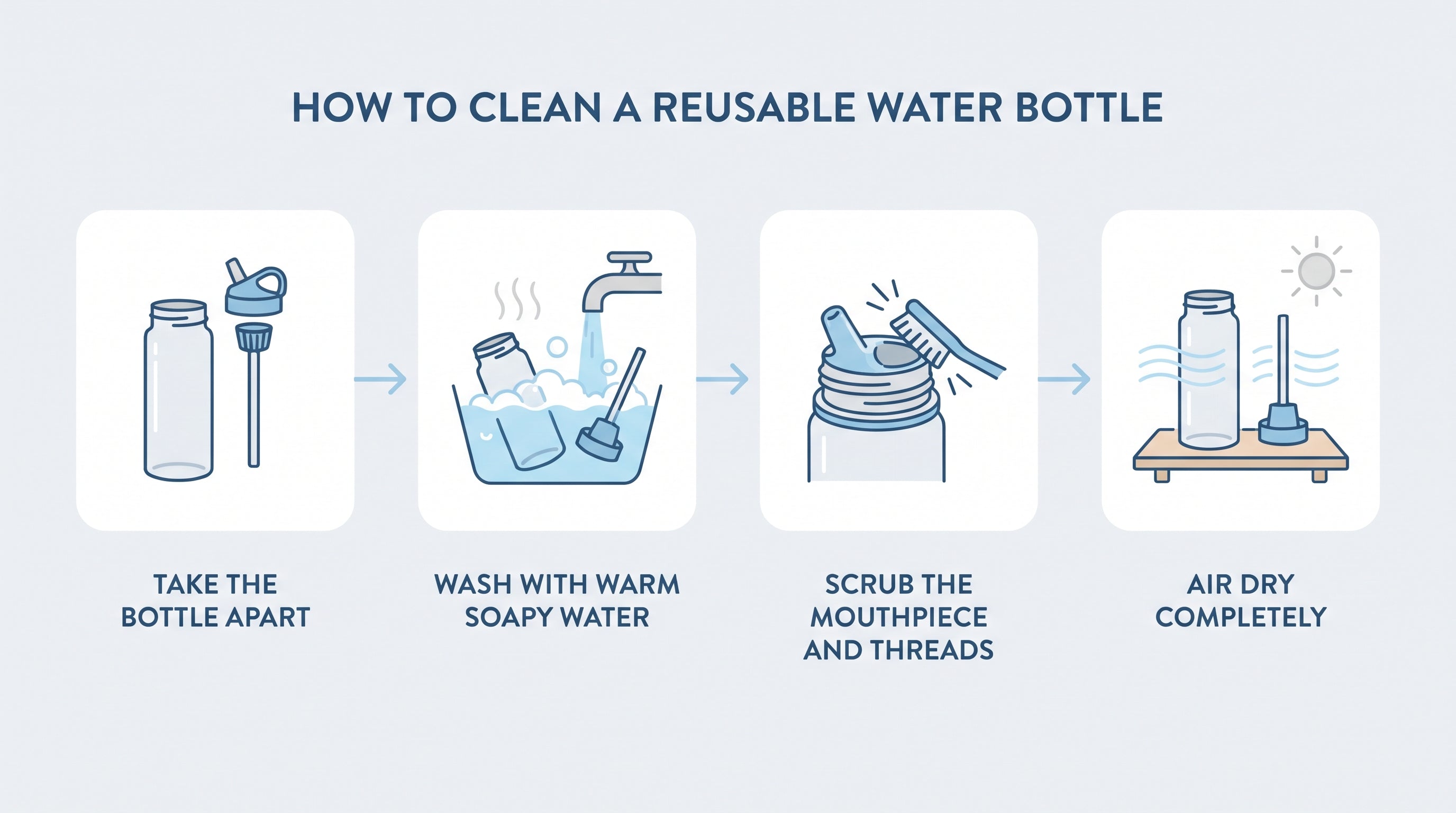
The routine is not complicated, but it is specific. Start by taking the bottle fully apart. Unscrew the lid, remove the gasket if it comes out, and pull the straw and mouthpiece apart if your bottle has them. A bottle still assembled is a bottle still dirty in the joints.
Wash the bottle and every part with warm water and a mild dish soap. A long-handled bottle brush reaches the bottom and sides, and a small straw brush reaches the inside of the straw. Give the mouthpiece and the threads extra attention, because those are the surfaces your mouth actually touches. If the bottle is dishwasher safe, a top-rack run works, but many insulated and aluminum bottles are not, so check the manufacturer's guidance before you choose the easy route.
Rinse everything thoroughly so no soap residue is left behind, then let every part air dry completely with the lid off before you put it back together. Drying matters more than most people think. The bacteria that come from your mouth prefer a moist environment, so a bottle that dries fully between uses does a large part of the work on its own.
For a deeper pass now and then, hot water at about 160 degrees Fahrenheit will sanitize a bottle and its parts in around thirty seconds, and a little vinegar or baking soda can help lift an odor. None of these replace the everyday soap and scrub; they are extras for the day you notice a smell or left a smoothie in the car.
How often should you actually wash it?
The honest answer is more often than you think. Experts recommend washing a reusable bottle after every use, or at the very least once a day if you use it regularly. If you are immunocompromised, if you put anything other than plain water in it, or if you share it, wash it after every single use. A survey of bottle owners found only about six in ten wash theirs at least once a day, which means a lot of bottles are coasting between washes.
Bacteria grow quickly when the conditions are right, and a bottle provides the conditions. Food safety educators who study this note that bacteria can double roughly every twenty minutes in a warm, damp setting, which is why a bottle that sat overnight with a little water in it is not the same bottle you rinsed that morning.
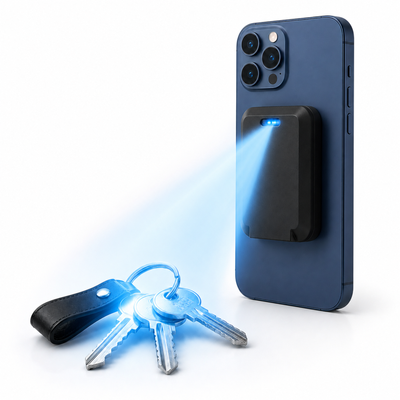
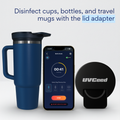
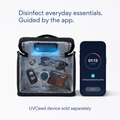
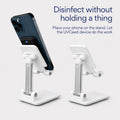
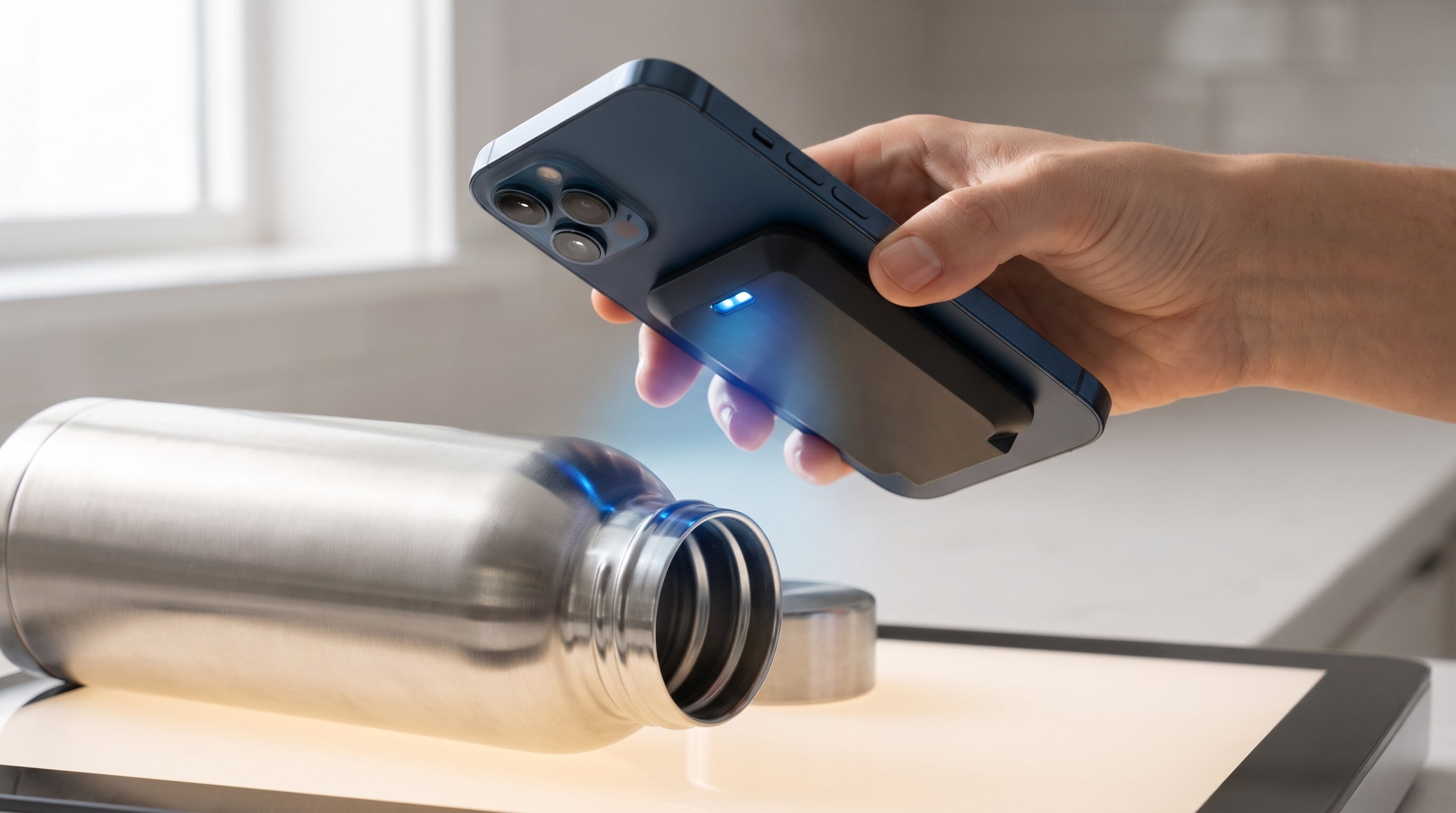
For a quick, no-liquid pass between washes that reaches the threads and crevices a cloth and brush can miss, see the UVCeed disinfection device.
Where UV-C fits in
Even a careful wash has a blind spot. The threads, the gasket, and the seam where a straw meets the lid are hard to reach, and the whole problem is that they stay damp. Ultraviolet-C light offers a different approach. UV-C is a wavelength of light in the germicidal range, and when that light is absorbed by the DNA in bacteria and viruses, it damages the DNA so the microorganism cannot reproduce. A microorganism that cannot reproduce cannot cause disease.
Because UV-C is light and not a chemical, it leaves no residue and needs no liquid, which is one reason it is used to disinfect water and surfaces. It also reaches differently than a brush. The light can fall into the same grooves and threads a cloth passes over, without wetting anything and without leaving a taste. The trade-off is coverage. UV-C works on a line of sight, so a surface in shadow does not get the same dose. That is why seeing what has actually been covered matters as much as the light itself.
A routine you can actually keep
The habit that sticks is the small one. Once a day, take the bottle apart, give it a real wash with soap and a brush, and leave it open to dry. After a workout or a day with anything but plain water, do it that same evening. Between washes, a quick pass of UV-C over the lid and threads covers the spots the brush did not reach. You do not need a drawer of brushes or a complicated system; a brush, a little soap, and a dry open bottle cover most of it. None of it takes more than a minute, and it keeps the item you sip from all day from becoming the item you never actually clean.
Want More Articles Like This?
Get research on UV-C treatment and product updates delivered to your inbox.