I have worked at the same desk for years, and I was sure it was clean. Every Friday I wiped the screen, dusted the monitor stand, and ran a cloth over the desk surface. I rinsed my coffee mug and threw away the wrappers from lunch. I would have told you, with total confidence, that my workspace was the tidiest part of the house.
Then I saw a study about office keyboards, and I realized I had been cleaning everything except the thing I touched most.
The Desk Looked Clean. The Keyboard Wasn't.
I eat lunch at my desk most days. A sandwich over the keyboard, a bag of chips between meetings, coffee set down inches from the spacebar. Crumbs happened, and I would flip the keyboard over once in a while and give it a shake, but I never actually cleaned it. The idea just never occurred to me. Screens smudge, so you clean them. Keyboards just sit there.
It turns out that is exactly the problem. A keyboard is warm from your hands, textured enough to hold onto things, and covered in a steady rain of skin cells and food particles. That is not an insult to my habits. It is just what a keyboard is.
What a Swab Actually Pulled Off
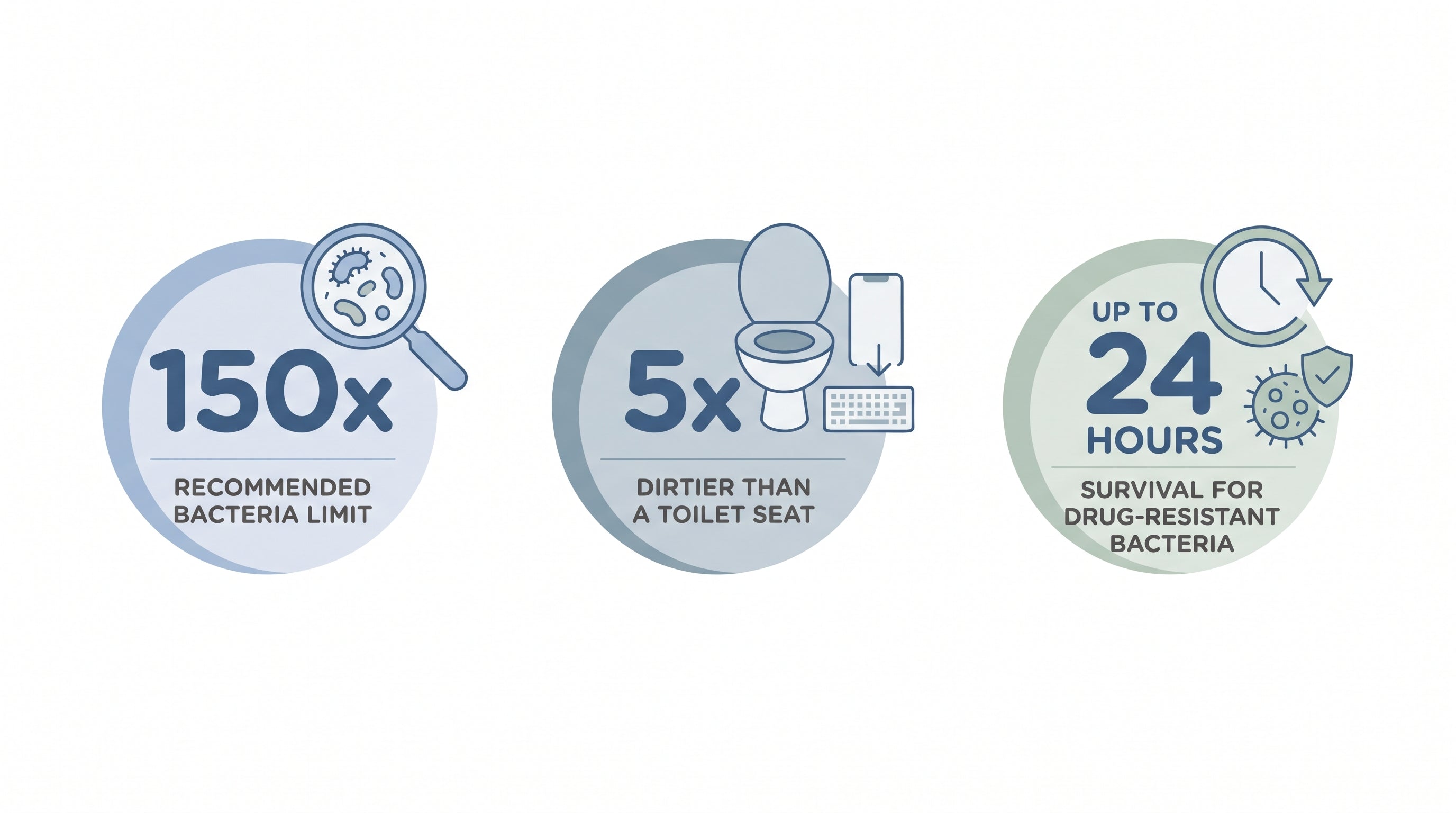
When the UK consumer group Which? swabbed 30 keyboards in a busy office, four of them came back dirty enough to be called a health hazard. Two showed warning levels of Staphylococcus aureus, the bacteria that lives on skin. One keyboard registered 150 times the recommended limit and was five times dirtier than the office toilet seat sampled the same day.
The names that showed up were not abstract. Researchers found coliforms and E. coli, the kind of bacteria associated with the gut, alongside the staph that comes from our own skin. In plain terms, the keyboard had become a record of every unwashed hand and every lunch eaten over the keys.
And it does not fade quickly. A widely cited analysis from Northwestern Memorial Hospital found that two drug-resistant bacteria, VRE and MRSA, could survive on a keyboard for up to 24 hours. My Friday wipe of the desk was doing nothing for any of this, because I was not wiping the keyboard at all.
That was the moment the whole thing stopped being abstract. I was not worried about my keyboard. I was slightly disgusted by my keyboard. And I wanted a routine that would actually reach the spaces a wipe cannot.
For the grooves between the keys, a dry pass of UV-C light turned out to be the answer I was looking for. See how it works: the UVCeed disinfection device.
Why Wipes Never Reached the Gaps
I started with the obvious fix: a disinfecting wipe. And it helped on the tops of the keys. But a keyboard is mostly seams and gaps. The crumbs, the oil, and the moisture live down between the keycaps, and a wipe just skims across the top. Worse, the dampness it leaves behind can sit in those gaps, which is the last thing you want before you start typing again.
The mouse had the same issue in miniature. The seam around the scroll wheel and the ring around the sensor on the underside were collecting oil from my palm, and I had never once looked at them.
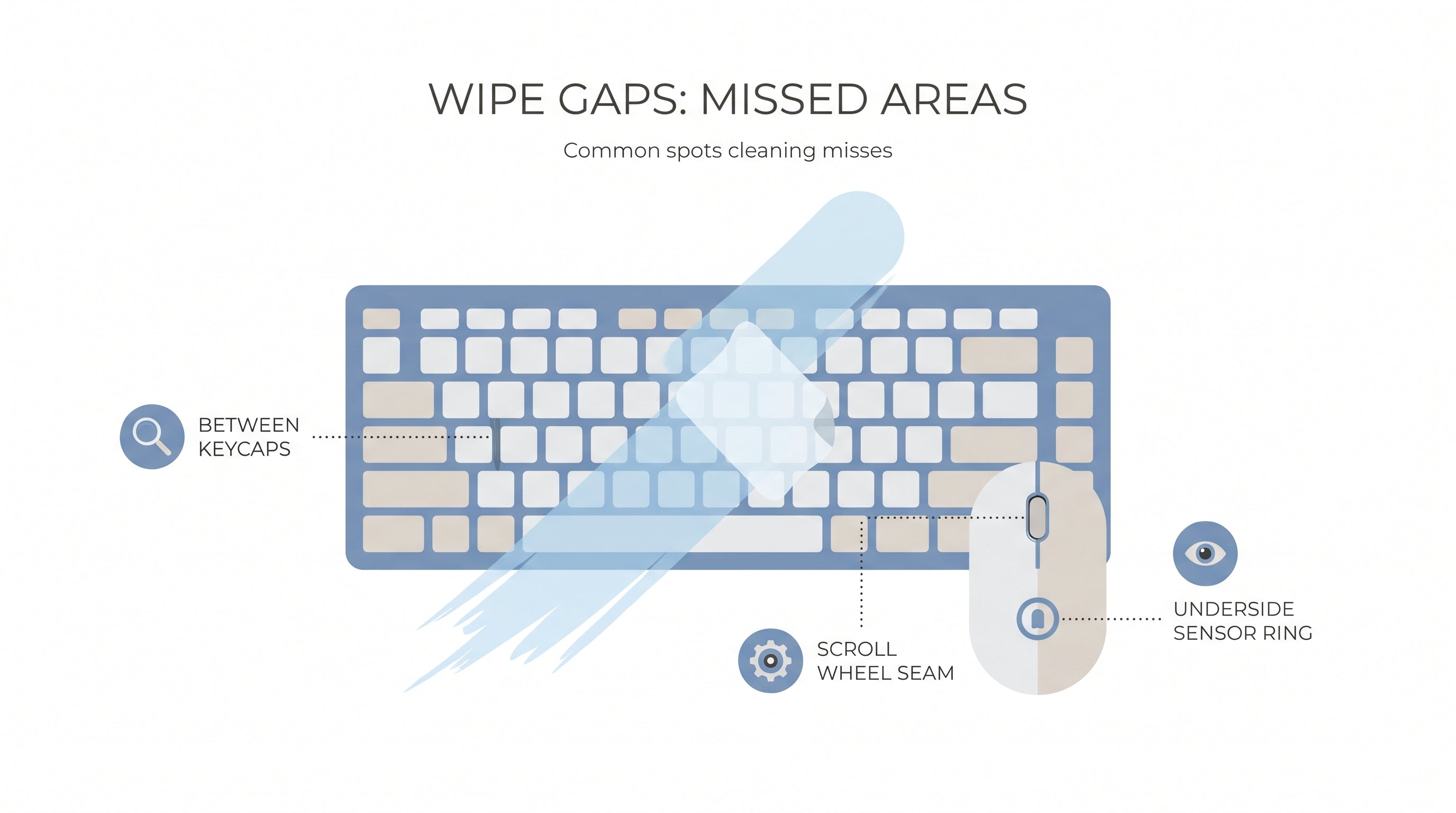
So I built a simple order that actually made sense: shake out the crumbs, clear the gaps with air, wipe the surfaces, and let it all dry. That handled the visible grime. What it did not handle was the bacteria a cloth leaves behind in the grooves.
The Dry Pass I Added to My Routine
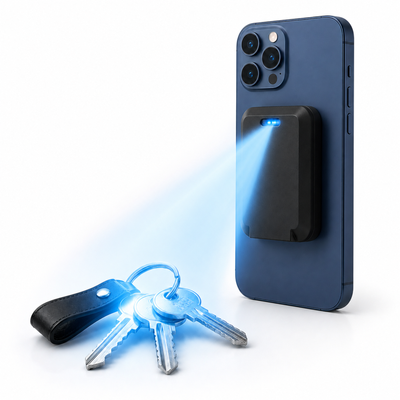
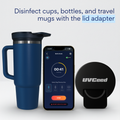
That is where UVCeed came in. It is a small UV-C device that snaps onto the back of a phone, and the app uses the camera to guide the pass and show which areas you have covered. Instead of pushing moisture into the keyboard, it shines short-wavelength UV-C light that damages the DNA of microbes so they cannot replicate.
The lab numbers are the part I kept coming back to. UVCeed reduced Staphylococcus aureus by 99.9 percent in 15 seconds and E. coli by 99.99 percent in 24 seconds. Those are the specific results printed on the product page, not a vague promise, and they gave me a concrete reason to trust the pass.
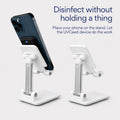
I want to be clear about how I use it. I still shake out the crumbs and wipe the oil first, because UV-C works by line of sight and does its best work on a surface that is already clean. Then I hold the phone over the keyboard and run a slow pass across the keys, the same way I would run a wand, and the screen fills in to show the spots I have covered. The mouse takes another half a minute.
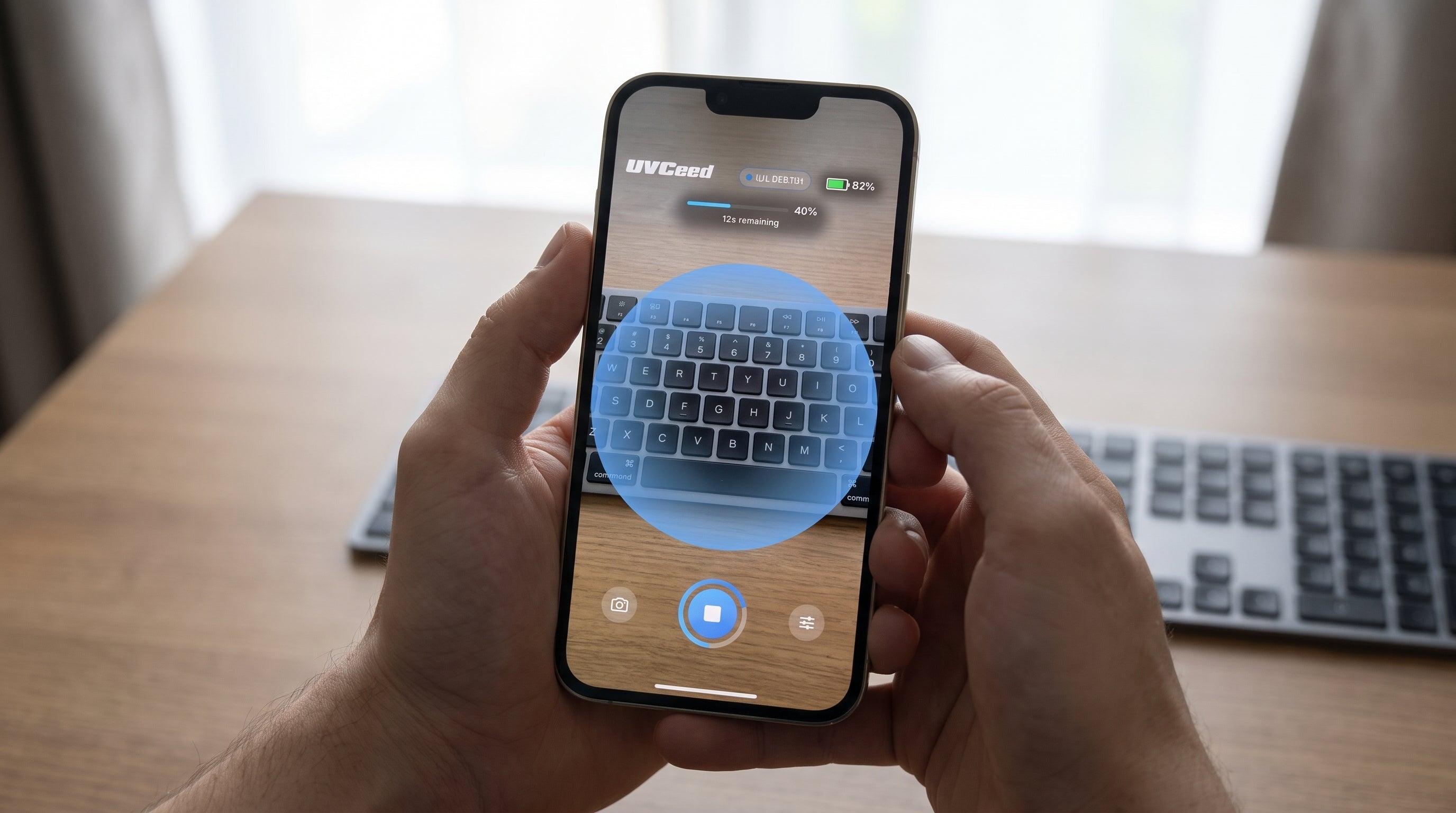
There is something almost satisfying about watching the coverage fill in. After years of cleaning by feel and hoping for the best, it was nice to see the pass in front of me instead of guessing.
If you have been wiping the screen and ignoring the keyboard the way I was, UVCeed is the piece that finishes the routine. See the UVCeed disinfection device here.
What Changed After a Week
Nothing dramatic happened, and that is the point. I did not turn my desk into a lab. I added about a minute to the end of my workday: shake, wipe, then a dry pass with UVCeed. The keyboard looks the same as it always did on a good day, except now it is actually clean between the keys, not just on top of them.
The change was mostly in my head, and that was enough. I stopped thinking of the keyboard as furniture and started thinking of it as a surface, the same way I think of a cutting board or a bathroom counter. It is a thing I touch all day, so it is a thing I clean.
A One-Minute Habit That Sticks
The routines that last are the ones you can do without clearing your schedule. That is what I like about this one. The keyboard gets a shake and a wipe, the mouse gets the same, and UVCeed covers the rest in about a minute. I tie it to the end of the workday, and it happens without a reminder now.
I still eat lunch at my desk. I am not about to pretend otherwise. The difference is that I am no longer eating over a surface I have never cleaned, and I finally know what was living between the keys.
Want More Articles Like This?
Get research on UV-C treatment and product updates delivered to your inbox.