I am the person who wipes the kitchen counters every single night. I run the sink, I spray the counters, I swap the hand towel when it looks tired. If you had asked me, I would have told you, in complete honesty, that I was a clean person. And I was, in exactly one room of my house.
Then I read a study about what grows inside a car, and I realized I had been driving the same route for eight years while never once disinfecting the thing I hold with both hands for forty minutes a day. The steering wheel. The gear shifter. The door handle I grab after pumping gas. All of it, untouched by anything but a drive-through napkin.
It was not that I did not care. It was that a car never looks dirty, so I never thought about it. And it turns out that is exactly the problem.
The surface I cleaned the least
Think about the list of things your hands touch in a normal day, and ask which ones you actually disinfect. Your phone, maybe, if you are careful. Your keyboard, occasionally, when a key starts to stick. Now think about your steering wheel. For most of us it sits at the very bottom of that list, below objects we touch a tenth as often. It is the most-touched, least-cleaned object I own, and I suspect it is yours too.
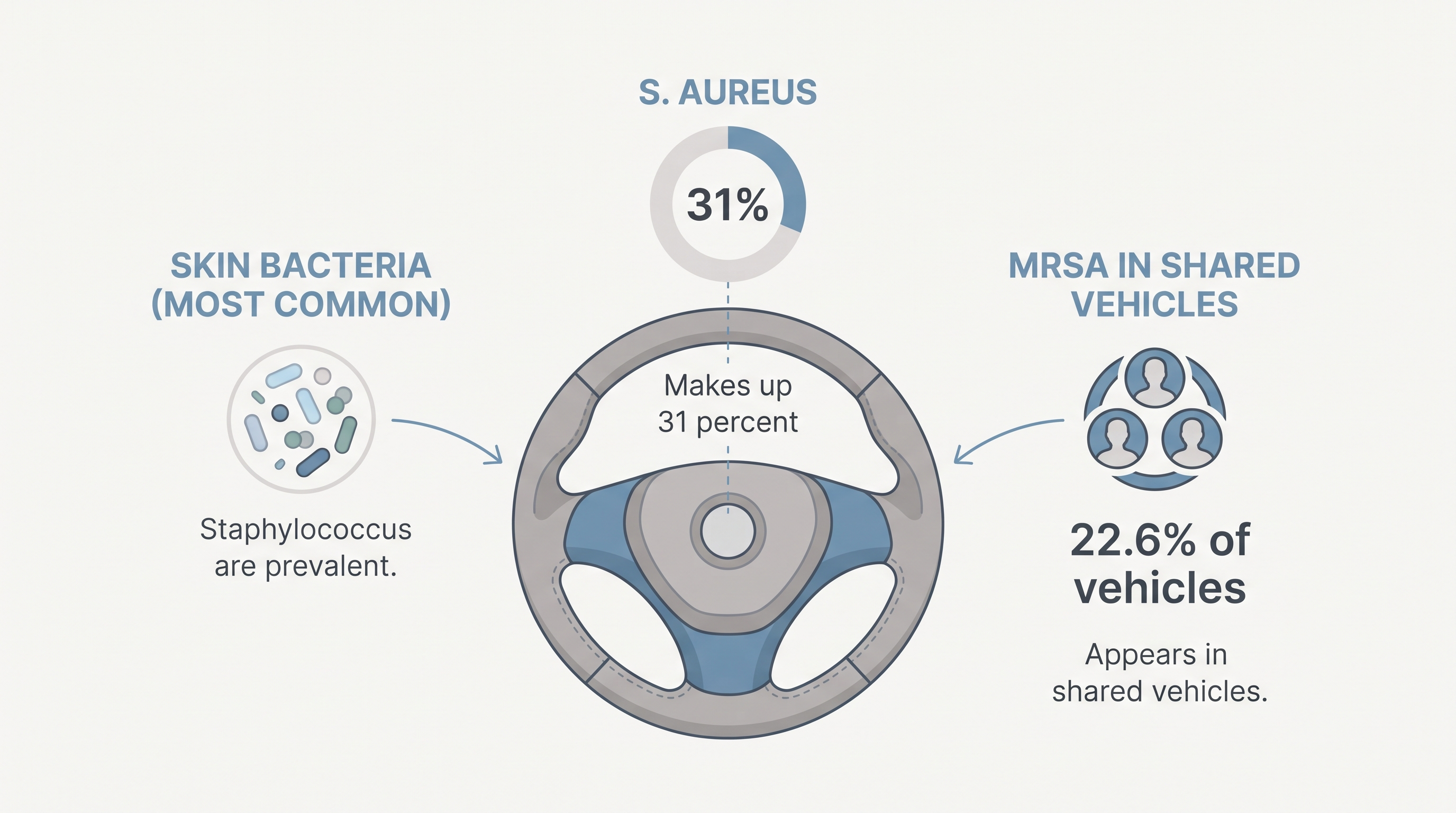
What pushed me over the edge was the numbers. Researchers who swabbed real car interiors found that the cabin is an environmental reservoir, a place where the bacteria from your skin, nose, and mouth collect and hang around on the controls you grip every trip. And the single most common thing they found was exactly what you would expect: the bacteria living on your own hands, transferred straight onto the wheel.
What a lab actually found
In one study published in the journal Biofouling, researchers swabbed 18 cars at 11 different interior locations: the steering wheel, gear shifter, radio knob, center console, door handles, and the window and cruise-control switches. The two most common types of bacteria nearly everywhere were Staphylococcus and Propionibacterium, both of which live naturally on human skin. Your car, in other words, is mostly holding the germs you brought in yourself.
Here is the number that stuck with me. Among the Staphylococcus they cultured, S. aureus made up 31 percent. And when the researchers tested shared community cars, 22.6 percent of that S. aureus was methicillin-resistant. MRSA, sitting in the car. Then a separate study from Aston University found E. coli in most of the trunks and on some of the driver's seats it tested, and counted 407 bacteria on the gear shifter alone.
I was not going to stop driving. But I was done pretending the wheel was clean just because it looked clean.
Why my wipes were not finishing the job
So I did what most people do. I grabbed a pack of disinfectant wipes and went to town, and for about a week I felt great. Then I looked closer. A steering wheel is covered in stitching and seams and a textured grip that exists specifically to stop your hands from slipping, which means it also stops a flat cloth from reaching the bottom of every groove. The gear shifter has seams. The climate buttons have gaps around each key. I was wiping the tops of things and calling it done.
That is not a reason to throw the wipes away. Visible dirt has to come off first, and a wipe is the right tool for that part of the job. But I wanted something that treated the surface itself, including the spots a cloth cannot press into. That is when I started looking at UV-C light.
For the surface I touch more than any other, a wipe that could not reach the seams was never going to be enough. See how UVCeed treats the spots a cloth misses.
How the light changed my routine
UV-C works differently than a chemical wipe. It does not scrub anything. Light in the 220 to 280 nanometer range, and especially around 254 to 265 nanometers, disrupts the DNA and RNA inside bacteria and viruses so they cannot reproduce, which is what actually stops them from spreading. The catch is that it is a line-of-sight treatment. It only works where the light can actually reach, and it needs the right dose, meaning enough intensity for enough time. That catch is exactly why I used to be skeptical of "wave a wand over it" gadgets.
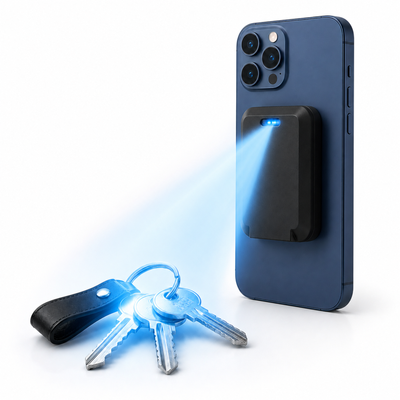
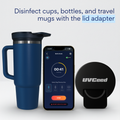
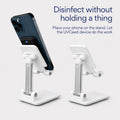
UVCeed is built around that catch instead of hiding from it. The device attaches to my phone, and the app uses the camera to show me, in real time, which parts of a surface I have covered and which I have not: a coverage map right on the screen, with the areas I have finished marked off as I go. When it says the target dose is reached, I know the job is done. There is no more guessing.
In independent lab testing on clean, hard, nonporous surfaces, it reduced Staphylococcus aureus by 99.9 percent in 15 seconds and E. coli by 99.99 percent in 24 seconds. The company is clear about the fine print: visible soil comes off first, and only the surfaces the light reaches directly are treated. Fine. That is exactly the routine I wanted anyway.
A device that shows me the finish line, instead of leaving me to hope the wipe got everything, is the difference between cleaning and actually finishing. Get the UVCeed disinfection device.
The ten-minute habit I actually keep
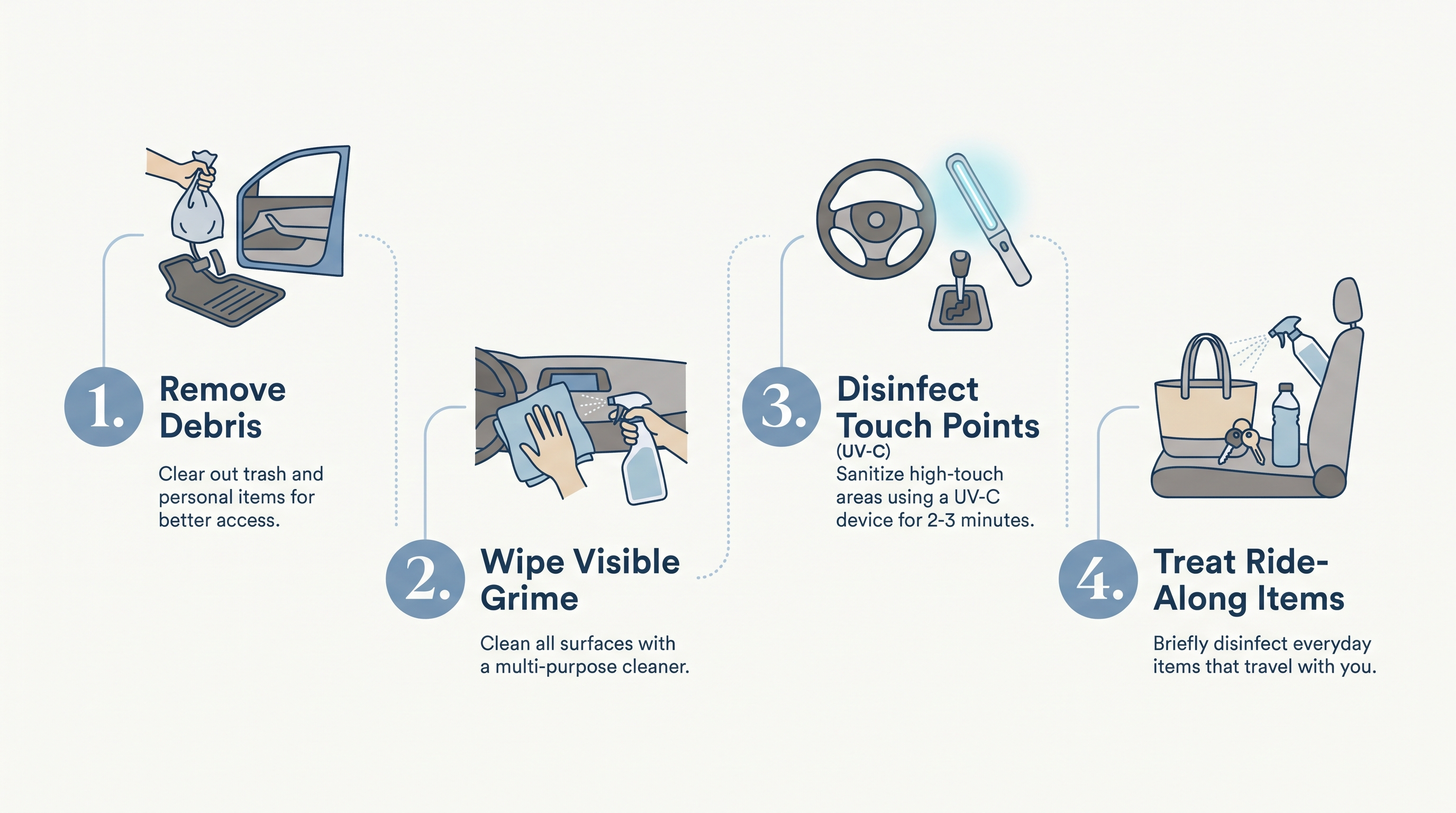
Here is the routine that finally stuck. Once a week, usually Sunday before the week starts, I spend ten minutes in the driveway:
- I brush the crumbs and dust out of the wheel and shifter.
- I wipe anything visibly sticky with a dry or lightly damp cloth.
- I work the UVCeed over the steering wheel, then the gear shifter, then the door handles, window switches, and the center console, letting the app tell me when each spot is done.
- I finish with the things that ride along: my phone, my keys, and my water bottle.
I eat in the car less now, but when I do, or when I drive the kids somewhere in the middle of cold season, I add an extra pass. Ten minutes. That is it.
The part I did not expect
The surprising thing was not the routine. It was the peace of mind. I used to brace a little every time I got in the car, not consciously, but somewhere in the background, because I knew the wheel was a question mark. Now it is not. I can see what I have covered, and I know it is done.
You do not have to become the person who details their car every weekend. You just have to be the person who finally treats the steering wheel like what it actually is: the surface your hands touch most. A little light, aimed at the right spots, closes the gap.
Your car is the room you occupy most and clean least, and it only takes ten minutes a week to change that. Make the switch with UVCeed.
Want More Articles Like This?
Get research on UV-C treatment and product updates delivered to your inbox.