I used to think I was the only one who noticed. Every time I checked into a hotel, I would stand in the doorway for a second, look at the TV remote sitting on the nightstand, and wonder who had touched it last. Then I would tell myself I was being ridiculous, pick it up, and change the channel.
Then I spent a year flying nearly every month for work, and somewhere around the third trip I stopped telling myself it was nothing. Not because I became afraid of travel, but because I finally looked at the numbers, and they matched the thing I had been feeling all along.
The moment I started noticing
It was a red-eye, the kind where the cabin is dim and everyone is half asleep. The man in the seat next to me pulled the tray table down, set his phone on it, then rested his head on the same surface while he dozed. A few minutes later I reached for my own tray table and thought: this is the fourth set of hands on this thing today, and nobody has wiped it since the last flight.
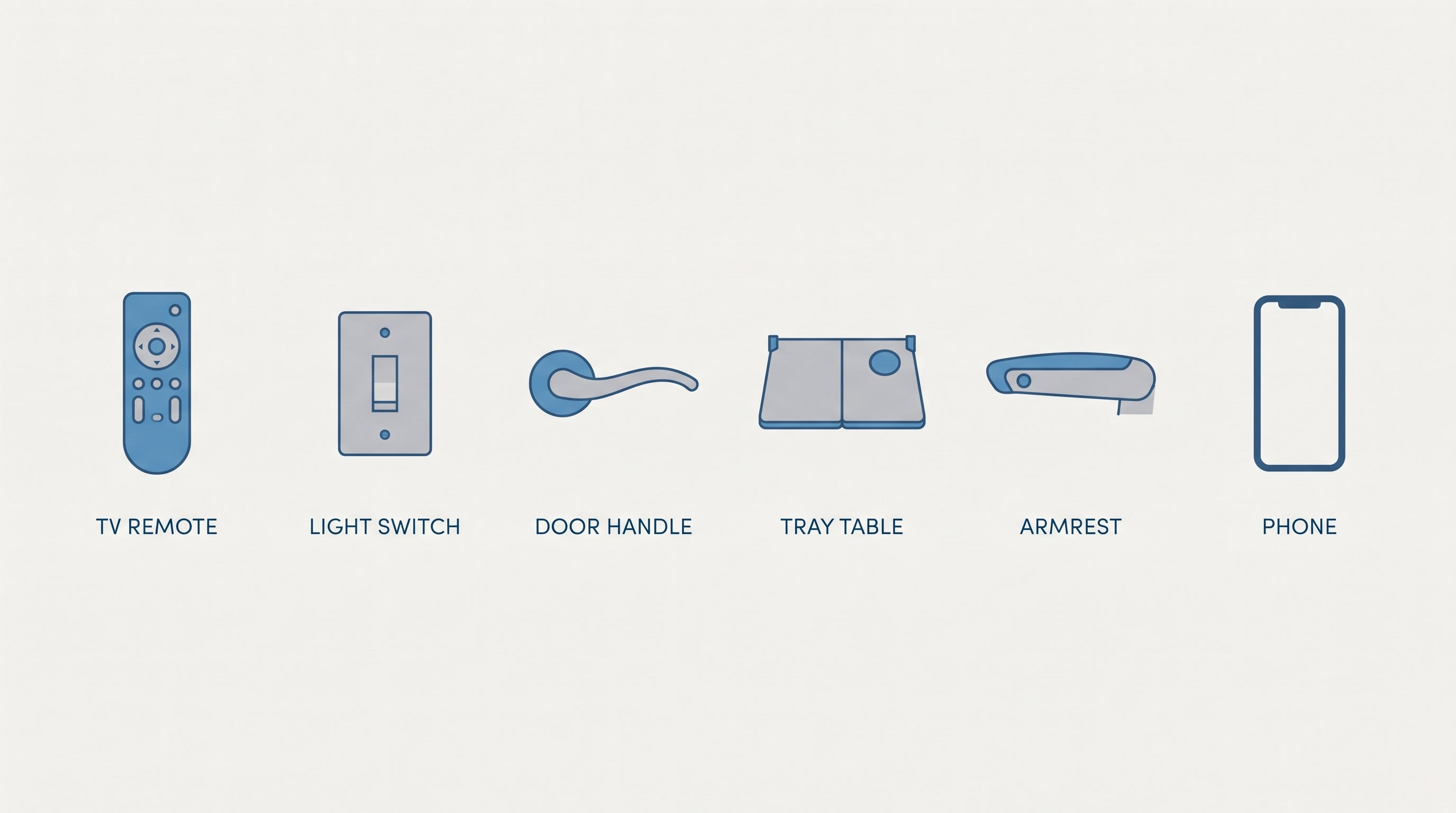
That was the moment it stopped being an abstract worry. Travel makes us touch a short list of things over and over: the remote, the light switch, the door handle, the tray table, the armrest, the seat pocket. Those are not random objects. They are the exact surfaces that pass through the most hands and get the least cleaning.
What the numbers actually say
I expected the airplane restroom to be the headline. It was not. In a study from Auburn University, researchers tested two pathogens on real cabin materials and found that MRSA survived longest, a full seven days, on the cloth of the seat-back pocket. E. coli survived up to four days on the armrest. Both could hang around for days on the very surfaces we sit against for hours.
The hotel data tells a matching story. In one study, researchers sampled 19 surfaces in hotel rooms and found the TV remote and the bedside lamp switch carried high levels of bacteria, right up there with the bathroom sink. The single dirtiest thing in the picture was not in the guest room at all. It was the housekeeping cart, the sponges and mops that travel from room to room.
I read those two studies back to back and felt a strange relief. My little doorway hesitation was not paranoia. It was pattern recognition.
Why I stopped trusting a quick wipe
For a long time my fix was a disinfectant wipe. I would drag it over the remote and call it done. But a wipe has a flaw I never considered: it removes what it can reach and tells me nothing about what it missed. It also cannot show me whether I actually covered the surface or just pushed bacteria around. The hotel researchers put it plainly, visual inspection is a poor way to judge whether a surface is clean.
That is the part that always tripped me up. A remote can look completely spotless and still be the most contaminated thing in the room. I did not need a bigger clean. I needed a way to know what I had actually cleaned.
The 15-second routine that stuck
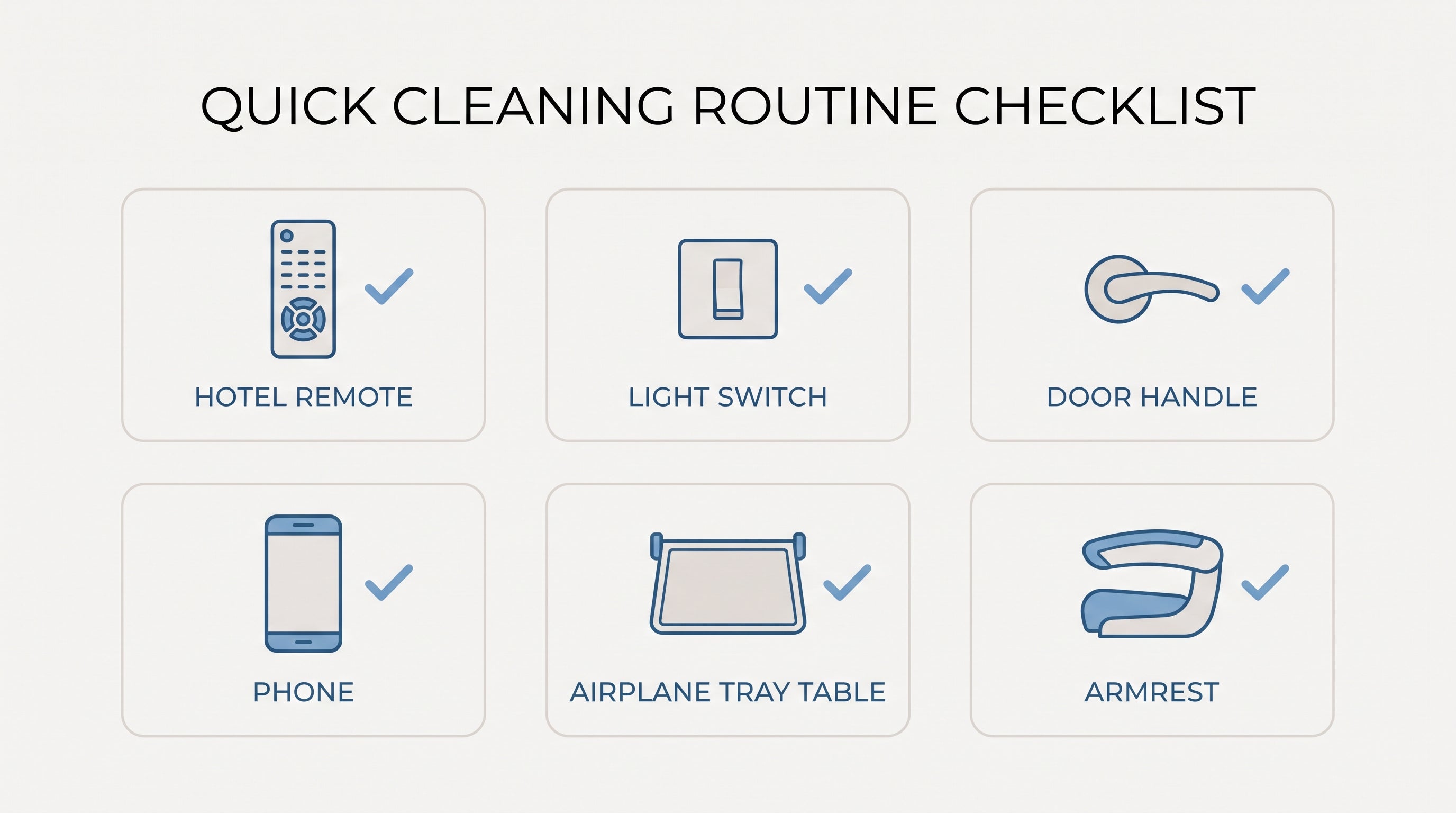
I did not turn into someone who disinfects an entire hotel room, because I do not have time for that and neither do you. I built a short list instead: the remote, the lamp switch, the door handle, my phone, and on a plane, the tray table and armrest. Each one gets a quick, deliberate pass.
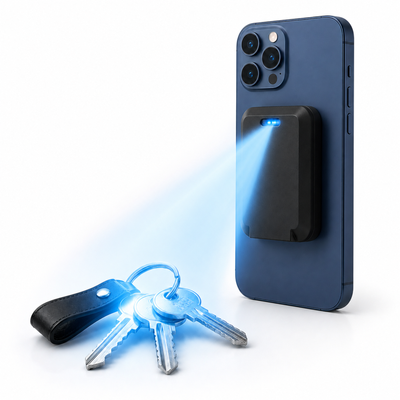
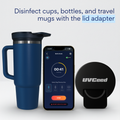
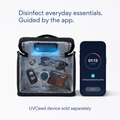
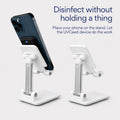
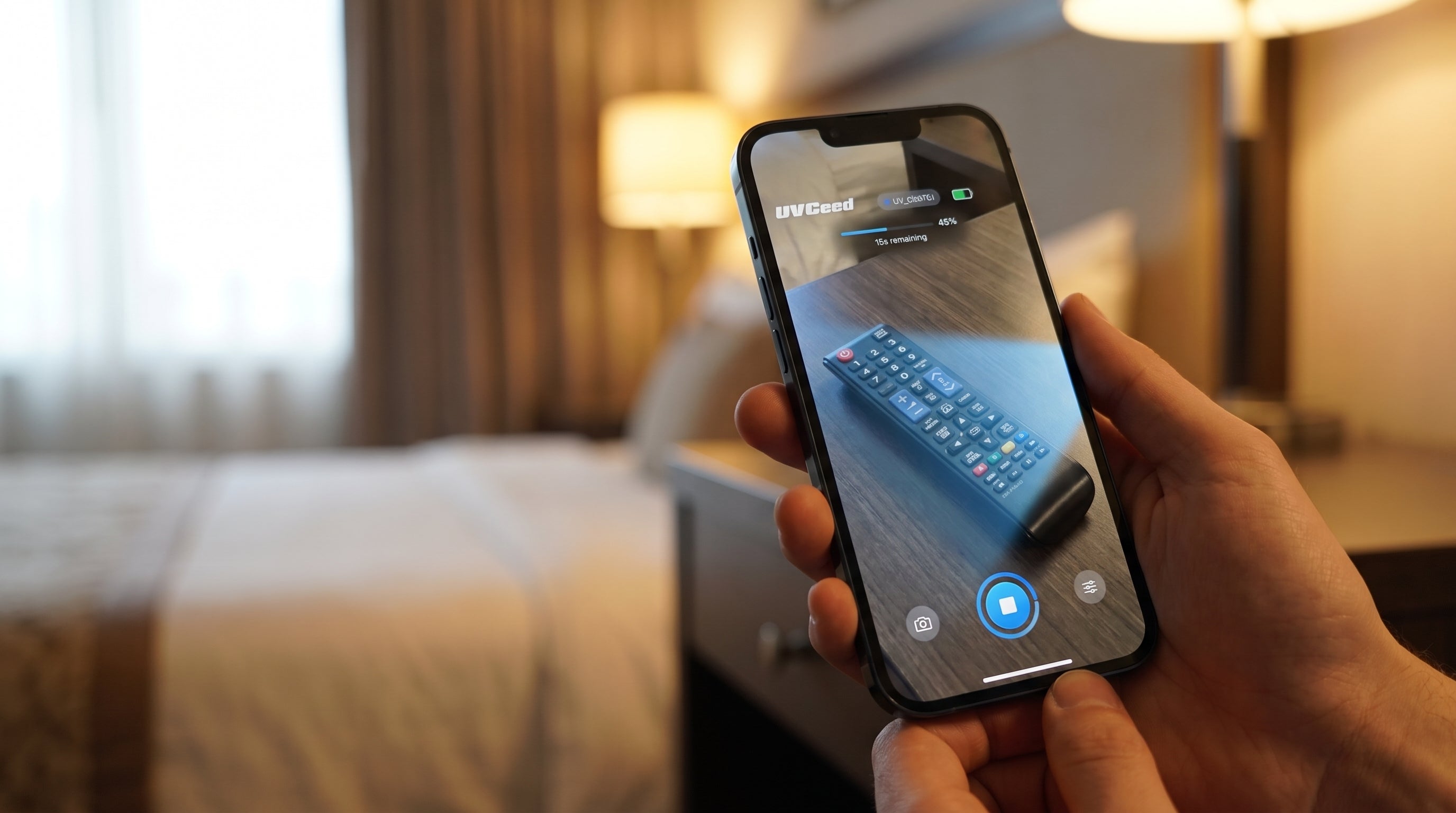
The reason it finally stuck is that UVCeed makes the step visible. The device attaches to the back of my phone, and the app uses the camera to show coverage as I move, so I can see exactly which part of the surface is done and which part I still need to cover. There is no guesswork left, and there is nothing to throw away afterward. The lab numbers are also reassuring: 99.9% of Staph aureus inactivated in 15 seconds, 99.9% of E. coli in 24 seconds, and 99.9% of SARS-CoV-2 in 32 seconds.
I keep coming back to one detail. The light has to reach the surface directly, so I use it on the flat things my hands actually touch, which is exactly where the studies say to aim. It does not claim to reach around corners, and I do not need it to. The routine takes about 15 seconds per surface, and you can watch it happen on your own screen.
Why it works at home too
Here is the part I did not expect. A few weeks into the habit, I realized the same short list exists at home. The remote. The light switches. The doorknobs. The phone my kids borrow and hand back. The same logic that made me feel better in a hotel room now applies in my own living room, and it feels less like a chore and more like tidying up something I can finally see.
I am not a germaphobe, and I did not become one. I just stopped pretending that looking clean is the same as being clean. Travel taught me where to aim, and a simple tool taught me how to know when the job is done. That is a small change with a long tail, and it started with a remote control I almost did not touch.
Want More Articles Like This?
Get research on UV-C treatment and product updates delivered to your inbox.