I have a clear memory of the morning that changed my routine. I was standing in front of the mirror, annoyed at the breakout on my chin that would not go away, holding the same foundation brush I had used every day for months. I washed my face without fail, changed my pillowcase, and cut back on the products I blamed. It never once occurred to me to wash the one tool that touched my face every single morning. Then, in a moment of frustration, I typed a question into my phone: how often should you wash makeup brushes. The first number I read was one I could not un-see.
What a swab actually found
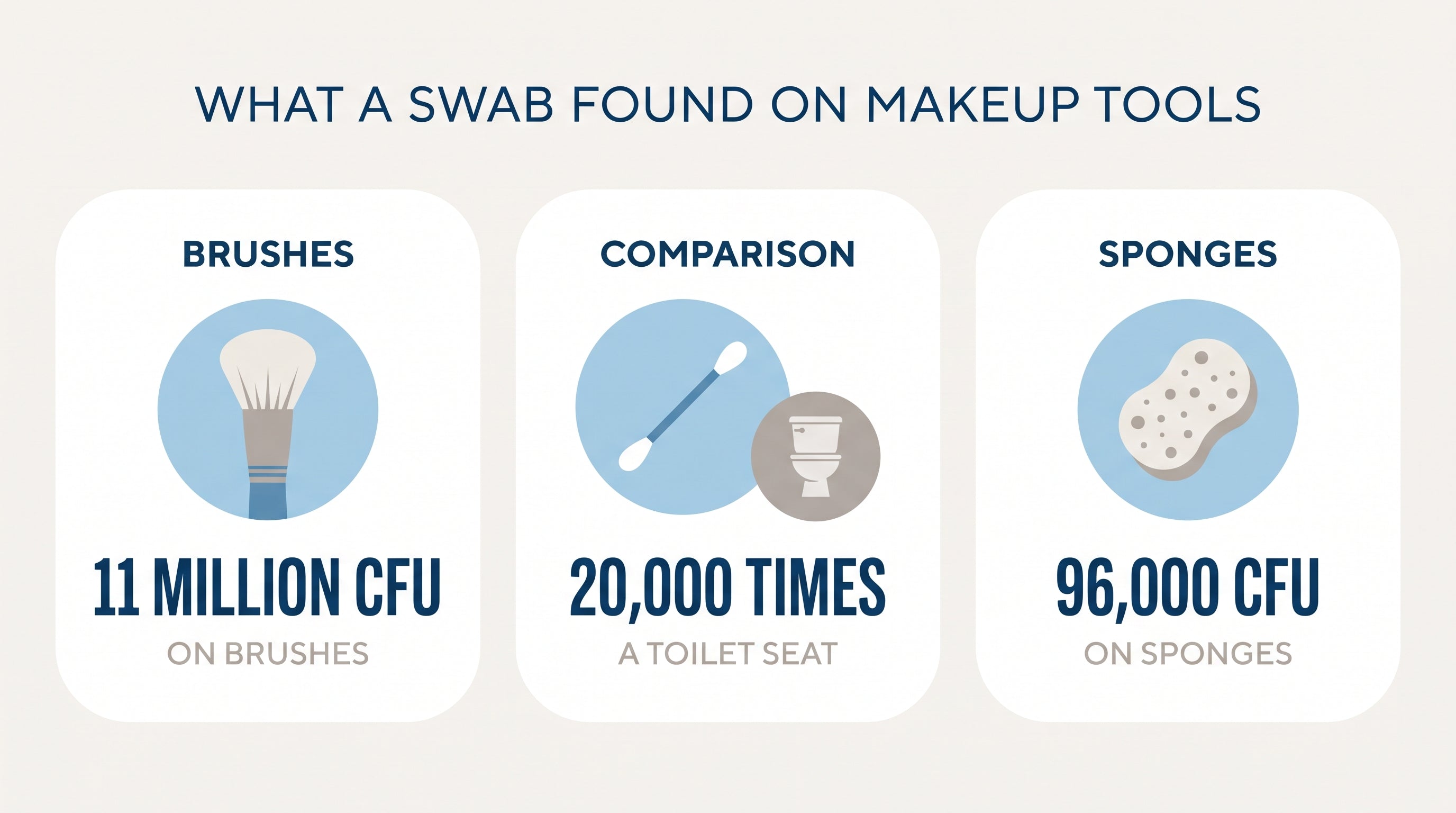
The study that stopped me came from a home retailer that swabbed makeup brushes the same way you would swab a kitchen counter. The average brush carried nearly 11 million colony-forming units of bacteria, about 20,000 times more than a public toilet seat. Seventy-two percent of what they found was Gram-positive rods, and the rest was Gram-negative bacteria of the kind described as antibiotic-resistant. Beauty sponges were worse in their own way: they held 96,000 colony-forming units, every one of them Gram-negative, and the study called them close to seven times dirtier than a dog's tennis ball. Even the vanity surface where I kept everything held 35 times more bacteria than the bathroom doorknob I wiped down every week.
I am not a germophobe, and I do not want to live in a lab. The reason those numbers mattered to me is specific: they came from the exact tool I pressed against my face every day. The American Academy of Dermatology warns that unwashed brushes can cause acne and rashes, and in more serious cases a fungal infection, E. coli, or a staph infection. I had been blaming my products for what my brush was doing.
If you use the same brushes every day, the difference between clean skin and a stubborn breakout can be the tool itself. See how UVCeed fits a daily routine.
Why my weekly wash still was not enough
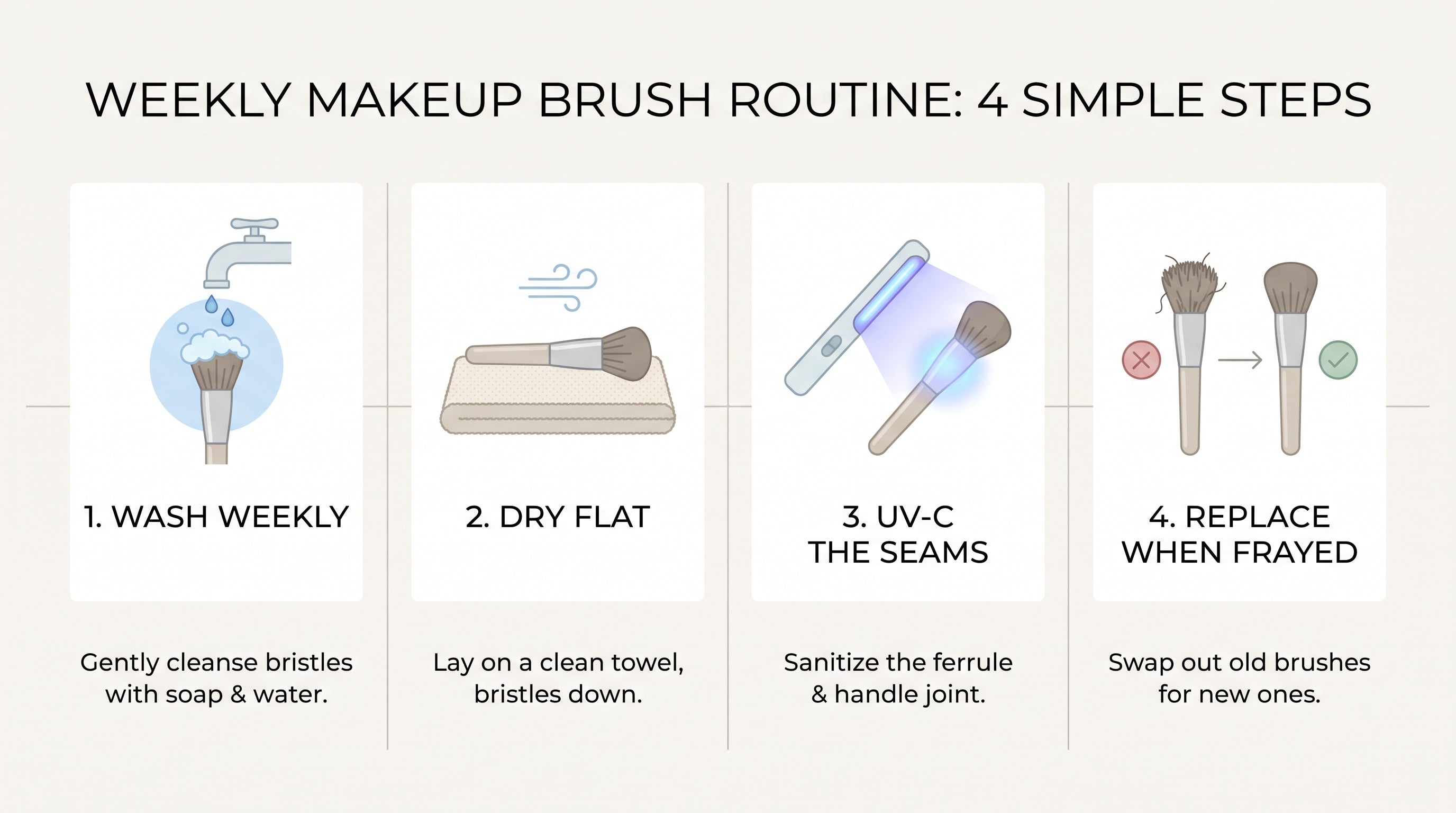
So I started washing my brushes. Baby shampoo, lukewarm water, rinse until the water runs clear, dry flat with the bristles hanging off the counter edge so the glue does not loosen. It helped, and my skin calmed down within a couple of weeks. But as I got more careful, I noticed the two places the wash never quite reached. The ferrule, the metal band where the bristles meet the handle, collects a thin ring of product and oil packed into a seam too tight for fingers. And the very base of the bristles, where they are densest, stays damp the longest and hides whatever the rinse did not flush out. Looking closely, I could see the proof: a faint line of old foundation pressed into the metal band, and a darker shadow deep in the bristles where the soap never quite reached. I could clean the tips perfectly and still leave those two spots untouched.
A no-liquid way to cover the areas not reached
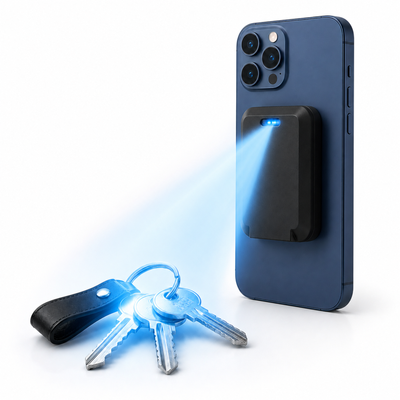
That is what led me to UVCeed, a UV-C disinfection device that attaches to the back of a phone and uses the camera to guide the pass and show what you have already covered. UV-C light works by damaging the DNA of bacteria so they cannot reproduce, but it only works where the light actually reaches, which is why aiming matters, and why the app's live coverage view made the difference for me. In independent lab testing, UVCeed reduced E. coli 99.99 percent in 24 seconds, Staph aureus 99.9 percent in 15 seconds, and SARS-CoV-2 99.9 percent in 32 seconds. After my weekly wash, I now run a slow pass over the ferrule and the base of the bristles, and a quick pass over the brush I use daily. No water, no drying time, no risk to the glue.
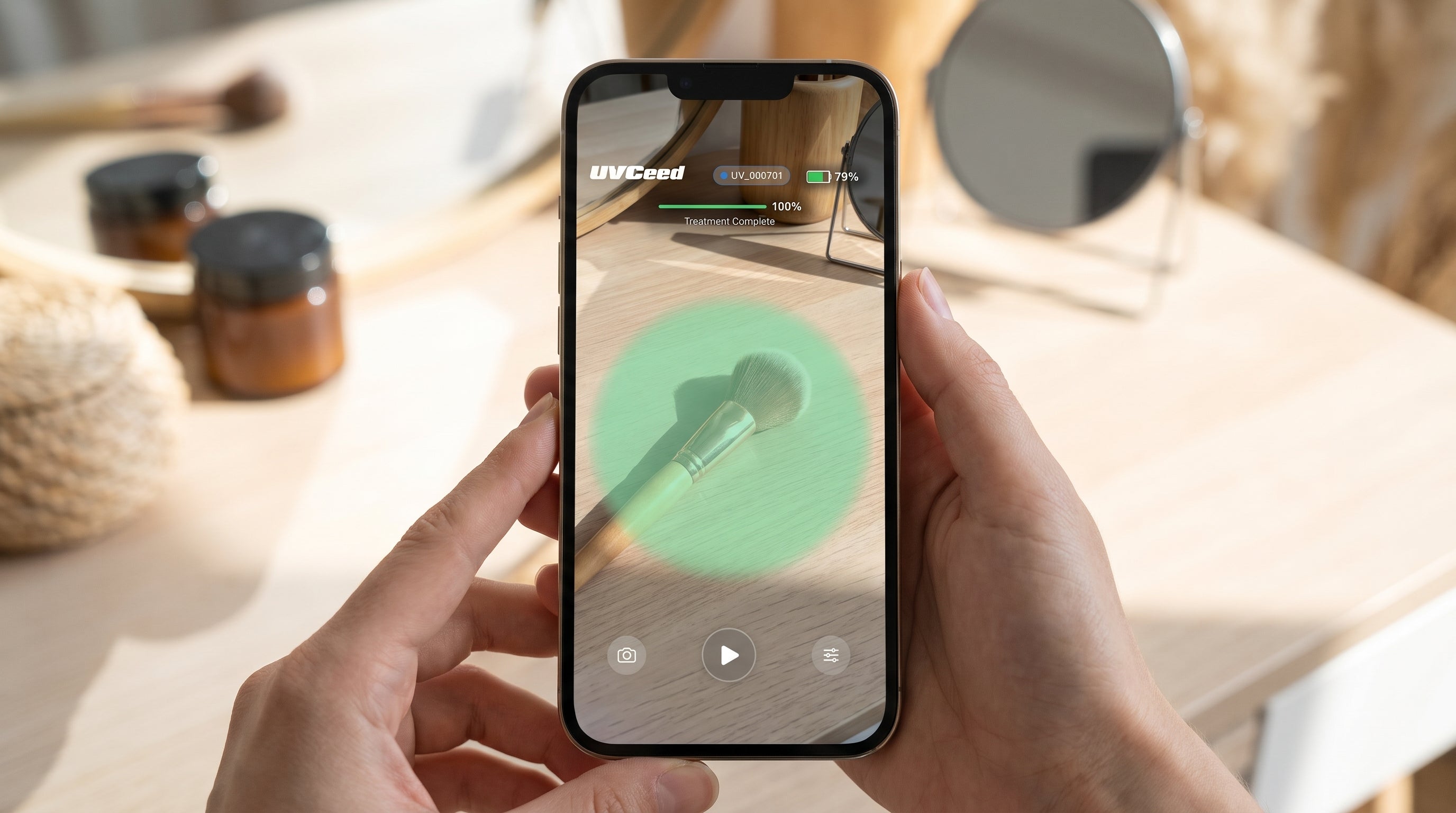
Because UVCeed shows the coverage on screen as you go, you can see exactly what you have already cleaned instead of guessing. See how UVCeed shows your coverage.
The 30-second habit that stuck
My routine now takes less time than the one I used to avoid. Wash wet-product brushes once a week, dry them flat overnight, and run a UVCeed pass over the seams the rinse cannot reach. I did not turn my bathroom into a clinic, and I did not stop using the products I like. I just stopped pressing yesterday's bacteria into my face every morning. The breakout that started all of this is gone, and I have not looked at my foundation brush the same way since.
If your face has been telling you something your routine has not fixed, start with the brush you use every day. See how UVCeed finishes what a wash starts.
Want More Articles Like This?
Get research on UV-C treatment and product updates delivered to your inbox.