TL;DR
A measles outbreak linked to a daycare in the metro Atlanta area has grown to 11 confirmed cases in Georgia for 2026, the state's second highest count in the past decade, behind only the 18 cases reported in 2019. The four newest cases are close contacts of a child confirmed positive on August 18. Nationally, measles cases topped 2,900 as of late August, the highest count in recent US history, and health officials are pointing to falling MMR vaccination rates as the reason outbreaks like this one keep starting.
What actually happened
According to reporting from CBS News Atlanta, four new measles cases were confirmed as close contacts of an initial case tied to a metro Atlanta daycare on August 18, 2026. That brings Georgia's 2026 total to 11 cases, up from 10 in all of 2025 and second only to the 18 cases the state saw in 2019. The children involved were either unvaccinated or not fully vaccinated against measles, mumps, and rubella.
The daycare cluster is part of a much larger national picture. According to CDC measles surveillance data, the United States had reported 2,903 confirmed measles cases as of August 27, 2026, the highest annual total in recent US history. Dr. Andi Shane of Children's Healthcare of Atlanta told reporters, "We really need to address this, and one of the challenges is that lower rates of MMR vaccination are really contributing to these outbreaks." Georgia's kindergarten MMR exemption rate sits at 5.1%, putting it among 24 states now exceeding the 5% threshold that public health researchers consider a tipping point for sustained community transmission.
Why measles spreads the way it does in group care settings
Measles is one of the most contagious viruses known. It spreads primarily through the air when an infected person coughs or sneezes, and the virus can remain suspended in a room and infectious for up to two hours after that person has left. It also survives on hard surfaces, doorknobs, toys, changing tables, cubby handles, for a period after contact, which is part of why daycares and other group childcare settings are such efficient transmission points. Symptoms, including high fever, cough, runny nose, and watery red eyes, typically appear 7 to 14 days after exposure, with the characteristic rash following 3 to 5 days after that, often after the child has already been contagious for days.
What to actually do if you're in an affected area
- Confirm your child's MMR vaccination status with your pediatrician. The two-dose series is highly effective, and catch-up doses are available at any age.
- If you suspect exposure or symptoms, call your healthcare provider before showing up, so the office can prepare to isolate your child from other patients in the waiting room.
- In Georgia, contact the Department of Public Health at 404-657-2588 during business hours or 1-866-782-4584 after hours to report a suspected case or ask about exposure risk.
- Keep frequently touched surfaces at home and in shared care spaces, doorknobs, light switches, cubby handles, changing tables, on a more frequent cleaning rotation during an active local outbreak.
Where UVCeed fits
Measles transmission is overwhelmingly airborne, and no surface device replaces vaccination as the primary defense. But the virus's ability to persist on hard surfaces for a period after contact means the doorknobs, toys, and changing stations a daycare group shares all day are a real secondary exposure pathway, one that's easy to overlook while the conversation focuses on air.
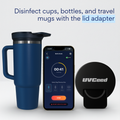
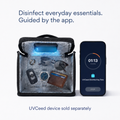
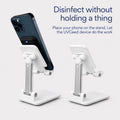
With UVCeed, you aim the device at one section, a doorknob, a changing table surface, a toy bin edge, and hold it steady until the app confirms that section is complete, then move to the next section for larger surfaces. It's a supplementary layer for the shared surfaces a group of kids touches all day, not a substitute for immunization or staying home while contagious.
FAQ
How many measles cases has Georgia had in 2026? 11 confirmed cases as of late August 2026, the state's second highest total in the past decade behind the 18 cases reported in 2019.
Is this outbreak connected to the national measles increase? It's part of the same broader trend. The US had 2,903 confirmed cases nationally as of August 27, 2026, per CDC data, the highest annual count in recent US history, driven largely by pockets of low MMR vaccination coverage.
How long does measles virus survive outside the body? It can remain infectious in the air of a room for up to two hours after an infected person leaves, and it can persist on surfaces for a period after contact as well.
Does UV-C kill the measles virus on surfaces? 254 nm UV-C is effective against a broad range of viruses on hard, non-porous surfaces with adequate exposure time and direct line of sight. It addresses the surface pathway only, not airborne transmission, which is why vaccination remains the primary defense against measles specifically.
What should I do if my child was at a daycare with a confirmed case? Call your pediatrician or local health department before visiting in person, confirm your child's MMR status, and watch for fever, cough, red watery eyes, or rash for up to 21 days after exposure.
Want More Articles Like This?
Get research on UV-C treatment and product updates delivered to your inbox.