TL;DR
Clade I mpox cases in the United States have grown from 23 in late May to more than 40 by July 2026, nearly doubling in about two months. New York City alone has logged 102 mpox cases since the start of the year, with 14 of those confirmed in just the most recent month tracked. The CDC still rates the overall U.S. risk as low, but the upward trend and its ties to international travel patterns are worth understanding.
What actually happened
Mpox (formerly known as monkeypox) is a viral disease that causes fever, swollen lymph nodes, and a distinctive rash, and it spreads through close physical contact, respiratory droplets during prolonged contact, and contact with contaminated surfaces or materials like bedding and clothing. The current concern centers on Clade I, a more severe strain than the Clade II strain behind the 2022 global outbreak.
According to the CDC's mpox situation summary, U.S. Clade I case counts rose from 23 as of May 27, 2026 to more than 40 by July 2026, with cases increasing in frequency since March. Nearly all U.S. cases trace back to recent travel to Central and Eastern Africa or parts of Western Europe experiencing newer outbreak activity, or to close contacts of travelers, rather than sustained domestic community spread. In New York City specifically, NYC Health data shows 102 total positive cases since January 1, 2026, with 14 of those diagnosed between July 12 and August 8, showing the trend is still moving upward rather than plateauing.
The CDC's official risk assessment for the general U.S. population remains low, with a low-to-moderate risk assessment specifically for men who have sex with men, the population that has represented the majority of cases historically. Community transmission remains limited, with travel and close-contact chains driving nearly all confirmed cases so far.
Why surfaces matter here more than with most outbreaks in this list
Unlike airborne-only pathogens, mpox is one of the few current outbreak threats where surface and material contact is a genuine, established transmission route, not a theoretical one. The virus can survive on bedding, clothing, towels, and other materials an infected person has had prolonged contact with. This is part of why the CDC's guidance for anyone with a suspected or confirmed case includes isolating and separately laundering or disinfecting shared linens, towels, and frequently touched surfaces in the home.
What to actually do
- Know the symptoms: fever, swollen lymph nodes, and a rash that can appear on the face, hands, feet, chest, or genital area, often starting a few days after fever onset.
- If you've traveled to an area with active Clade I transmission and develop symptoms, contact a healthcare provider and mention your travel history specifically.
- Avoid skin-to-skin contact and sharing bedding, towels, or clothing with anyone showing symptoms.
- If mpox is confirmed in your household, disinfect frequently touched hard surfaces, doorknobs, light switches, bathroom fixtures, in addition to laundering fabric items separately in hot water.
Where UVCeed fits
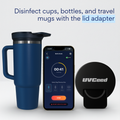
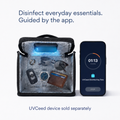
254 nm UV-C is effective against a wide range of viruses on hard, non-porous surfaces with adequate contact time and direct line of sight, which makes it a reasonable supplementary tool for the shared hard surfaces in a household managing a suspected or confirmed case, doorknobs, bathroom fixtures, remote controls, alongside the laundering and isolation measures that do the primary work for fabric and close-contact transmission.
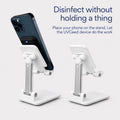
With UVCeed, you aim the device at one section, a doorknob, a bathroom fixture, a remote control, and hold it steady until the app confirms that section is complete, then move to the next section for anything larger than the coverage area.
FAQ
How worried should I be about mpox right now? The CDC rates the overall U.S. risk as low. Nearly all current cases are tied to international travel or close contacts of travelers, with limited community spread, though case counts have been climbing since spring.
How does mpox actually spread? Primarily through prolonged close physical contact, respiratory droplets during extended close contact, and contact with contaminated materials like bedding or clothing an infected person has used.
Is Clade I mpox different from the 2022 outbreak? Yes. The 2022 global outbreak was driven by Clade II, generally considered less severe. Clade I, the strain behind the current increase, is associated with more severe illness.
Can UV-C protect against mpox? 254 nm UV-C is effective against a broad range of viruses on hard surfaces with direct line of sight, but mpox's main transmission routes are close contact and shared fabric items, so laundering and isolation matter more than surface disinfection alone.
Who is most affected by the current increase? Nearly all confirmed U.S. cases are linked to travel to Central and Eastern Africa or parts of Western Europe with active outbreak activity, or to close contacts of those travelers.
Want More Articles Like This?
Get research on UV-C treatment and product updates delivered to your inbox.