A groundbreaking narrative review published in Cureus exposes the health and environmental risks of quaternary ammonium compounds (QACs) - and highlights UV-C technology as the future of safe, effective disinfection.
When the pandemic swept the globe, chemical disinfectants became household essentials overnight. Sales of disinfecting wipes and sprays skyrocketed as families, schools, hospitals, and businesses desperately sought protection from the virus. But what if the very products we trusted to keep us safe were silently causing harm?
A new peer-reviewed study published in Cureus - co-authored by Dr. Peter Bonutti, renowned orthopedic surgeon, medical innovator, and founder of UVCeed - reveals alarming findings about quaternary ammonium compounds (QACs), the active ingredients in most popular disinfectants including Clorox and Lysol wipes.
Read the full peer-reviewed study here
The Hidden Truth About Your Disinfecting Wipes
QACs are everywhere - in hospital-grade cleaners, household sprays, hand sanitizers, fabric softeners, and even mouthwashes. The QAC industry produces over 700,000 tons annually, representing a $20 billion global market. But according to the research, this widespread use has far outpaced scientific scrutiny of their safety.
What the Research Found:
Health Concerns:
- QAC exposure has been linked to respiratory irritation, occupational asthma, and contact dermatitis
- Animal studies show reproductive toxicity, decreased fertility, and developmental effects at low doses
- Recent research found QACs may damage oligodendrocytes - brain cells critical for neurological function - with potential links to neurodevelopmental disorders
- QACs have been detected in 80% of human blood samples tested
They Don't Even Work the Way You Think:
- Most QAC wipes require surfaces to stay wet for 4 full minutes to actually disinfect
- Over 50% of surfaces dry within 60 seconds at room temperature
- This means you'd need to re-wipe the same area up to 4 times for true disinfection
- There's no way to visually confirm if a surface has been adequately disinfected
Environmental Impact:
- QACs persist in soil, water, and household dust long after application
- They're toxic to aquatic life and have been shown to bioaccumulate
- Wastewater treatment doesn't effectively remove them
Why a Surgeon Created a Better Solution
Dr. Peter Bonutti isn't just a researcher - he's a practicing orthopedic surgeon with over 30,000 surgeries and 500+ patents to his name. After decades in the operating room, he understood better than anyone the critical importance of effective disinfection.
"As a surgeon, I've spent my career fighting infection," says Dr. Bonutti. "When I looked at the science behind chemical disinfectants, I realized we needed a fundamentally different approach - one that's effective, safe, and gives people real confidence that surfaces are actually clean."
That's why he created UVCeed.
The UV-C Advantage: Science-Backed, Chemical-Free Disinfection
UV-C light (wavelengths between 200-280 nanometers) has been used in hospitals and laboratories for decades. It works by damaging the DNA and RNA of pathogens, rendering them unable to replicate - without any chemicals, residues, or toxic byproducts.
According to the peer-reviewed research, UV-C offers significant advantages:
| Feature | UV-C Disinfection | Chemical Disinfectants (QACs) |
|---|---|---|
| Residue | None | Persistent residues on surfaces and in dust |
| Toxicity | None when properly used | Skin/eye irritation, respiratory issues, reproductive concerns |
| Antimicrobial Resistance | None - physical mechanism | Documented resistance in bacteria and viruses |
| Environmental Impact | Zero contamination | Detected in soil, water, and wildlife |
| Speed | Seconds to minutes | Requires 4+ minutes of wet contact |
| Verification | Real-time visual confirmation possible | No way to confirm effectiveness |
UVCeed: The Smart UV-C Device That Shows You It's Working
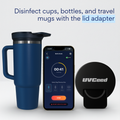
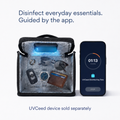
UVCeed isn't just another UV gadget. It's a breakthrough in disinfection technology that combines:
- Medical-grade 265nm UV-C LED - the exact wavelength proven to destroy bacterial and viral DNA
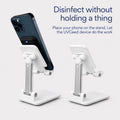
- Augmented reality visualization - see disinfection happening in real-time through your iPhone
- AI-powered safety features - automatically shuts off if it detects skin, eyes, or pets
- Smart dosage control - ensures the right amount of UV-C energy reaches every surface
No chemicals. No residue. No guessing.
What This Means for You and Your Family
Every time you use a chemical disinfectant wipe, you're potentially:
- Exposing yourself to compounds linked to health concerns
- Leaving chemical residues where your children play and your pets rest
- Contributing to environmental contamination
- Not even achieving true disinfection unless you're re-wiping multiple times
The science is clear: there's a better way.
Ready to Make the Switch?
Join the thousands of families, healthcare professionals, and businesses who have already discovered the UVCeed difference.
Shop UVCeed Now →
✓ EPA registered
✓ Independently lab tested
✓ Named one of Fast Company's "Next Big Things in Tech"
✓ Created by a physician with 30+ years of medical innovation
About the Study:
"Clinical and Environmental Harms of Quaternary Ammonium Disinfectants and the Promise of Ultraviolet-C (UV-C) Alternatives: A Narrative Review" was published in Cureus (May 2025) and is indexed in PubMed/PMC. Authors include Mitchell K. Ng (Maimonides Medical Center), Michael A. Mont (LifeBridge Health), and Peter M. Bonutti (Sarah Bush Lincoln Bonutti Clinic).
Access the full peer-reviewed paper →
UVCeed is designed and manufactured by Bonutti Technologies in Effingham, Illinois - a medical device company with over 400 patents and 30+ years of healthcare innovation.
Want More Articles Like This?
Get research on UV-C treatment and product updates delivered to your inbox.