TL;DR
- CDC is tracking a fast-moving cyclosporiasis outbreak across 18 states with 400+ reported illnesses and 20+ hospitalizations as of early July 2026.
- Cyclospora is chlorine-resistant. Rinsing produce with tap water does not reliably kill it.
- UV-C at 254nm inactivates Cyclospora oocysts through DNA damage - the same mechanism used in municipal water treatment.
- A short handheld UV-C session on your produce prep surfaces, cutting boards, and reusable bags is the missing step in most kitchens.
The Outbreak Everyone Missed This Week
Between May 1 and June 16, 2026, the CDC confirmed 145 cyclosporiasis cases across 17 states, and by early July that number had climbed past 400 illnesses in 18 states with 20+ hospitalizations. Michigan alone reported more than 300 cases since June 22. No single food source has been identified, which is the scariest part - investigators are chasing multiple clusters at once. Source: CDC Foodborne Outbreaks.
Cyclospora spreads through raw produce or water contaminated with human feces. Symptoms show up 2 to 14 days later: watery, sometimes explosive diarrhea, cramping, nausea, fatigue, low-grade fever. It can last weeks without treatment. Source: CDC Cyclosporiasis.
Why Rinsing Isn't Enough
Cyclospora oocysts are unusually tough:
- Resistant to standard chlorine bleach concentrations used in produce washing.
- Not killed by refrigeration or freezing at typical home temperatures.
- Can survive on stainless steel and plastic prep surfaces for days.
Source: CDC Parasites - Cyclospora Biology.
Municipal water plants use UV light specifically because chlorine can't be trusted against this class of parasite. That same 254nm wavelength is what you can now aim at your kitchen counter yourself.
Your Produce Prep Zone Checklist
- Rinse produce under running water - understand this reduces but does not eliminate Cyclospora.
- Dry with a clean, single-use towel.
- Wash cutting boards and knives in hot soapy water.
- Run a UV-C session on the cutting board, counter, and colander before the next use.
- Refrigerate promptly.
Where UVCeed Fits
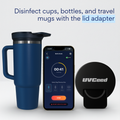
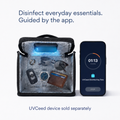
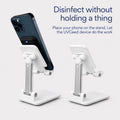
UVCeed is a smart handheld UV-C disinfecting device that uses 254nm germicidal light - the same wavelength documented to inactivate Cyclospora oocysts and reduce SARS-CoV-2 by 99.99% at 6.5 cm in 64 seconds. It clips to any iPhone 12 or newer via MagSafe, and the companion app uses machine vision to keep the light off any time it detects people or pets in the frame. Source: UVCeed Product Page.
You aim UVCeed at a section of the surface, hold it still until the app confirms the session is complete for that section, then move to the next section. That deliberate, held session is what makes UV-C work - dose is time on target, not a fast sweep.
- Rechargeable USB-C, ~1 hour to full charge, ~2 hours continuous use.
- Real-time in-app exposure monitoring and automatic shutoff.
FAQ
Can I just use bleach on my counters? Sodium hypochlorite works if you use the right concentration and dwell time, but it damages surfaces over time and leaves residue near food. UV-C leaves no residue.
How long is a UV-C session? For a phone-sized area at close range, roughly 60 seconds is enough for high-log reduction of most pathogens. The UVCeed app tells you when the section is done - you don't guess.
Does UV-C kill the parasite itself or just the oocysts? It damages the DNA inside the oocyst so it cannot reproduce or infect. That is the same mechanism used in drinking water UV plants. Source: EPA UV Disinfection Guidance.
The Bottom Line
The 2026 Cyclospora outbreak is a reminder that the pathogens showing up in American kitchens right now are the ones your usual habits weren't built to stop. Add a UV-C session to your produce prep routine.
Want More Articles Like This?
Get research on UV-C treatment and product updates delivered to your inbox.