TL;DR: FEMA's published emergency kit guidance still treats disinfection as "bleach + water + buckets." That works until you cannot get more bleach or you need to disinfect food prep surfaces without rinsing. A USB-C-rechargeable UV-C device closes the gap and runs off a power bank for weeks.
You built the kit. Water for three days. Food for three days. Flashlights, batteries, radio, first aid, plastic sheeting, duct tape, can opener, blankets, copies of documents. Two gallons of bleach for water treatment and surface disinfection.
The bleach is finite. It off-gasses. It degrades over time. It needs gloves. It cannot be used on food prep surfaces without rinsing, and rinsing requires water you might not have.
The 2026 disaster pattern - heat domes, hurricane intensification, multi-day power outages, wildfire evacuations - is exposing the gap. Households need a disinfection layer that does not consume the water supply.
What Disasters Actually Require Disinfection For
The post-event hygiene workload nobody plans for:
- Food prep surfaces in a powerless kitchen
- Baby bottle nipples and pacifiers when boiling water is rationed
- Wound care setup (clean tweezers, scissors, suture kit if you have one)
- CPAP mask for sleep apnea users in shelters
- Toothbrushes when the tap water is on a boil advisory
- High-touch surfaces in shared shelter spaces
Bleach addresses some of these. It cannot address all of them, especially the items that touch mouths and wounds.
Why UV-C Belongs Next To The Flashlight
A handheld UV-C device:
- Runs off USB-C; a 20,000 mAh power bank delivers weeks of cycles
- No chemistry to expire, no rinse required
- Works on water-rationed conditions
- Safe for food-contact surfaces
- Compact enough to fit in a go-bag
It is the missing disinfection layer for the modern emergency kit.
The 5-Item Emergency Disinfection Protocol
When the kit is in use:
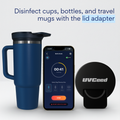
- Drinking water vessels. UV-C the lid threads and spout before each pour.
- Food prep surface. UV-C the cutting surface before opening cans or rehydrating food.
- Wound care tools. UV-C tweezers, scissors, and the area around the wound.
- Mouth-contact items. UV-C the toothbrush before each use during a boil advisory.
- Shared shelter touch points. UV-C door handles and shared surfaces if sheltering with non-household members.
Total cycles per day in active use: 20-40. Power consumption: well under a single power bank's daily output.
The Power Bank Math
A typical USB-C handheld UV-C device draws 5W during a 60-second cycle. A 20,000 mAh / 74 Wh power bank delivers roughly 800-1,000 minutes of cycle time, or about 2-3 weeks of typical emergency-use cadence before the power bank itself needs recharging.
That outlasts most multi-day outage scenarios, and the same power bank is already in your kit for the phone.
Why UV-C Is Better Than Bleach For Specific Scenarios
- Baby items. No rinse means no contamination risk from contaminated rinse water.
- Wound care. No chemical contact with broken skin.
- Food contact. No off-gas, no residue, immediately usable.
- Eye-area items (glasses, contact lens cases). Bleach is unsafe; UV-C is appropriate at proper distance.
- Electronics. Bleach corrodes; UV-C does not.
Bleach still has its role for bulk water treatment and high-pathogen surface deluge. UV-C is the precision layer.
Why UVCeed.com's Device For The Go-Bag
- 254 nm true UV-C
- USB-C rechargeable from any phone power bank
- Tilt-sensor auto-shutoff (safe in crowded shelter conditions)
- Compact: fits in a 1L go-bag pouch with room for cables
- No chemistry to expire on a 3-5 year storage cycle
Frequently Asked Questions
Do I still need bleach in the kit?
Yes, for water treatment and bulk surface disinfection. UV-C is additive, not replacement.
How long does the device last in storage?
Indefinitely for the lamp; the battery should be cycled (charged then partially discharged) every 4-6 months for longevity. Same maintenance as any lithium emergency device.
Will it work in cold conditions?
Yes. UV-C output is stable across the temperature range a sealed go-bag experiences. Battery performance degrades in extreme cold; warm the device before use.
Can I use it during the disaster, not just after?
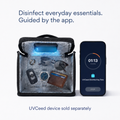
Yes. Pre-event, sweep your phone, IDs, and go-bag contents. During shelter, sweep shared surfaces. Post-event, sweep recovered items before they enter the cleaned house.
The Bottom Line
The 2026 emergency kit needs a disinfection layer that does not consume water, does not expire, and works for items bleach cannot touch. Buy a UVCeed disinfection device, drop it in the go-bag with the power bank, and close the gap FEMA's guidance still leaves open.
Want More Articles Like This?
Get research on UV-C treatment and product updates delivered to your inbox.