On 20 July 2022, the US Food and Drug Administration told the public to stop using 13 specific ultraviolet wands. The agency's own testing found some of them exposed users to as much as 3,000 times the recommended daily limit for UV-C radiation at a 2-inch distance. The product category never fully recovered. Here is the full list, how to check yours, and what to do if you own one.
The warning did not disappear. The FDA Safety Communication was updated on 17 August 2023 to add more products to the list, and it remains active guidance today. If you bought a handheld UV wand during the pandemic, this article is for you.
What the FDA actually said
The FDA has not approved, cleared, or authorized any of the wands on its list as medical devices. These are consumer products that were sold with surface-disinfection claims, and the agency's device-safety office tested them after receiving injury reports.
The core finding, in the agency's own words:
"Some UV wand products give off at a distance of about two inches, as much as 3,000 times more UV-C radiation than the exposure limit recommended by the International Commission on Non-Ionizing Radiation Protection."
The FDA warned that users of these wands "may experience an injury to the skin (erythema, burn-like skin reaction), eyes (photokeratitis), or both after a few seconds of exposure." The eye injury, the agency noted, causes "severe pain and a feeling of having sand in the eyes."
The FDA's recommendations were specific:
- Do not use the UV wands on the list.
- Consider alternative disinfection methods, including routine chemical cleaners.
- Avoid any UV product that does not include safety instructions or disclose its radiation output.
The agency did not issue a formal recall of the devices. That is a regulatory distinction worth noting - a recall requires the manufacturer or the FDA to initiate removal. A Safety Communication is a public warning. Many of these products stayed on third-party marketplaces long after the warning was published.
The 13 wands, in a single table
Every product below is confirmed against the FDA's own Safety Communication page, which lists the original seven products from the 20 July 2022 bulletin and six additions from the 17 August 2023 update.
| # | Brand / Product | Model | Manufacturer | FDA finding |
|---|---|---|---|---|
| 1 | Safe-T-Lite | - | Max-lux Corporation | On FDA list; unsafe UV-C emission |
| 2 | OttLite Rechargeable UVC Disinfecting Wand | UV10002M | OttLite Technologies Inc. | On FDA list; unsafe UV-C emission |
| 3 | UVILIZER Flip | SG-153 | In My Bathroom LLC | On FDA list; unsafe UV-C emission |
| 4 | Ultraviolet Sterilamp | PURPLEGLOW | Vanelc | On FDA list; unsafe UV-C emission |
| 5 | Sharper Image UV Sanitizing Portable Wand | 101362 | MerchSource LLC | On FDA list; unsafe UV-C emission |
| 6 | SurfaceSoap UV | - | PhoneSoap LLC | On FDA list; unsafe UV-C emission |
| 7 | Magic UV Light Sanitizer | - | Magic UV Light Sanitizer | On FDA list; unsafe UV-C emission |
| 8 | Purple Glow Ultraviolet Sterilamp | BP52 | In My Bathroom LLC | Added 17 Aug 2023 update |
| 9 | UVILIZER UV Light Sanitizer | Razor | In My Bathroom LLC | Added 17 Aug 2023 update |
| 10 | OttLite Compact Travel Disinfecting Wand | UV11001M | OttLite Technologies Inc. | Added 17 Aug 2023 update |
| 11 | WBM Smart UV Portable Sterilizer | UV-03 | World Business Management | Added 17 Aug 2023 update |
| 12 | Safe and Healthy Disinfecting UV Light | 2090 | Ontel Products Corporation | Added 17 Aug 2023 update |
| 13 | 59S Wand Disinfector | 5F1025917 | Shenzhen UV Guard Technology | Added 17 Aug 2023 update |
Retail distribution details for individual SKUs are not disclosed in the FDA bulletin. Several of these products were widely sold through Amazon, Bed Bath and Beyond, QVC, HSN, and brand-direct websites during 2020-2022. If your wand is a close variant of one of these models - same manufacturer, slightly different model number - treat it as suspect and run the inspection below.
How to tell if your wand is on the list even if the brand name isn't
Many wands sold during the pandemic were rebadged versions of the same underlying hardware. The brand on the box is not the brand that made the bulb. If you own a handheld UV wand, run through these five checks before you use it again.
1. Check for a 510(k) number or an ISO 15858 statement on the label. Medical-grade UV disinfection devices in the US are cleared through the FDA's 510(k) pathway and will carry a 510(k) number on the device, the manual, or the box. ISO 15858:2016 is the international standard for UV-C device safety information. If the device makes a disinfection claim and shows neither a 510(k) number nor an ISO 15858 statement, that is a red flag. None of the 13 wands on the FDA list were cleared as medical devices.
2. Look at the bulb itself. A genuine 254 nm UV-C bulb is either a low-pressure mercury discharge tube (looks like a tiny fluorescent lamp, often rated 4-11 watts) or a surface-mount UV-C LED on a small ceramic wafer. Both should be labeled with the wavelength (254 nm). If the bulb glows deep purple or blue-white and you can see the color brightly without eye protection, you are probably looking at a UV-A or "blacklight" bulb, which does not disinfect but is sometimes sold as if it does. True UV-C is nearly invisible to the human eye.
3. Check for eye-protection interlocks. Safer UV-C devices shut off automatically when inverted, tilted upward, or when their housing is opened. If your wand runs continuously no matter which way you point it - including straight at your face - it does not have an interlock, which is one of the specific hazards the FDA flagged.
4. Check for FCC and FDA registration numbers. An FCC ID on an electronic device is not an FDA clearance, but its absence often signals a product that bypassed the normal US import channels. On the FDA side, you can search a manufacturer or device name in the FDA Establishment Registration and Device Listing database. If nothing comes back, the device is not registered.
5. Check whether the brand still sells the model today. Many of the 13 wands were quietly dropped from brand catalogs without a formal recall. If the product page is gone from the manufacturer's website but the Amazon listing is still live under a third-party seller, that is often the fingerprint of a device the brand has walked away from.
Save these five checks. We have packaged them as a one-page printable at the bottom of this article.
The injuries the FDA tracked
The two medical conditions named in the FDA bulletin are not exotic. Both are well documented in ophthalmology and dermatology literature, and both are caused by acute UV-C exposure of the kind these wands produce.
Photokeratitis is sometimes called "welder's flash" or "snow blindness." It is a sunburn of the cornea and conjunctiva. Symptoms begin 6 to 12 hours after exposure and include severe eye pain, light sensitivity, tearing, blurred vision, and the sensation of grit in the eye. It is usually reversible within 24 to 48 hours with lubricating drops and darkness, but repeat episodes raise the long-term risk of corneal damage and cataract formation.
Erythema is the skin equivalent - a burn-like redness that can appear within hours of exposure. In high-dose cases it is accompanied by edema, blistering, and peeling, similar to a severe sunburn.
The longer-term concerns are the ones that do not show up in 48 hours. Chronic unprotected exposure to UV-C radiation is associated with elevated risk of corneal clouding and non-melanoma skin cancer, which is why occupational exposure limits exist in the first place. The JAMA 2022 news brief on the FDA warning summarized the concern plainly: "certain UV wands marketed for disinfecting household items may expose the user and those nearby to unsafe levels of UV-C radiation that may harm eyes and skin with a few seconds of exposure."
The FDA received injury reports before issuing the Safety Communication. Independent coverage, including a Washington Post consumer piece and HuffPost's review of the phone sanitizer category, had been raising questions about these products since 2020-2021. A class action against UV Sanitizer USA challenged disinfection claims in the same period.
Why PhoneSoap SurfaceSoap was on the list and the PhoneSoap Pro was not
This is the single most important point of fairness in this article, because it explains the regulatory logic.
The product on the FDA list is SurfaceSoap UV, PhoneSoap's handheld open-emission wand. It emits UV-C into the open air, pointed at a surface the user selects.
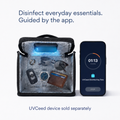
The PhoneSoap Pro is not on the list. It is an enclosed sanitizing chamber - you place your phone inside a lidded box, close it, and the UV-C emits only when the lid is closed. The user never has line of sight to the bulb while it is on, and the box geometry prevents the "2-inch open-air exposure" scenario the FDA was testing for.
That difference - open emission versus enclosed emission - is the entire regulatory story of UV-C consumer devices. The FDA's concern is not UV-C itself, which has been used safely in water treatment, hospital air handling, and food processing for decades. The concern is open-air handheld geometry pointed at a user's eyes and skin at close range.
PhoneSoap continued selling enclosed-chamber products after the Safety Communication. That is consistent with the FDA's framing.
What makes UVCeed different from the 13 wands
UVCeed is not on the FDA list. We want to say that plainly and early, because it is the first question any informed buyer will ask.
Four design decisions separate UVCeed from the devices on the Safety Communication:
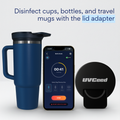
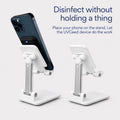
MagSafe-attached, face-down orientation. UVCeed clips to the back of the phone and is used face-down against a surface. The emitter points away from the user's face. The 13 wands on the FDA list are handheld with an exposed bulb that can be pointed in any direction, including at the user's own eyes.
The phone camera maps the UV-C emission in real time. The UVCeed app uses the phone's camera to visualize the beam footprint on-screen, so the user can see exactly where the UV-C is landing. The devices on the FDA list have no visualization layer. You wave them and hope.
On-screen dose verification. UVCeed tells you when a surface has received a sufficient dose and when it has not. That removes the incentive to over-wave or hold the device at an unsafe close range, which is the exact behavior that produced the FDA's "2-inch, 3,000x exposure" test condition.
General-wellness device, not a medical device. This is a trust feature, so we are stating it in writing. UVCeed is positioned under the FDA's general-wellness policy as a low-risk surface sanitizer. We do not make medical-cure claims. We do not claim UVCeed holds 510(k) clearance. We make surface-dose claims and let the user decide what to do with that information. If a UV-C product in this category is making medical-grade kill claims without a 510(k) clearance to back them, that is exactly the kind of claim the FDA has been pushing back on since 2020.
What to do if you own one of the 13
Stop using it. Even if you have been using it for months without an obvious injury, chronic UV-C exposure risk accumulates. The absence of a burn today is not evidence of safety.
Do not sell it on eBay, Facebook Marketplace, or at a yard sale. You would be passing an FDA-flagged hazard to a stranger who may not know to check. Several of the 13 are still showing up on resale platforms.
Contact the retailer for a refund. Even outside a formal return window, many retailers have honored returns on FDA-warned products. Reference the Safety Communication by date (20 July 2022) and product name when you ask.
Dispose of the bulb at a hazardous waste drop-off. Low-pressure mercury UV-C bulbs contain mercury vapor and should not go in household trash. Most US counties operate a household hazardous waste facility that accepts fluorescent and UV-C bulbs. Call ahead to confirm.
Report an injury. If you believe you were harmed by one of these wands, you can file a report through the FDA's MedWatch program. Those reports are part of what triggered the original Safety Communication and the 2023 update.
Sources
- FDA Safety Communication, "Do Not Use Ultraviolet (UV) Wands That Give Unsafe Levels of Radiation," 20 July 2022, updated 17 August 2023. https://www.fda.gov/medical-devices/safety-communications/do-not-use-ultraviolet-uv-wands-give-unsafe-levels-radiation-fda-safety-communication
- FDA Consumer Update, "Beware of Ultraviolet (UV) Wands That Give Unsafe Levels of UV Radiation." https://www.fda.gov/consumers/consumer-updates/beware-ultraviolet-wands-give-unsafe-levels-uv-radiation
- JAMA, "FDA Warns of UV Wands Emitting Harmful Radiation Levels," 2022. https://jamanetwork.com/journals/jama/fullarticle/2795910
- Public Citizen, "Think Twice Before Using These UV Wands to Disinfect Surfaces." https://www.citizen.org/article/think-twice-before-using-these-uv-wands-to-disinfect-surfaces/
- Washington Post, "The UV sanitizer boom," 16 February 2021. https://www.washingtonpost.com/lifestyle/2021/02/16/uv-sanitizer-phone-covid-germs/
- HuffPost, "PhoneSoap Review: Does It Work?" https://www.huffpost.com/entry/phonesoap-review-does-it-work_l_5e62c0bfc5b68d6164544fed
- Top Class Actions, "UV Sanitizer Light Claims Challenged in Class Action Lawsuit." https://topclassactions.com/coronavirus-covid-19/uv-sanitizer-light-claims-challenged-in-class-action-lawsuit/
Want More Articles Like This?
Get research on UV-C treatment and product updates delivered to your inbox.