TL;DR
Hotel ice machines are an underappreciated contamination risk. A 2021-2022 outbreak of Burkholderia multivorans infections at two Southern California hospitals was traced to contaminated ice machines, with genetic sequencing confirming the clinical and environmental isolates matched, according to Contagion Live. A 2026 hospitality-industry case study specifically targeted E. coli, Listeria, and Legionella contamination inside commercial ice machines at a large resort, confirming these aren't theoretical risks in travel settings.
What the research actually shows
Ice machines create a nearly ideal environment for biofilm formation: constant moisture, dark interior compartments, intermittent cleaning schedules, and surfaces that are hard to reach with a simple wipe-down. Infection control researchers have flagged this repeatedly. A study published in Infection Control & Hospital Epidemiology described ice machines as "hiding in plain sight" as a potential source for spreading gram-negative bacteria and Candida species, noting the equipment is frequently overlooked in routine facility cleaning protocols, per Cambridge Core.
A March 2026 case study evaluated a chlorine dioxide gas treatment system specifically designed to reduce microbial contamination inside commercial ice machines at a major hospitality facility, targeting E. coli, Listeria, and Legionella as key pathogens of concern, according to Selective Micro Technologies. The fact that a dedicated intervention study was needed tells you the baseline contamination problem is real, not a hypothetical.
Ice machines that aren't cleaned frequently develop mold, mineral scale, biofilm, and bacterial colonies, including E. coli, Salmonella, and Listeria, according to industry infection-control resources tracking microbial risks in ice equipment. Legionella specifically thrives in the warm, stagnant water reservoirs that feed many ice machines before the water is actually frozen, which is why it shows up repeatedly in ice-machine contamination research.
Why hotel ice is a specific blind spot for travelers
Most travelers assume ice is inherently clean because it's frozen and cold. Freezing does not kill most bacteria; it just slows or pauses their activity. When ice melts in a drink, any bacteria present become active again. Hotel ice machines also see extremely high, unpredictable usage volume from guests scooping ice with shared (and often unwashed) scoops, room service carts, and mini-bar restocking, all of which introduce contact points that a machine's internal cleaning cycle wasn't designed around.
Unlike a restaurant kitchen with health-code inspections on a predictable schedule, hotel ice machines, especially ones tucked in hallway alcoves, often fall outside a guest's ability to assess cleanliness at all. You can't see inside the machine, and there's no visible indicator of when it was last serviced.
What to actually do
- When possible, use bottled or canned ice, or ice from a source you can visually assess, rather than automatically defaulting to the hallway ice machine.
- Avoid touching the ice scoop's inner surface, and never set it down on the machine's exterior or a nearby surface between uses.
- If a hotel ice machine looks visibly dirty, has mineral buildup around the dispenser chute, or the scoop is missing its holder, skip it and ask the front desk for an alternative.
- Wipe down mini-fridge and minibar surfaces in your room before use, since these get infrequent cleaning between guest turnovers.
- If you're traveling with someone immunocompromised, elderly, or very young, treat hotel ice as an avoidable risk rather than a convenience worth taking.
Where UV-C fits
The parts of a hotel room you actually control, the mini-fridge interior, the ice bucket provided in-room, cups, and glassware, are reasonable targets for a quick disinfection pass on arrival. 254 nm UV-C light inactivates bacteria including E. coli and Listeria on hard, line-of-sight surfaces.
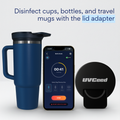
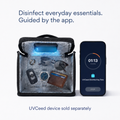
A UVCeed session works by aiming at one zone, the ice bucket interior, a glass, the mini-fridge handle and shelf, and holding until the app confirms that section's dose is complete before moving to the next. That structure matters in a hotel room because you're disinfecting items with unknown cleaning history, and a deliberate, section-by-section pass covers corners and interior surfaces that a quick wipe with a tissue would miss entirely.
If you fill the in-room ice bucket yourself from a machine you're unsure about, running a session over the bucket's interior afterward is a reasonable add-on step, not a substitute for choosing a cleaner ice source when one's available.
FAQ
Does freezing kill bacteria in ice? No. Freezing slows or halts bacterial activity but doesn't reliably kill most bacteria. Once ice melts, surviving bacteria can become active again.
Are hotel ice machines regulated or inspected? Regulation varies significantly by jurisdiction and is often less rigorous than restaurant kitchen inspections, which is part of why documented contamination cases keep surfacing in infection-control literature.
What pathogens have actually been linked to ice machines? Documented cases and studies point to E. coli, Listeria, Legionella, Burkholderia species, and Candida, spanning both healthcare and hospitality settings.
Can UV-C disinfect ice itself? UVCeed is designed for surface disinfection of hard, line-of-sight items like buckets, cups, and fridge interiors, not for treating ice or water directly. Choosing a cleaner ice source remains the better first step.
Is bottled water safer than hotel ice by default? Generally yes, since sealed bottled water hasn't passed through equipment with the contamination risks documented in ice machine research, though it's worth confirming the seal is intact before use.
Want More Articles Like This?
Get research on UV-C treatment and product updates delivered to your inbox.