TL;DR
Two separate Listeria recalls landed within two weeks of each other in August 2026: City Foods, Inc. pulled about 3,215 pounds of ready-to-eat pastrami and corned beef on August 8, and Kettle Cuisine recalled its Marketside Tomato Bisque Soup Kits sold at Walmart after a routine test came back presumptive positive. Neither has a confirmed illness attached yet. That is not the point. Listeria is the one common foodborne bacteria that keeps multiplying inside your refrigerator, which is exactly why ready-to-eat deli and prepared-meal categories produce recalls like this on a rolling basis.
What Actually Happened
City Foods pastrami and corned beef: The USDA's Food Safety and Inspection Service announced on August 8, 2026 that City Foods, Inc., a Chicago establishment, recalled approximately 3,215 pounds of ready-to-eat products that may be contaminated with Listeria monocytogenes, per FSIS. The recall covers 10-lb boxes of "Midamar Premium Beef Pastrami" (case code 19410) and 20- to 30-lb boxes of "Bea's Best Cooked Corned Beef Brisket" (case code 18919). Both were produced July 16, 2026, carry a 60-day shelf life, and reached foodservice locations in Illinois, Iowa, and Michigan before further distribution, according to MEAT+POULTRY. The contamination was caught during routine inspection; no illnesses have been confirmed.
Kettle Cuisine tomato bisque soup kits: Kettle Cuisine LLC recalled its Marketside Tomato Bisque Soup Kits, sold exclusively at select Walmart stores in 14-ounce packages with a use-by date of August 22, 2026, after routine testing produced a presumptive positive result for Listeria monocytogenes. Roughly 3,240 packs are included in the recall.
Both recalls follow the same pattern: routine testing catches the contamination before it is definitively tied to any illness, and both involve categories, deli meat and prepared soup, that sit in the refrigerator for days or weeks before being eaten.
Why Listeria Is the One Bacteria Your Fridge Doesn't Stop
Most foodborne bacteria need warmth to multiply. Listeria monocytogenes does not follow that rule; it can grow slowly even at standard refrigerator temperatures of 36-40°F, per the CDC. That single trait explains why deli meats, soft cheeses, smoked seafood, and pre-made soups and salads are the recurring source category for Listeria recalls, rather than fresh produce or shelf-stable goods.
The people at real risk are a defined group: adults 65 and older, people with weakened immune systems, and pregnant women, for whom the CDC notes that 1 in 4 who get listeriosis lose the pregnancy or the baby shortly after birth. For everyone else, symptoms are usually fever, muscle aches, and fatigue, though the CDC's clinical overview notes severe cases can progress to headache, stiff neck, confusion, and convulsions. Incubation can take up to 70 days, which is part of why these outbreaks are so hard to trace to a single meal.
What to Actually Do in Your Kitchen
- Check for either recalled product. Midamar pastrami or Bea's Best corned beef (case codes 19410 / 18919, produced 7/16/2026), or Marketside Tomato Bisque Soup Kits (use-by 8/22/2026).
- Discard or return anything matching those descriptions; do not taste-test to check.
- Clean the refrigerator shelf and drawer the product sat in. Listeria spreads by cross-contamination inside a cold fridge more easily than bacteria that need warmth to survive.
- Wipe down anything the packaging touched, including nearby containers and the fridge door handle.
- If you are pregnant, 65+, or immunocompromised and ate either product, contact your doctor even without symptoms, per FDA guidance.
Where UV-C Fits (and Where It Does Not)
UV-C at 254 nm inactivates Listeria on hard, non-porous surfaces by damaging the DNA that lets it reproduce, which makes it well suited to the fridge shelf, handle, and counter, all of which should not need a chemical spray near food-adjacent surfaces. 254 nm UV-C does inactivate bacteria on food surfaces themselves when there is direct line of sight, but FDA rules prevent us from citing a specific reduction percentage on food, so we do not.
UV-C cannot reach bacteria that has soaked into a porous cutting board or sponge, and it will not disinfect food still sealed inside packaging. For any recalled product, the only correct step is disposal, not disinfection.
Where UVCeed Fits
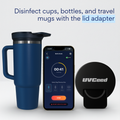
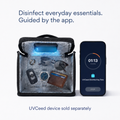
UVCeed is a 254 nm UV-C device that pairs with your phone camera and app to guide a session across the exact surface you are treating. You aim UVCeed at one section, hold it steady while the app confirms that section is complete, then move to the next section if the surface is larger than the coverage area.
After a fridge recall scare, run a session on the shelf, the door handle, and the counter where the product sat. No chemical residue near food-storage surfaces, no wipes to throw away, and a tilt-safety shutoff that turns the lamp off if the device rotates away from the target.
FAQ
Why do so many Listeria recalls involve deli meat and prepared meals specifically? Because those categories sit in refrigerated storage for extended periods, and Listeria is one of the only common foodborne bacteria that keeps multiplying at refrigerator temperatures, per the CDC.
Neither recall has confirmed illnesses. Why does that matter? It doesn't mean the risk isn't real. Both recalls were triggered by routine lab testing catching contamination before anyone reported getting sick, which is the system working as intended rather than a reason to dismiss the recall.
Do I need to sanitize my whole refrigerator? Focus on the shelf, bin, and any surfaces the specific product touched. Neither FSIS nor Kettle Cuisine has indicated broader contamination beyond the recalled items and their immediate contact surfaces.
How long can Listeria symptoms take to appear? Up to 70 days, per the CDC's clinical overview, which is much longer than most foodborne illness and part of why these cases are hard to trace.
Can UV-C replace refrigerator cleaning entirely? No. UV-C is a supplement for hard surfaces like shelves and handles. Spills, crumbs, and porous materials like door gaskets still need physical cleaning first.
The Bottom Line
Two Listeria recalls in two weeks is not a coincidence, it is a pattern tied to how the bacteria survives refrigeration. Check both product lists, clear anything that matches, and treat the surfaces they sat near, not just the product itself.
Want More Articles Like This?
Get research on UV-C treatment and product updates delivered to your inbox.