TL;DR
Walking pneumonia, caused by the bacteria Mycoplasma pneumoniae, surges in multi-year waves as population immunity fades and rebuilds, typically every 3 to 7 years. The 2024 surge was unusually large and hit younger children harder than the historical pattern of mostly school-age kids and teens. According to the CDC, infections remain elevated in some parts of the US in 2025 and into 2026, meaning the wave that started two years ago has not fully cleared. It is easy to dismiss because most cases are mild enough that people keep going about their day, which is exactly where the nickname comes from, but roughly 2 million infections happen in the US every year, and it spreads efficiently in exactly the settings kids return to every fall.
What actually happened
Mycoplasma pneumoniae is a bacterium, not a virus, and it causes an atypical pneumonia that is usually milder than typical bacterial pneumonia, hence "walking" pneumonia, since most people do not feel sick enough to stay in bed. Per the CDC's surveillance and trends page, the bacteria surges in multi-year cycles driven by waning population immunity, and while national activity has declined since its early 2025 peak, infections remain elevated in some regions heading into 2026. Roughly 2 million infections occur annually in the US, though many go undiagnosed because symptoms overlap with other respiratory illnesses and testing is not routine outside of hospitals and outbreak investigations.
The 2024 surge broke from historical patterns in a way that caught pediatricians off guard. Walking pneumonia traditionally hits school-age children and adolescents hardest, but CDC surveillance data showed a notable August 2024 peak in children as young as 2 to 4 years old, a population that had built up less immunity during the years when respiratory illness spread was suppressed by pandemic-era precautions. That immunity gap is part of why the current wave has had more staying power than past cycles, and reporting from WRIC described the spread as "moving quickly" through pediatric populations specifically.
The antibiotic resistance wrinkle
Because Mycoplasma pneumoniae is a bacterium, it is treated with antibiotics, specifically macrolides like azithromycin, rather than the antivirals or supportive care used for viral respiratory illness. That makes drug resistance a real and separate concern from the raw case count. Global macrolide resistance rates average around 28%, but they vary enormously by region: US resistance sits below 10%, compared to roughly 50% in Japan and as high as 80% in parts of China. The US numbers are comparatively reassuring for now, but ongoing CDC resistance monitoring exists precisely because that gap has narrowed before and could again.
What to actually do this fall
- Treat a persistent, weeks-long cough in a child, even a mild one where they otherwise seem fine, as worth a pediatrician visit rather than assuming it will resolve on its own.
- Remember that Mycoplasma pneumoniae spreads primarily through respiratory droplets in close-contact settings: classrooms, school buses, and daycare rooms are the highest-risk environments.
- Disinfect shared high-touch items in these settings regularly, water fountain handles, shared tablets and keyboards, cafeteria trays, since respiratory droplets do settle on surfaces even though close contact is the primary spread route.
- Do not assume a mild cough means it is "not contagious." Mycoplasma pneumoniae infections can be contagious even when symptoms are mild enough that a child feels fine going to school.
- If your child's school reports elevated absences for respiratory illness, ask specifically whether Mycoplasma has been mentioned, since it is less commonly tested for than flu or RSV and can be missed in general "it's just a cold" messaging.
Where UVCeed fits
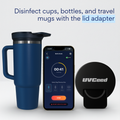
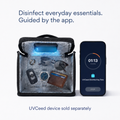
To be straightforward: Mycoplasma pneumoniae's primary transmission route is respiratory droplets from close, prolonged contact, not surfaces, so surface disinfection is a secondary layer here, not the main defense. Handwashing, staying home when symptomatic, and appropriate antibiotic treatment when diagnosed matter more. Where UV-C adds value is in reducing the overall bacterial load on the shared items that get touched constantly in classrooms and at home when a family member is contagious: shared cups, water bottles, tablets, phones, and doorknobs in a household managing a sick child.
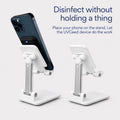
With UVCeed, you aim the device at one section, a shared tablet, a water bottle, a doorknob, and hold it steady until the app confirms that section is complete, then move to the next section. It will not replace the antibiotic your pediatrician prescribes, but it is a chemical-free way to cut down on what is sitting on the surfaces your family touches most while someone at home is contagious.
FAQ
Is walking pneumonia contagious even in mild cases? Yes. Mycoplasma pneumoniae can spread even when the infected person has mild symptoms, which is part of why it is easy to under-detect and why it moves so efficiently through schools and daycares.
Why did the 2024 surge hit younger kids harder than usual? CDC data showed an unusual shift toward children as young as 2 to 4 years old, likely because that age group had less built-up immunity from the years when respiratory illness spread was reduced during the pandemic.
How is walking pneumonia treated? With antibiotics, typically macrolides like azithromycin, since it is caused by bacteria rather than a virus. This is different from most other common childhood respiratory illnesses, which are viral and do not respond to antibiotics at all.
Is antibiotic resistance a concern for Mycoplasma pneumoniae in the US? Current US macrolide resistance rates are below 10%, notably lower than the 50% to 80% rates seen in parts of Asia, but the CDC continues to monitor resistance trends closely since they can shift over time.
Can UV-C help protect against walking pneumonia at home? 254 nm UV-C can reduce bacterial load on hard, shared surfaces like doorknobs, water bottles, and devices, which is a useful secondary layer, but the primary transmission route is respiratory droplets from close contact, so it should not replace medical treatment or standard illness precautions.
Want More Articles Like This?
Get research on UV-C treatment and product updates delivered to your inbox.