TL;DR
Cryptosporidium is the #1 cause of recreational water illness outbreaks in the U.S. It's chlorine-resistant, takes days to kill in a treated pool, and CDC tracks new outbreaks every summer. The pool water is the primary vector. The locker room, the goggle bag, and the phone you left in the locker are the secondary vectors - and they leave the park with you.
The 2026 recreational-water backdrop
- Cryptosporidium is chlorine-resistant - CDC estimates it can survive for more than seven days in properly chlorinated pool water (CDC Recreational Water Illnesses - Crypto).
- CDC surveillance: treated recreational water outbreaks in the U.S. average dozens per year, with cryptosporidium accounting for the majority of cases (CDC Healthy Swimming: Outbreak Reports).
- Symptoms: watery diarrhea, stomach cramps, dehydration - lasting up to two weeks.
Why the locker room matters
People shower, change, and pack out through the same 200-square-foot room. That means:
- Wet floors with fecal-oral contamination potential
- Shared bench surfaces and locker latches
- Wet swim suits and towels thrown into lockers with dry phones, wallets, and keys
- Shared hair dryers and bench seating
You put your dry phone into a locker. Two hours later, you retrieve it - the locker now holds bacteria and oocysts from your wet suit, from your shower runoff, and from whoever used the locker before you.
What lives on the goggles
Goggles get wet in the pool, then get worn on your face. If the water was contaminated, the goggle frame and strap now carry:
- Cryptosporidium oocysts
- Giardia cysts
- Pseudomonas ("hot tub folliculitis" bacterium - CDC Pseudomonas Rash)
- Adenoviruses - a documented cause of pool-associated conjunctivitis
The goggle strap then transfers everything to your hair, your face, and your ear.
Your water park exit protocol
- Shower thoroughly with soap before you leave the park.
- Air-dry goggles instead of packing wet.
- Change out of the wet suit into dry clothes before you touch your phone or wallet.
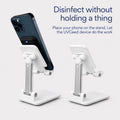
- Run a UVCeed session on your phone, keys, wallet, and goggle frame - aim the beam at one section, hold still until the app confirms coverage is complete, then move to the next section for larger surfaces.
- Wash hands before eating or driving.
Where UVCeed fits
UVCeed's 254nm UV-C is the germicidal wavelength peer-reviewed against Cryptosporidium oocysts (NIH: UV inactivation of Cryptosporidium) - one of the few modalities besides prolonged desiccation that inactivates these oocysts. App-guided sessions. USB-C. Tilt-safety shutoff.
FAQ
Does chlorine kill everything in the pool? No. Chlorine at standard levels inactivates most bacteria and viruses in under an hour, but Cryptosporidium can survive for a week or more.
Should we still go to water parks? Yes - with basic hygiene discipline. Don't swallow pool water, shower before and after, don't swim with diarrhea (per CDC).
Session time on a phone? About 60 seconds per section. The app confirms coverage before you move on.
The bottom line
The pool is the park's problem. The locker is yours.
Want More Articles Like This?
Get research on UV-C treatment and product updates delivered to your inbox.