TL;DR
- A 2023 to 2025 outbreak of Mycobacterium fortuitum infections traced to two Tennessee ambulatory surgery centers, presented at SHEA Spring 2025, was linked to a missing water management plan and an unlicensed surgical technologist involved in reprocessing.
- AAAHC's 2025 Quality Roadmap found infection prevention and control deficiencies cited unsafe sterilization and disinfection practices in 13.3 percent of surveyed facilities, and IPC failures accounted for 22 percent of all Immediate Jeopardy findings.
- CMS Conditions for Coverage require every ASC to run a documented, CDC-aligned infection prevention program under 42 CFR 416.51, overseen by a qualified infection control professional.
- Peer-reviewed research on OR turnover cleaning shows high-touch equipment like anesthesia carts, keyboards, and monitor housings is frequently missed by standard manual cleaning, with contamination rates as high as 65 percent on some surfaces before targeted intervention (PubMed).
- A handheld UV-C device is a genuine supplemental layer for hard, non-porous equipment surfaces between cases. It never touches sterile instrument reprocessing, which remains 100 percent an autoclave and CMS/AAAHC-validated process.
Two Surgery Centers, One Technologist, and a Two-Year Investigation
In July 2023, five patients who underwent procedures at an ambulatory surgery center in Tennessee developed joint infections caused by Mycobacterium fortuitum, a nontuberculous mycobacterium that lives in water and soil and is notoriously resistant to routine disinfection. Investigators eventually traced additional cases to a second, unrelated ASC. Whole-genome sequencing confirmed the infecting strains were genetically identical across both facilities, and the common link turned out to be a single unlicensed surgical technologist who worked reprocessing duties at both sites, according to the outbreak report presented at the Society for Healthcare Epidemiology of America's Spring 2025 conference and covered by Infection Control Today.
The investigation found a stack of overlapping failures: no water management plan at either facility, no certified sterile processing staff, an infection preventionist juggling unrelated job duties on top of infection control, and what investigators described as multiple lapses in reprocessing and aseptic technique. Compounding the problem, Tennessee had no state law requiring ASCs to report surgical site infections at the time, meaning the pattern went undetected for months while more patients were exposed.
This case is a reminder that ASC infection failures are rarely one dramatic mistake. They are usually a combination of thin staffing, unclear ownership of the infection prevention program, and gaps between what a facility's written policy says and what actually happens in the reprocessing room and OR turnover between cases. For administrators, the lesson is not "buy a new gadget." It is "audit every layer of your infection prevention program, including the ones that feel routine."
Why the Regulatory Stakes Are Higher for ASCs Than for a Typical Medical Office
Ambulatory surgery centers do not operate under the same infection control expectations as a general dental or outpatient medical practice. CMS requires every Medicare-certified ASC to maintain a documented infection prevention program under the Conditions for Coverage at 42 CFR 416.51, which mandates that the program be run by a designated, qualified professional, aligned with nationally recognized guidelines such as those from the CDC, and integrated into the facility's ongoing quality assessment and performance improvement activities. Surveyors work from CMS State Operations Manual Appendix L, which spells out exactly how infection control compliance is assessed during a certification or complaint survey.
Most ASCs are also accredited by AAAHC or the Joint Commission, which layer additional standards on top of CMS requirements. The numbers from AAAHC's 2025 Quality Roadmap are sobering for a sector that performs invasive procedures daily: unsafe sterilization and high-level disinfection practices were cited in 13.3 percent of facilities, 12.1 percent had inadequate documentation of how their infection prevention program was actually implemented, and 9.3 percent lacked a governing-body-approved written IPC program at all. Infection control deficiencies made up 22 percent of every Immediate Jeopardy citation issued that year, meaning it was the difference between a routine finding and a facility facing possible termination from Medicare. The follow-up 2026 AAAHC roadmap found the same pattern persisting: facilities often had policies on paper but lacked the oversight, training, and surveillance to back them up in practice.
The CDC's own guidance, the Guide to Infection Prevention for Outpatient Settings: Minimum Expectations for Safe Care, exists specifically because outpatient and ambulatory settings have a documented history of falling short of hospital-level infection control rigor, even though they perform hospital-level procedures. CDC also tracks ASC-specific surgical site infection data through its National Healthcare Safety Network, which most state health departments now require ASCs to report into.
Peer-reviewed research backs up why hard surfaces deserve specific attention during turnover. A systematic scoping review of OR environmental cleaning found that standard turnover cleaning reduces microbial burden on irregular and horizontal surfaces like anesthesia keyboards and floors, but often fails to meaningfully reduce contamination on smooth, vertical surfaces. A more recent study identifying high-touch surfaces in the OR found contamination rates of 65 percent on computer mouse and keyboard combinations, 60 percent on chairs, and 15 percent on door switches before targeted cleaning protocols were applied. None of this is about instrument sterility. It is about the equipment and fixtures surrounding the sterile field that staff and patients touch dozens of times a day, and that get less scrutiny than the autoclave log.
Separately, a small peer-reviewed study conducted in a joint replacement surgical suite measured bacterial contamination on five high-touch surfaces, including the anesthesia machine vitals screen and the anesthesia cart table, before surgery, after surgery, after manual cleaning, and after a handheld UV-C LED pass. Manual cleaning alone reduced average contamination by 74 percent, and adding the UV-C step reduced it further to a 98 percent total reduction across the full sequence. The authors were careful to note real limits: the sample size was small, only seven operative days, the setting was a single surgeon's suite, and the study measured colony-forming unit reduction rather than actual infection rates. It is a useful data point on what a supplemental UV-C pass can add after standard cleaning, not proof that any UV-C device prevents surgical site infections on its own.
Hard Surfaces That Deserve a Second Look Between Cases
This checklist covers hard, non-porous surfaces in pre-op, OR-adjacent, and post-op areas. It intentionally excludes surgical instruments, which follow a completely separate, validated sterilization pathway under your reprocessing SOPs and are never appropriate for UV-C handheld treatment.
- IV pole shafts and hooks: handled by nearly every staff member moving a patient between bays, and easily missed because they are round, vertical, and awkward to wipe fully.
- Monitor housings and cable connectors: touched constantly during vitals checks, with crevices around buttons and ports that manual wiping tends to skip.
- OR table rails and the exterior of pads: adjacent to the sterile field but outside it, and subject to the same turnover time pressure as everything else in the room.
- Anesthesia cart drawer handles and keyboard or mouse combinations: identified repeatedly in the literature above as among the highest-contamination surfaces in the OR.
- Cabinet and supply closet handles in pre-op and post-op bays: high-frequency touchpoints during rapid patient turnover that are rarely first on a cleaning checklist.
- Waiting room and check-in counters, pens, and clipboards: the first and last surfaces every patient and family member touches, often overlooked because they feel non-clinical.
- Call buttons, bed rails, and armrests in recovery bays: touched by patients who are groggy, in pain, or otherwise unable to practice hand hygiene themselves.
- Door handles and light switches between pre-op, OR, and recovery zones: connect every clinical area and get touched by every person moving through the facility.
Where UVCeed Fits
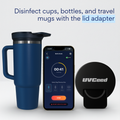
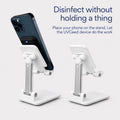
A handheld 254nm UV-C device is a supplemental step for the hard, non-porous surfaces on the list above, applied after your standard EPA-registered hospital-grade disinfectant wipe-down, not instead of it. In a fast-turnover pre-op bay or post-op recovery area, staff wipe down surfaces per protocol, then aim the device, hold steady until the app confirms the section is complete, then move to the next section. That workflow adds a documented, repeatable second layer of treatment on surfaces that turnover time pressure and manual technique variability can cause to get missed, which is exactly the gap the OR contamination research above describes.
This only applies to equipment exteriors, rails, handles, counters, and fixtures. It has no role in the sterile processing department and no role in preparing surgical instruments for the next case. The UVCeed disinfection device is built for administrators who want an auditable, app-confirmed record that a hard-surface treatment pass happened between patients, on top of whatever your infection control program already requires, not as a replacement for any part of it.
What UV-C Does Not Do: An Honest Limitations Note
UV-C handheld devices do not sterilize surgical instruments, and they are not a substitute for autoclave or low-temperature sterilization in any form. Nothing about adding UV-C to a hard-surface protocol changes what CMS, AAAHC, or the Joint Commission require for instrument reprocessing, and any vendor suggesting otherwise should not be trusted with your facility's compliance. UV-C is also line-of-sight only, meaning it cannot treat surfaces it cannot directly reach, shadowed areas, or the inside of equipment housings, and it does nothing for airborne transmission or bioburden inside a wound. It does not replace your EPA-registered hospital disinfectant protocol for any surface category, and it does not change a single CMS Condition for Coverage or AAAHC standard your facility is surveyed against. Treat it as exactly what it is: an added layer on hard equipment surfaces, not a shortcut around validated sterilization or accreditation requirements.
Frequently Asked Questions
Does UV-C treatment satisfy any part of the CMS Conditions for Coverage infection control requirement? No. The CMS requirement under 42 CFR 416.51 is about your documented, CDC-aligned infection prevention program as a whole, including sterilization, hand hygiene, and surveillance. UV-C on hard surfaces can be one documented practice within that broader program, but it does not satisfy the requirement by itself.
Can UV-C be used on surgical instruments between autoclave cycles? No. Surgical instruments require validated sterilization, sterilization monitoring with biological indicators, and manufacturer-specified reprocessing steps. UV-C handheld devices are designed for hard, non-porous environmental surfaces, not instruments intended for use inside the sterile field.
How does UV-C fit into a 15 to 20 minute OR turnover window? It is applied to accessible hard surfaces such as table rails, monitor housings, and cart exteriors after the standard disinfectant wipe-down, as a quick, app-confirmed pass on specific high-touch points rather than a full-room treatment.
Will using UV-C help during an AAAHC or CMS survey? It can serve as evidence of a proactive, documented environmental hygiene practice, but surveyors are assessing your overall written infection prevention program, staff competency, and sterilization records. UV-C use should be documented as a supplemental step, not presented as your primary infection control method.
Bottom Line for ASC Administrators
The Tennessee outbreak did not happen because a facility lacked a fancy piece of equipment. It happened because basic layers of infection prevention, a water management plan, qualified reprocessing staff, and clear ownership of the IPC program, were missing or thin. That is the real lesson for ASC administrators heading into survey season: shore up the fundamentals first, then look for genuine supplemental tools that add a documented layer of protection on the hard surfaces your OR turnover cleaning is most likely to miss. A handheld UV-C device from UVCeed can be part of that layered approach for equipment exteriors, rails, and high-touch fixtures, alongside, never instead of, your validated sterilization workflow and EPA-registered disinfectant protocols.
Want More Articles Like This?
Get research on UV-C treatment and product updates delivered to your inbox.