TL;DR
- Room cleanliness is still the top reason guests leave negative hotel reviews, according to a November 2025 Ecolab guest survey of 598 travelers, and it is the single factor most likely to cost a property a five-star rating and a repeat stay (Ecolab).
- Housekeeping remains the hardest department to staff in hotels, with 38% of properties citing unfilled housekeeping openings in AHLA's most recent staffing survey, more than any other role (AHLA).
- Standard checkout cleans run roughly 30 to 45 minutes per room, with housekeepers typically assigned 12 to 16 rooms a shift, leaving almost no slack to add extra steps without slowing turnover (Mitti/SafetyCulture).
- Portable, line-of-sight UV-C devices can be added to the tail end of an existing turnover checklist to hit remotes, thermostats, light switches, and bathroom fixtures in under two minutes, without replacing standard disinfectant protocols.
The review math every GM already knows, now with numbers behind it
Every general manager has read a one-star review that starts with "the room looked clean until..." and ends with a cancellation from a repeat guest. That gut feeling now has research behind it. A third-party survey conducted on behalf of Ecolab in November 2025, covering 598 hotel guests, found that room cleanliness is the number one reason guests leave a negative review, and the top issue that keeps a stay from earning five stars or a return booking (Ecolab). The same study found that stained linens push 73% of guests to a two-star rating or lower and make 54% reconsider returning, that visible pests cost a property at least three stars from 72% of guests, and that odor alone is enough to drop satisfaction ratings by two stars or more for 84% of guests.
None of that is happening in a vacuum. Hotels are trying to hold the line on cleanliness scores while running leaner housekeeping departments than they did before the pandemic. AHLA's Front Desk Feedback survey of 282 hoteliers, fielded between December 2024 and January 2025 in partnership with Hireology, found that 65% of hotels were still reporting staffing shortages, with housekeeping cited as the hardest role to fill at 38%, ahead of front desk at 26% (AHLA). Seventy-one percent of surveyed properties said they had job openings they could not fill despite active searching, even after raising wages. That is the operational reality behind every cleanliness complaint: fewer hands, more rooms, and a guest base that is quicker than ever to post a review the moment something feels off.
At the same time, guests are asking more openly about how clean a room actually is. Industry coverage of hotel sanitation programs has noted that consumers now expect "intense room cleaning protocols with more rigorous solutions," and that properties advertising enhanced disinfection routines, including UV-C, have used it as a trust-rebuilding and booking driver rather than a one-time pandemic gimmick (Hospitality Technology). Some brands leaned into this early and visibly. The Westin Houston Medical Center was reported to be the first hotel in the country to deploy UV disinfection robots on every guest room between stays, layering the technology on top of, not instead of, its existing Ecolab-based cleaning protocol (Hotel Business). The lesson for operators today is not that every property needs a robot fleet. It is that guests notice and reward visible, communicated cleanliness effort, and punish its absence in a review that outlives the stay by years.
Why the turnover window is the real bottleneck
The math gets tighter when you look at the clock housekeeping is actually working against. Industry productivity benchmarks put a stayover refresh at 20 to 30 minutes and a full checkout clean at 30 to 45 minutes, with individual housekeepers typically assigned 12 to 16 rooms per shift (Mitti/SafetyCulture). Limited-service properties often push toward the low end of that range to hit checkout-to-check-in targets. There is essentially no built-in buffer for adding new steps to the SOP, which is exactly why so many enhanced-cleaning initiatives quietly die after the first staffing crunch: they look good in a memo but do not survive a 32-minute room with a housekeeper who is already covering for two unfilled positions.
That combination, rising guest sensitivity to cleanliness paired with shrinking housekeeping capacity, is the actual business problem behind this article. It is not "guests are grossed out by hotel rooms." It is "your review score depends on a cleanliness standard that your current staffing model makes harder to hit every quarter," and it shows up directly in ADR-sensitive OTA rankings, brand audit scores, and repeat-guest revenue.
A practical checklist for GMs and directors of housekeeping
- Audit your current turnover SOP against the actual clock. If your standard is a 30-minute checkout clean, time a few real rooms with a stopwatch. If housekeepers are quietly running 40, your written standard and your floor reality have already diverged, and that gap is where quality slips first (Mitti/SafetyCulture).
- Name the specific complaint drivers in your training, not just "clean thoroughly." Ecolab's data points to stained linens, odor, and visible pests as the highest-impact items for rating drops, so inspection checklists should call those out by name rather than burying them in a general cleanliness line item (Ecolab).
- Track unfilled housekeeping shifts against review score trends. If your department is running short-staffed the way 65% of AHLA's surveyed hotels report, you likely already have the data to show leadership where the correlation between coverage gaps and cleanliness complaints shows up (AHLA).
- Give inspectors a five-minute spot-check routine focused on high-visibility touchpoints: bathroom fixtures, bedding edges, remote and thermostat surfaces, and door handles, since these are the items guests photograph and mention by name in reviews.
- Decide what "enhanced clean" actually means at your property before you market it. A vague claim invites scrutiny; a specific, documented step (for example, a UV-C pass on high-touch electronics and fixtures after standard cleaning) is defensible in a brand standards audit and easy to explain to a guest who asks.
Where UV-C fits, honestly
254nm UV-C is germicidal light that damages the DNA and RNA of bacteria and viruses on surfaces it directly reaches. That "directly reaches" part matters more than any marketing claim: UV-C is a line-of-sight technology. It disinfects the surface facing the light, not the back of a remote sitting face-down, not fabric fibers a lamp cannot fully penetrate, and not a surface still coated in visible soil, since organic material can shield pathogens from the light. Public health literature on ultraviolet germicidal irradiation in health care settings describes it plainly as "an effective adjunct, but not a stand-alone technology," meaning it works best after standard cleaning and disinfection, not instead of it (PMC).
Safety matters just as much as efficacy here. The CDC notes that UV-C energy directed into an occupied space can cause temporary eye or skin damage, which is why germicidal UV-C at 254nm is designed for use in unoccupied spaces, with trained operators, warning signage, and controlled exposure (CDC). In a hotel context, that means a UV-C pass belongs squarely in the unoccupied turnover window, after the room has been vacated by the departing guest and before the next arrival, never as something run around staff or guests in the room.
So what UV-C is not: it is not a replacement for EPA-registered disinfectant wipes, laundering protocols, or your brand's standard chemical checklist. It will not clean a stain, remove an odor at its source, or substitute for a housekeeper actually cleaning the room. What it is: a fast, targeted way to hit specific high-touch items with germicidal light as a documented final step, on surfaces that have already been physically cleaned.
Where UVCeed fits
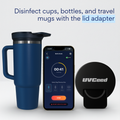
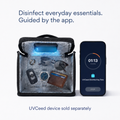
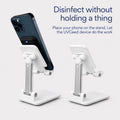
This is where a portable device changes the operational math rather than adding to it. UVCeed is a handheld 254nm UV-C unit built to be carried on a housekeeping cart and used as the last 60 to 90 seconds of a turnover, not a separate cleaning cycle. A realistic workflow looks like this: the housekeeper finishes the standard clean and disinfectant protocol as usual, then, before marking the room ready, aims the device at the remote, the thermostat, the light switches, the door and faucet handles, and the bathroom fixtures, holding steady on each surface until the companion app confirms that section is complete, then moving to the next surface. The app-guided confirmation gives a director of housekeeping a simple, auditable log that the step happened, which is useful both for brand standards inspections and for backing up a "verified clean" claim if a guest asks what enhanced cleaning actually means at your property.
Because the device is small enough to run per-room rather than per-floor, it fits inside the existing 30 to 45 minute turnover window instead of requiring a separate robot pass or a dedicated technician, which is the practical reason enterprise UV-C robots stalled at a handful of flagship properties while portable devices are easier to roll out hotel-wide. It also gives marketing and front-desk teams something concrete and specific to say to guests who are already asking about cleanliness protocols, rather than a vague "we clean thoroughly" line that does not differentiate the property from the hotel across the street.
FAQ
Does a UV-C pass replace our standard disinfectant checklist? No. UV-C is a supplemental step for high-touch surfaces after standard cleaning and EPA-registered disinfectant use, not a substitute for it. Brand standards and health codes still require your existing chemical protocol.
How much time does adding a UV-C step realistically add to turnover? For a handheld device covering key touchpoints (remote, thermostat, light switches, handles, bathroom fixtures), plan on roughly one to two minutes per room, which fits inside most standard 30 to 45 minute checkout clean windows.
Is it safe to run UV-C while a housekeeper is still working in the room? No. 254nm UV-C should only be used in an unoccupied space, since direct exposure can cause temporary skin and eye damage. Use it as the final step after housekeeping staff have finished their in-room tasks and are stepping out.
Can we legally market a UV-C step as a "verified clean" amenity? Yes, as long as the claim is accurate and specific to what you actually do. Describe the step plainly (for example, "high-touch surfaces treated with UV-C disinfection during turnover") rather than implying it replaces standard cleaning entirely.
Which surfaces benefit most from a UV-C pass in a guest room? Hard, non-porous, frequently touched surfaces with direct line of sight: remotes, thermostats, light switches, door handles, faucet handles, and bathroom fixtures. Fabric, upholstery, and shadowed or hidden surfaces get little benefit since UV-C cannot reach or penetrate them effectively.
The bottom line
Cleanliness is not a soft metric anymore. It is the top reason guests leave a bad review, and it is getting harder to protect with a housekeeping department that is short-staffed more often than not. The properties that hold their scores steady will be the ones that make small, specific, auditable changes to the turnover routine rather than vague promises about "enhanced cleaning." A portable UV-C step at the end of the checklist is one of the few additions that fits inside the existing time budget, gives housekeeping leadership something to document for brand audits, and gives the front desk something concrete to tell guests who are already asking.
Want More Articles Like This?
Get research on UV-C treatment and product updates delivered to your inbox.