As of February 2026, the United States has recorded nearly 1,000 confirmed measles cases - more than four times the number at this point last year. Twenty-six states are now reporting infections, and one county in South Carolina alone has seen more than 900 cases since the fall. Three people died from measles in 2025, including two children, and the nation is on track to lose its "measles elimination" status for the first time since 2000.
But perhaps the most alarming detail emerging from this crisis isn't just how fast measles is spreading. It's how unprepared many of our healthcare facilities are to stop it.
Hospitals Are Struggling to Identify - and Contain - the Virus
A recent investigation by KFF Health News, published in partnership with USA Today, revealed a disturbing scene at a North Carolina hospital. Twin 7-year-old boys arrived at Mission Hospital in Asheville with fever, cough, rash, pink eye, and cold symptoms - textbook signs of measles. Yet more than two hours passed before the children were isolated. During that delay, at least 26 other people in the hospital were exposed to the virus.
Federal investigators found that the hospital's staff had actually trained on measles identification just seven months earlier. Still, the symptoms were missed. The hospital was placed in "Immediate Jeopardy" by federal regulators - one of the most severe sanctions a healthcare facility can face.
The problem? Most doctors and nurses practicing today have never encountered a measles case in their careers. As one pediatrician with 30 years of experience put it, she has never seen measles in person. In the middle of winter, the symptoms can look identical to dozens of other common respiratory viruses.
Why Measles Demands a Different Level of Vigilance
Measles isn't just another seasonal bug. It is considered one of the most contagious diseases known to science. Here's what makes it so dangerous:
- Airborne persistence: The measles virus can remain active and infectious in the air for up to two hours after an infected person has left a room. You don't need to be in the same room at the same time as a sick person to catch it.
- Extreme contagion: An unvaccinated person exposed to measles has a 90% chance of becoming infected.
- Delayed symptoms: It can take one to two weeks for someone who has been infected to show symptoms - meaning they can spread it unknowingly throughout hospitals, schools, grocery stores, and airports during that window.
- Serious complications: Measles can lead to pneumonia, severe dehydration, brain inflammation, and death. The fatality rate in children is 1 to 3 per every 1,000 cases.
Measles exposure sites reported this year include hospitals, schools, churches, big-box retailers, and community colleges. If you're in a shared indoor space, you're in a potential transmission zone.
Chemical Wipes Aren't Enough - And Here's Why
When most people think about disinfection, they reach for chemical wipes or sprays. But here's what many don't realize: most disinfecting wipes require 4 full minutes of wet contact time to be effective. In practice, almost nobody waits that long. The surface dries, the germs survive, and you walk away with a false sense of security.
Even more critically, chemical wipes can only clean the surfaces you physically touch. They do nothing about the contaminated air around you - and with a virus like measles that lingers airborne for hours, surface cleaning alone leaves a massive gap in protection.
This is exactly why hospitals have relied on ultraviolet light - specifically UV-C technology - for nearly a century.
UV-C Light: The Hospital-Grade Weapon Against Measles (Now in Your Pocket)
UV-C germicidal irradiation has a proven track record against the measles virus that stretches back to the 1940s. In landmark studies conducted in Philadelphia schools during that era, researchers demonstrated that UV-C light dramatically reduced measles transmission among students.
Today, leading researchers at institutions like Columbia University and Harvard have continued to validate UV-C technology as one of the most effective tools for inactivating airborne pathogens - including measles, influenza, COVID-19, and drug-resistant bacteria. The science is clear: UV-C light destroys the DNA and RNA of viruses and bacteria, rendering them unable to replicate. Unlike chemical disinfectants, microorganisms cannot develop resistance to UV-C light.
For decades, this technology was confined to large, expensive hospital equipment. That's no longer the case.
Meet UVCeed: Hospital-Grade UV-C Disinfection That Goes Where You Go
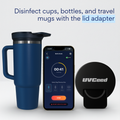
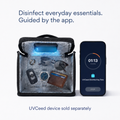
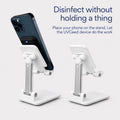
UVCeed puts the same germicidal UV-C wavelength used in medical facilities into a compact, portable device that clips to your smartphone. In just 30 seconds, it eliminates up to 99.99% of bacteria and viruses on surfaces - without chemicals, without residue, and without the guesswork.
Here's what makes UVCeed different from anything else on the market:
- Medical-grade 265nm UV-C LED - the proven germicidal wavelength that hospitals trust, delivered with patented dosage-control technology
- AI-powered safety monitoring - machine-vision technology automatically shuts off the UV-C light if it detects a person or pet
- Real-time visual confirmation - the smartphone app shows you exactly what's being disinfected and tells you when the cycle is complete
- Truly portable - pocket-sized, rechargeable via USB-C, and ready for 500+ uses per charge
- EPA registered and CE certified - held to the same safety standards as hospital-grade equipment
Developed by Bonutti Technologies, a medical device incubator with over 30 years of innovation and 400+ patents, UVCeed was designed by surgeons who understand that effective infection control shouldn't be limited to operating rooms.
Where to Use UVCeed in the Age of Measles
Given that measles exposure sites now include everyday locations, consider how UVCeed can help protect you and your family:
- Doctor's offices and hospital waiting rooms - Disinfect the chair, clipboard, and pen before you touch them. As we've seen, even hospitals are struggling to contain measles exposures.
- Schools and daycares - Sanitize your child's water bottle, lunchbox, and desk supplies. One North Carolina school had to quarantine 100 students after a single measles exposure - and only 41% of students there were vaccinated.
- Airports and airplanes - Tray tables, armrests, and seatbelt buckles are high-touch surfaces shared by thousands of travelers daily.
- Hotels and vacation rentals - Remote controls, light switches, faucet handles, and door knobs are rarely cleaned to a medical standard between guests.
- Grocery stores and retail - Shopping cart handles, checkout keypads, and self-serve kiosks are all potential contact points.
- Gyms and fitness studios - Shared equipment, locker room surfaces, and water fountains see constant use.
Vaccination + Disinfection: A Layered Defense
Public health experts universally agree that vaccination is the most effective way to prevent measles. Two doses of the MMR vaccine are 97% effective. But vaccination and environmental disinfection aren't an either/or proposition - they work best together as layers of protection.
Even vaccinated individuals can experience breakthrough infections, particularly in communities with active outbreaks where high levels of the virus are circulating. And for the millions of immunocompromised people, infants too young to be vaccinated, and others who remain vulnerable, reducing the pathogen load on surfaces in their environment is a meaningful additional line of defense.
UV-C surface disinfection is one more layer in your protection strategy - fast, proven, chemical-free, and now completely portable.
Don't Wait for the Next Exposure Alert
Measles cases are accelerating. Hospitals are scrambling. And the virus doesn't care whether you're in a waiting room, a classroom, or a Costco.
You can't control whether the person who sat in your seat an hour ago was carrying measles. But you can control what you do about the surfaces you're about to touch.
Get your UVCeed device today →
30 seconds. 99.9%* of germs eliminated. Zero chemicals. Hospital-grade protection - wherever life takes you.
UVCeed is EPA registered and CE certified. Lab-tested to eliminate 99.99% of common bacteria and viruses on hard, non-porous surfaces. UVCeed is designed to reduce exposure to germs on surfaces and is not a substitute for vaccination or medical advice. Always follow public health guidelines for disease prevention.
Want More Articles Like This?
Get research on UV-C treatment and product updates delivered to your inbox.